Bifold vs Sliding Doors: What’s the Difference and Which Should You Choose?
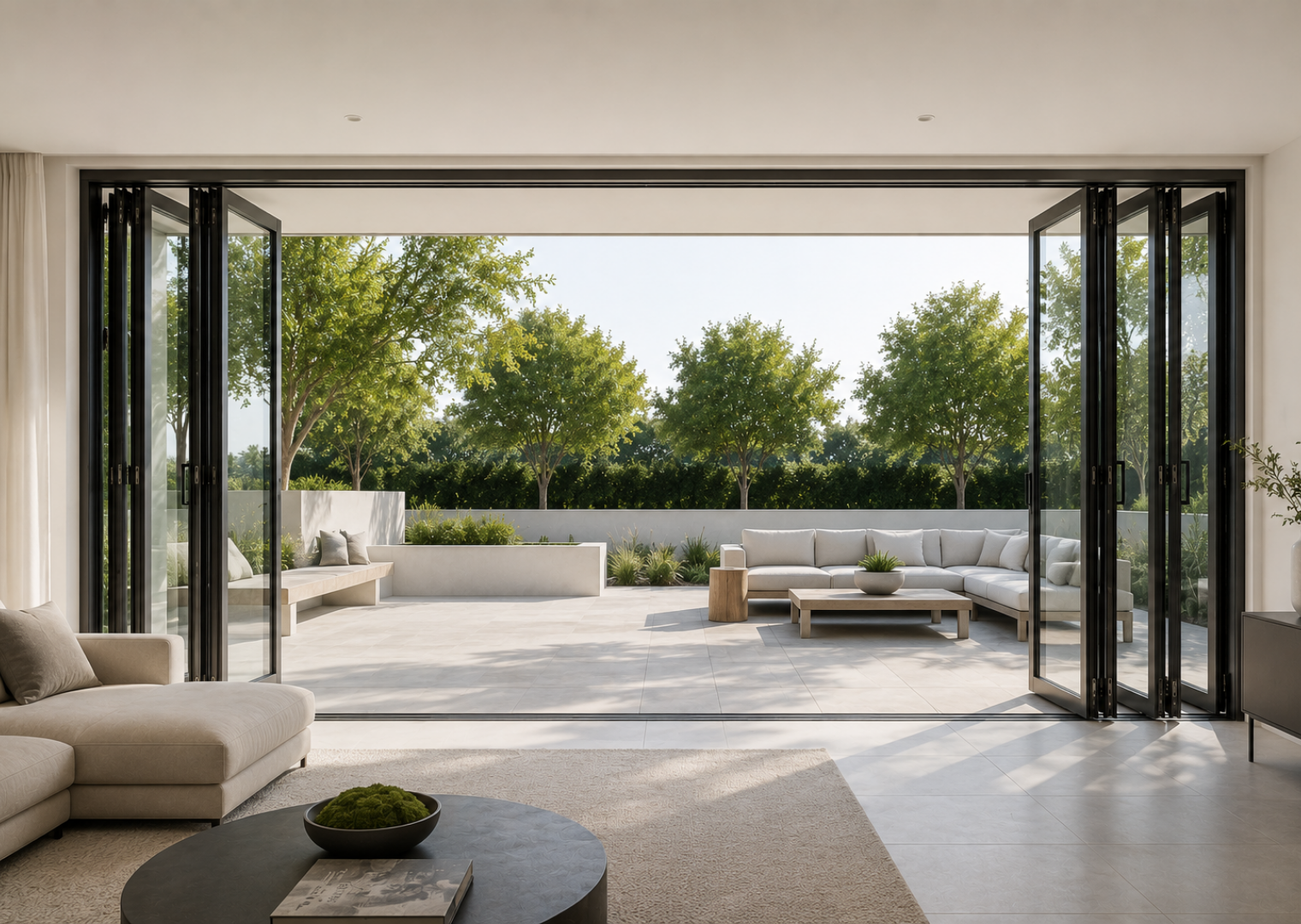
Choosing between bifold vs sliding doors depends on your available space, desired views, opening size, and how you want to use the room. Bifold doors fold and stack to the side, allowing a large portion of the opening to be opened and creating a strong connection between indoor and outdoor spaces. In contrast, sliding doors move horizontally along tracks, with large glass panels overlapping behind one another to provide wider, more uninterrupted views while taking up minimal floor space. Bifold doors are often preferred when maximum opening and indoor-outdoor access are the priority, while sliding doors are an excellent choice for homeowners who want expansive glass, panoramic views, natural light, and a space-efficient design.
What Are Bifold Doors?
Bifold doors are made up of several glazed panels connected by hinges that fold and stack neatly against one side of the opening, similar to a folding screen. When fully open, they can leave up to 90% of the opening completely clear, creating an almost wall-free connection between indoor and outdoor spaces. Bifold doors are a popular choice for wide openings where homeowners want the option of a fully open facade during good weather.
What Are Sliding Doors?
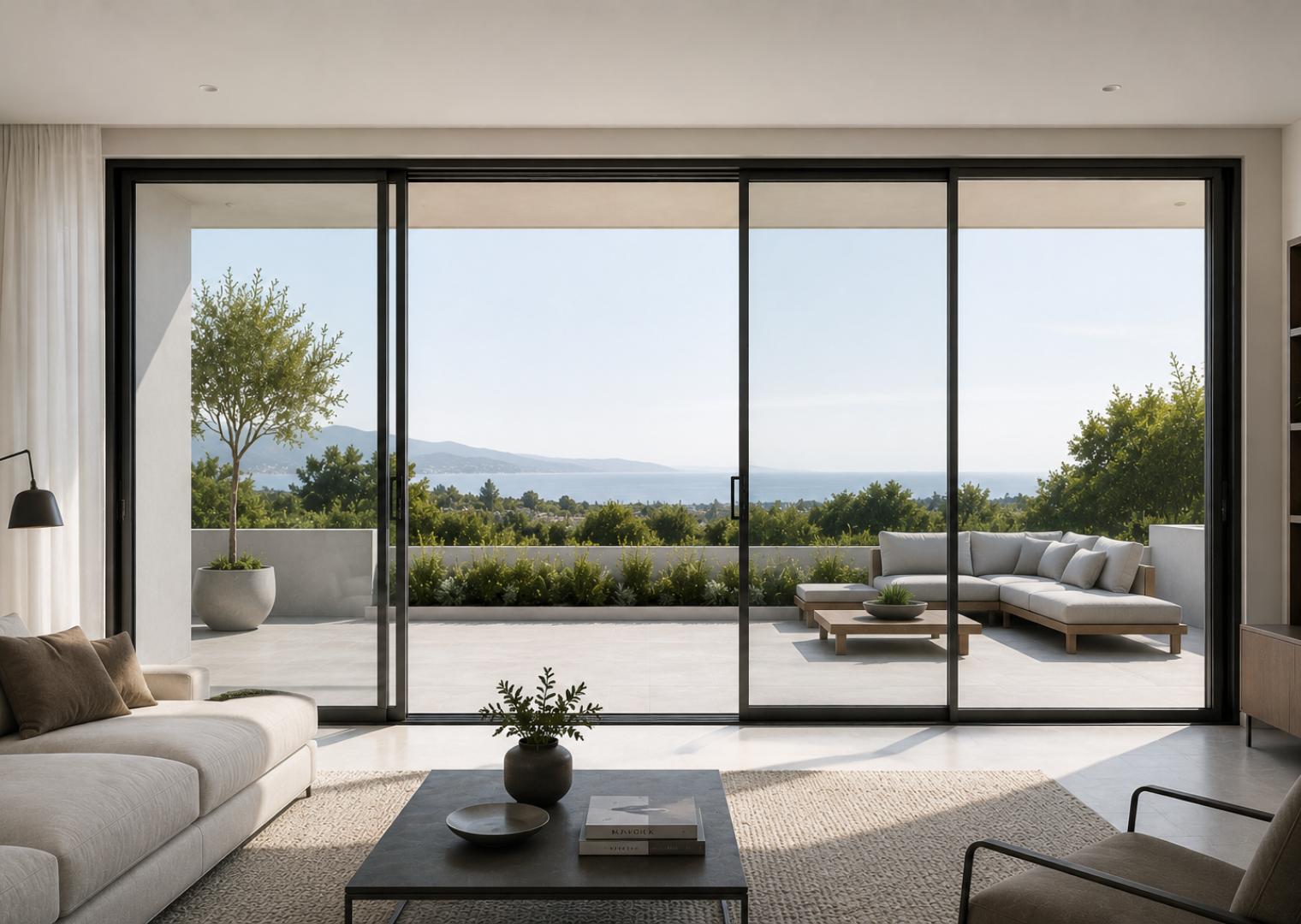
Sliding doors consist of large glass panels that run on a track and slide horizontally past one another, rather than folding. They don’t swing into the room or stack outward, which makes them a practical choice where floor space, either inside or outside, needs to stay clear. Sliding doors are especially common for patios, balconies, and openings where a bifold’s folding panels would take up too much depth.
Bifold vs Sliding Doors: Key Differences
Opening Width and Space
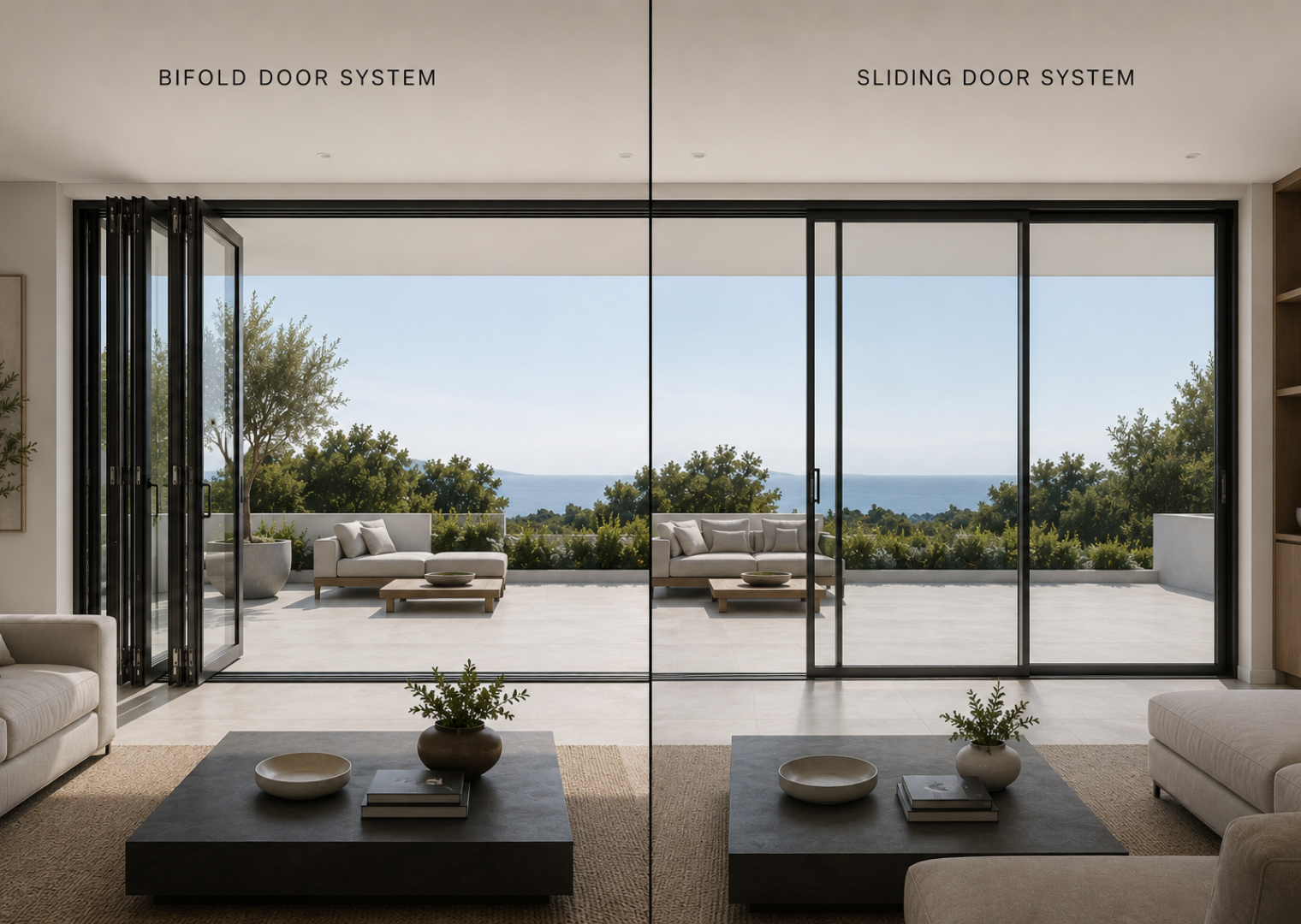
This is where bifold vs sliding doors differ the most. Bifold doors can open up almost the entire width of the opening, giving a true indoor-outdoor feel. Sliding doors typically only open to about half the total width, since one panel always has to overlap or sit behind another. If a fully open, wall-free look is the priority, bifold doors win; if the opening is very wide and a full opening isn’t essential, sliding doors are simpler.
Ventilation
Sliding doors make it easy to crack open just one panel for airflow without exposing the whole opening, which is useful for everyday ventilation. Bifold doors are more of an all-or-nothing system. While some designs include a single access door within the panel set, partial ventilation isn’t their strong point compared to a sliding door.
Weatherproofing and Sealing
Sliding doors generally have fewer seams and moving joints than bifold doors, which can make them slightly easier to seal tightly against wind and dust. Bifold doors have a seal at every hinge point, so quality hardware and installation matter more here: a well-made bifold door performs just as well, but a lower-quality one is more likely to develop draughts over time.
Aesthetics and Sightlines
Sliding doors offer cleaner, more minimal sightlines when closed, since there are fewer frame divisions. Bifold doors have more visible framing between panels, which some homeowners like for a more structured, architectural look, while others prefer the glass-heavy simplicity of a slider.
Cost
Bifold doors usually cost more than sliding doors of a similar width, mainly because of the additional hinges, panels, and folding hardware involved. Sliding doors, with their simpler track-and-panel design, tend to be the more budget-friendly option for openings where a full-width opening isn’t a must-have.
Maintenance
Sliding doors have fewer moving parts, so there’s generally less hardware to maintain over time. Bifold doors, with multiple hinges and rollers, need periodic checks to keep every panel folding smoothly, though quality aluminium hardware keeps this to an occasional adjustment rather than a real burden.
Security
Both bifold and sliding doors can be built with multi-point locking systems, laminated or toughened safety glass, and reinforced frames, so security largely comes down to hardware quality rather than the door style itself. That said, sliding doors have a single track and fewer locking points by design, so it’s worth confirming the locking mechanism meets your security needs, especially for ground-floor openings.
Durability and Lifespan
Sliding doors, with their simpler track-and-roller mechanism, tend to have fewer components that can wear out over time. Bifold doors have more hinges and rollers working together, so long-term durability depends heavily on hardware quality: a well-engineered bifold system with quality hinges will still perform smoothly for decades, while a budget system may start sticking or misaligning within a few years.
Bifold vs Sliding Doors: Pro and Cons
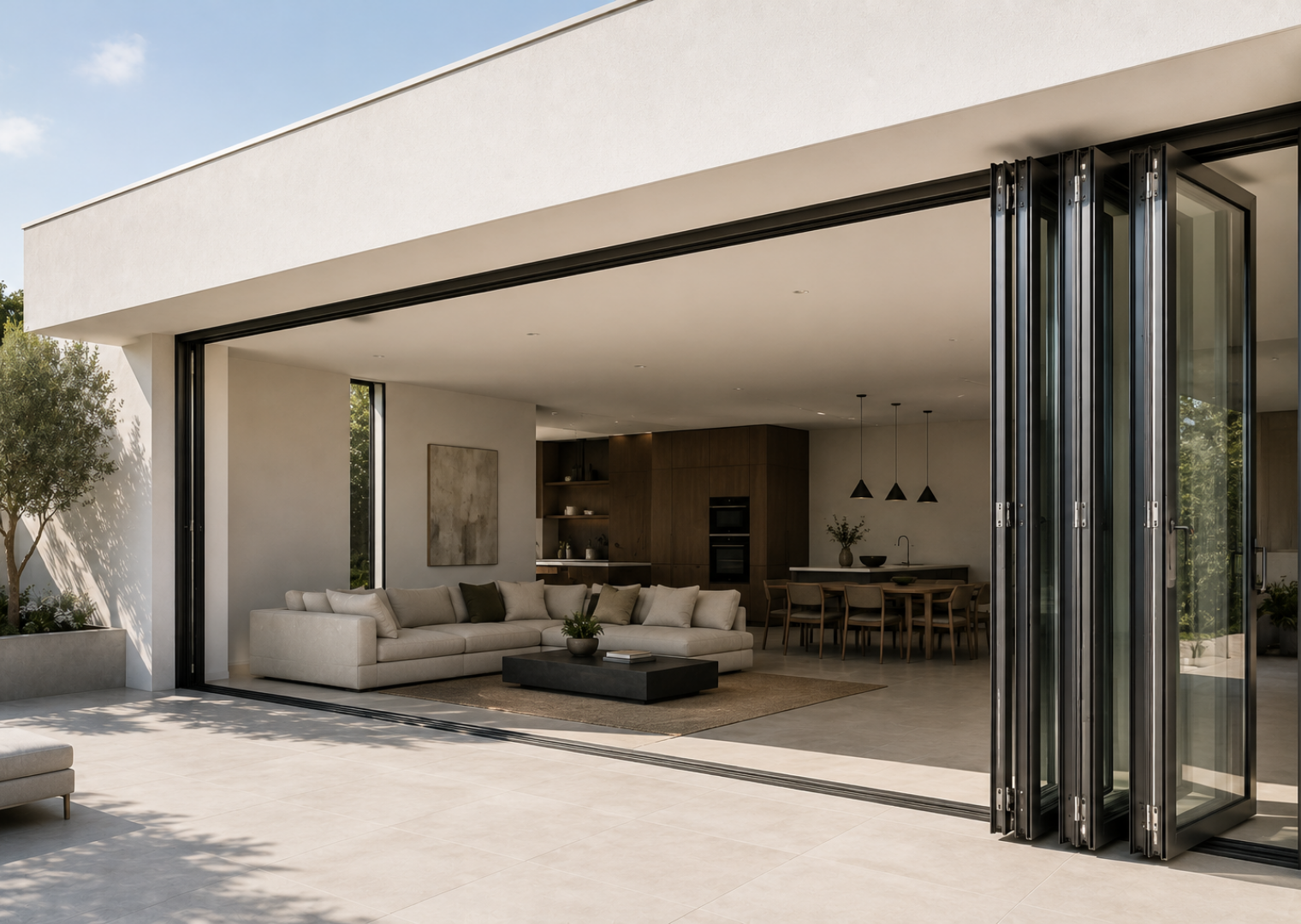
When comparing bifold vs sliding doors, the right choice depends on your opening size, available floor space, desired views, budget, and how you plan to use the room. Both options can provide excellent natural light, modern aesthetics, and a seamless connection between indoor and outdoor living areas, but they work in different ways. Bifold doors fold and stack their panels to the side, creating a much wider open aperture and making them ideal for entertaining, patios, gardens, and large indoor-outdoor openings. Sliding doors, on the other hand, move horizontally along a track and typically feature larger glass panels with slimmer sightlines, making them particularly attractive when panoramic views, maximum glazing, and space efficiency are the priority.
Bifold Doors
Pros
- Bifold doors are designed to create a wide, open connection between your home and outdoor space. Their folding-panel configuration can clear most of the opening when fully opened, making them a strong choice for indoor-outdoor living, entertaining, patios, terraces, and garden access.
- They are available in different panel configurations and can include a traffic door for convenient everyday access without opening the entire system.
- Modern aluminium bifold doors can also provide durable, low-maintenance frames, low thresholds, and good thermal performance when correctly specified with suitable glazing and hardware.
Cons
- The main drawback of bifold doors is that the panels need stacking space when they are opened, either inside or outside the property.
- They also have more vertical frame lines than sliding doors, which can slightly interrupt the view when the doors are closed.
- Depending on the number of panels, opening size, glass specification, hardware, and installation requirements, bifold doors can also become more complex and potentially more expensive.
- Oversized panels require careful consideration of glass weight, hinges, rollers, thermal performance, and overall system strength.
Sliding Doors
Pros
- Sliding doors are an excellent option for homeowners who want large glass areas, panoramic outdoor views, maximum natural light, and a space-saving door system.
- Because the panels slide horizontally rather than folding outward or inward, they require little additional room when opened.
- Modern aluminium sliding doors are often designed with slim sightlines and large glass panels, creating a clean, minimalist appearance while maximizing daylight. They are particularly suitable for wide openings where uninterrupted views of a garden, terrace, balcony, pool, or landscape are important.
Cons
- Standard sliding doors cannot normally open the entire width of the structural opening because the panels overlap or slide behind fixed panels.
- This means they provide excellent views but generally offer less direct access than fully opened bifold doors.
- Large-format sliding doors can also use heavy glass panels, so the quality of the rollers, tracks, hardware, glass specification, and installation becomes important for smooth and reliable operation.
- Oversized glass panels may also require additional care during installation, cleaning, maintenance, or replacement.
Which Is Better for Small Spaces?
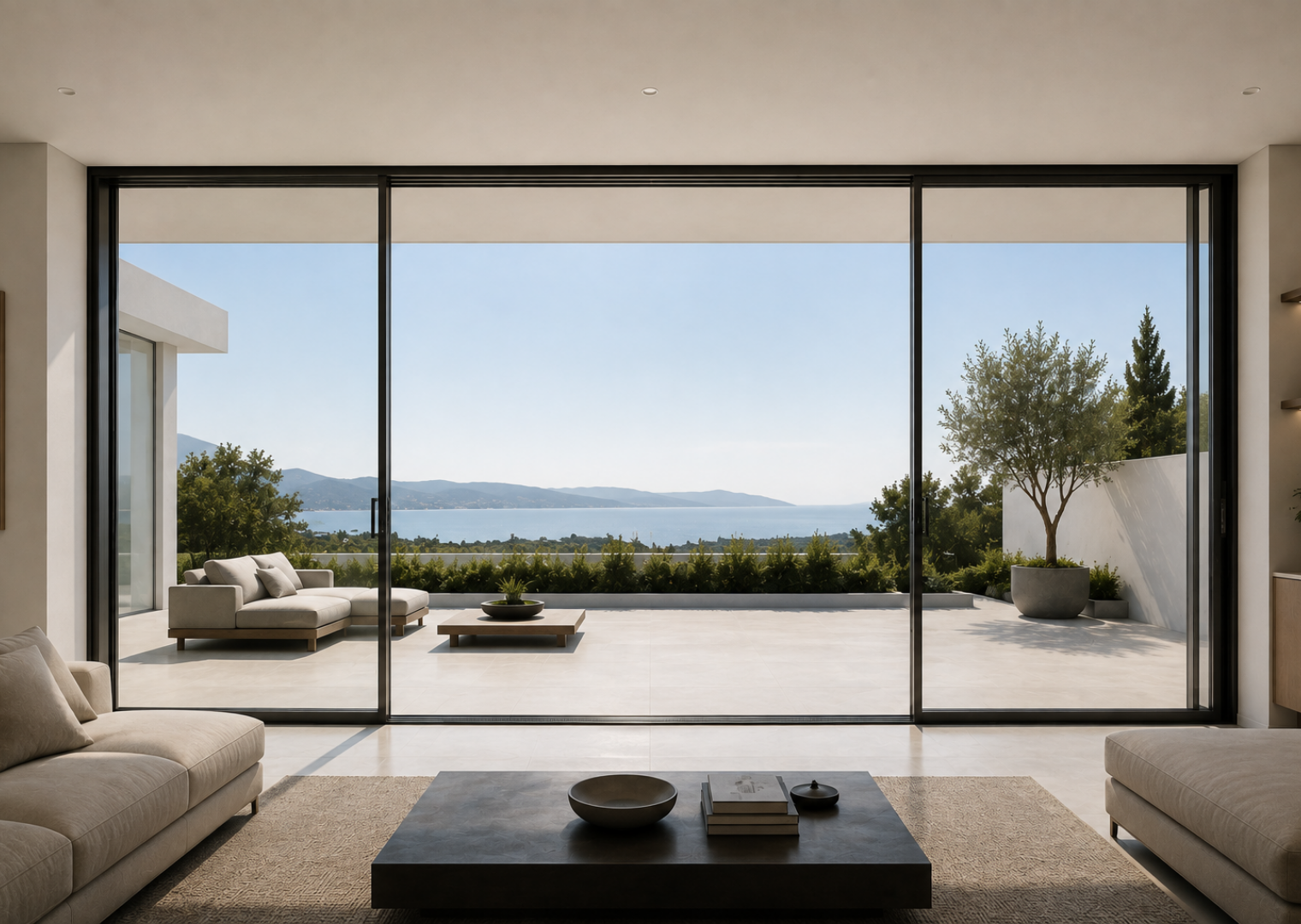
For small patios, balconies, or narrow openings, sliding doors are usually the more practical choice. Because the panels slide past each other instead of folding outward, they don’t need extra clearance on either side of the opening, which bifold doors typically do when fully stacked. If floor space, indoors or out, is limited, a sliding door setup makes better use of what’s available.
Which Is Better for a Full Indoor-Outdoor Opening?
If the goal is to fully open a room to a garden, terrace, or pool area, bifold doors are the stronger choice. Their ability to fold back and clear almost the entire opening makes them the standard pick for homeowners who want the option of removing the boundary between indoors and outdoors entirely, such as for entertaining or wide-open living spaces.
Bifold vs sliding doors: Which Should You Choose?
- Choose bifold doors if you want a fully open, wall-free connection to the outdoors and have the budget and space to support the folding panels.
- Choose sliding doors if you want easier everyday ventilation, a lower cost, and minimal sightlines, especially for narrower or space-limited openings.
- Consider your climate: sliding doors’ simpler seals can be an advantage in dusty or windy conditions, while a well-built bifold door still performs reliably with quality hardware.
- Think about daily use: if you open your doors fully only occasionally, a sliding door may serve you better day-to-day; if wide-open living is a daily habit, bifold doors are worth the investment.
Why Is Arqen the Best Choice for bifold vs sliding doors?
Whichever way you lean in the bifold vs sliding doors decision, the door’s real-world performance comes down to who builds and installs it. Arqen Industries manufactures both bifold and sliding aluminium door systems in-house, so the comparison above isn’t just theory. It’s backed by hardware and profiles built to hold up under daily use. Here’s what sets Arqen apart:
- Decades of aluminium door expertise: Arqen’s background spans over 60 years in construction and architectural aluminium, with dedicated experience in doors, windows, curtain walls, and facade systems, so both the bifold and sliding ranges are engineered by a team that specialises in exactly this product category.
- European-engineered profile systems: Arqen’s bifold and sliding doors are built on European-engineered aluminium profiles, giving both product lines the tight tolerances, smooth operation, and durability expected of premium architectural door systems.
- Hardware built for heavy daily use: Because bifold doors rely on hinges and rollers, and sliding doors rely on their track system, Arqen sources and tests hardware specifically rated for frequent opening and closing, so panels keep gliding and folding smoothly for years, not just at handover.
- Engineered for the UAE’s climate: Whether it’s the multiple seals on a bifold panel or the track seals on a sliding door, Arqen designs both systems to resist heat, humidity, and dust infiltration rather than relying on a generic, imported specification.
- Custom sizing and configuration: Arqen fabricates both bifold and sliding doors to the exact width, panel count, and glazing specification your opening needs, rather than limiting you to a handful of standard sizes.
- Backed by a 20-year warranty: Every Arqen door system, bifold or sliding, is backed by a 20-year structural warranty, giving homeowners and developers long-term confidence in the choice they make.
- In-house manufacturing and quality control: Because Arqen fabricates its own aluminium components rather than outsourcing production, every bifold and sliding door goes through the same quality checks, resulting in a tighter fit, quieter operation, and a longer-lasting finish.
If you’re still weighing bifold vs sliding doors for your project, Arqen’s team can walk through your opening dimensions, budget, and how you plan to use the space, and recommend the system that will genuinely perform best, rather than pushing whichever product is easiest to sell.
Frequently Asked Questions About Bifold vs Sliding Doors
Are bifold doors more expensive than sliding doors?
Yes, bifold doors are generally more expensive than sliding doors of a similar width, due to the extra hinges, panels, and folding hardware required to make them work smoothly.
Which is better for ventilation, bifold vs sliding doors?
Sliding doors are generally better for everyday ventilation, since a single panel can be opened partway without exposing the entire opening. Bifold doors are more of an all-or-nothing system unless a dedicated access door is built into the design.
Do bifold doors let in more light than sliding doors?
Both styles let in significant natural light, but sliding doors often have slightly larger uninterrupted glass panels with fewer frame divisions, giving marginally cleaner sightlines when closed.
Can bifold doors be used in small spaces?
Bifold doors can be used in small spaces, but they need clearance on the side where the panels stack when open. Sliding doors are usually the more space-efficient choice for tighter openings.
Which door type is more weather-resistant, bifold or sliding?
Sliding doors typically have fewer seams and are slightly easier to seal tightly, but a well-engineered bifold door with quality hardware and gaskets can perform just as well against wind, dust, and rain.
Final Thoughts
There’s no single winner in the bifold vs sliding doors debate. It comes down to how you plan to use the opening. Bifold doors are built for a fully open, indoor-outdoor lifestyle, while sliding doors offer easier daily ventilation, cleaner sightlines, and a lower cost for narrower or budget-conscious projects. Matching the door type to your space, climate, and daily habits is what actually determines which one is right for your home.
Not sure which option fits your project? Get a free consultation: