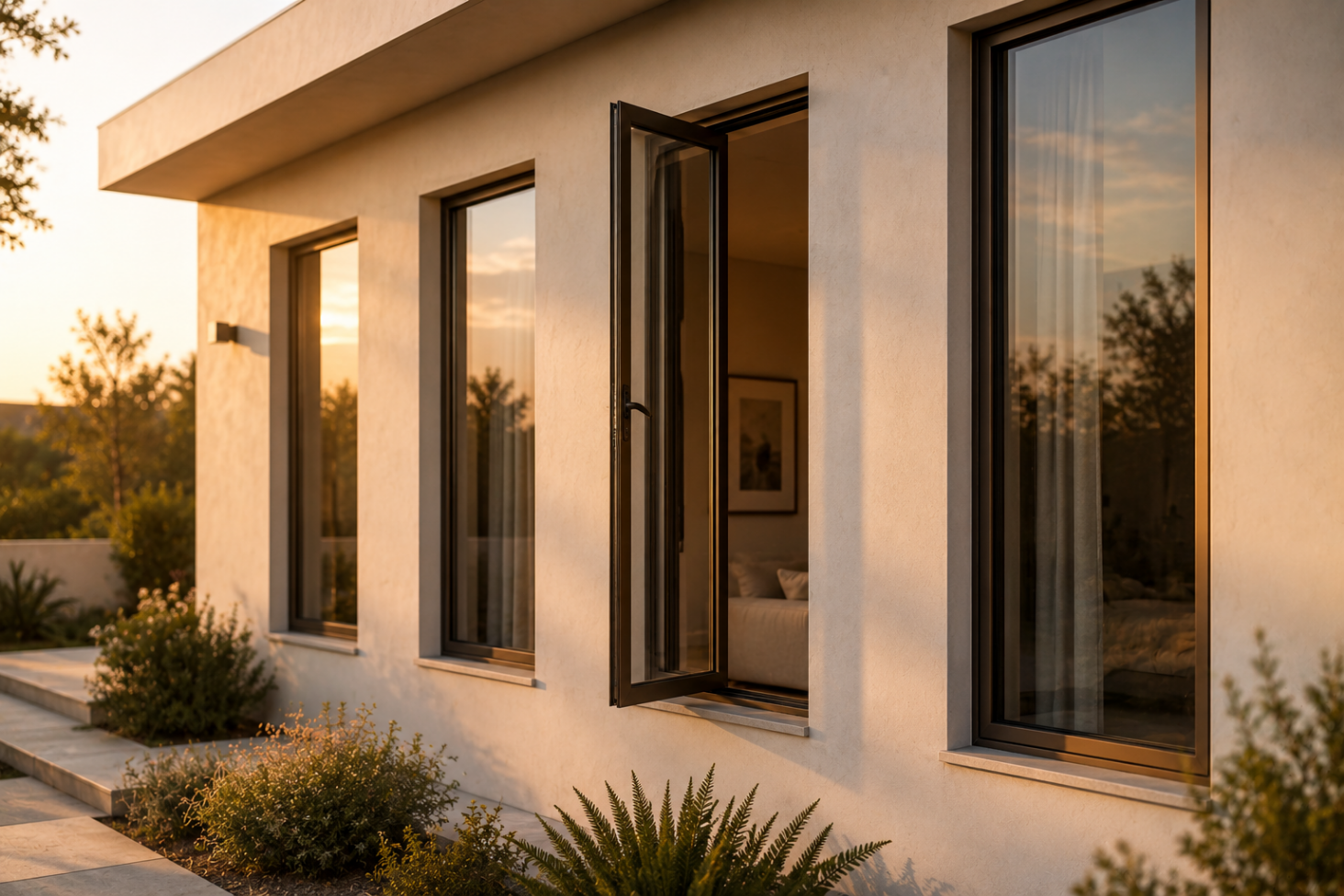
What are aluminium casement windows and why do they matter so much?
A contractor once told me he could always spot a badly specified casement window from across a room, not by looking at the glass, but by watching how someone opened it. If the handle sticks, or the sash drops slightly before it swings, something upstream in the specification went wrong. It’s a small detail, but it says a lot about how Aluminium Casement Windows actually work, and why getting them right matters more than most people assume when they’re just comparing window styles on paper.
An aluminium casement window is, at its core, a window with a sash hinged on one side that swings outward, opened and closed using a crank handle connected to a gear mechanism. That sounds simple, and mechanically it is. But the reason aluminium casement has become the standard choice across so many new builds in the region isn’t the mechanism itself, it’s what aluminium as a frame material allows that mechanism to do.
This guide walks through what an aluminium-casement-windows actually is, how the mechanism works, why it’s become the preferred option over timber and uPVC alternatives, and what to actually check before specifying one for a project.
What Is an aluminium-casement-windows?
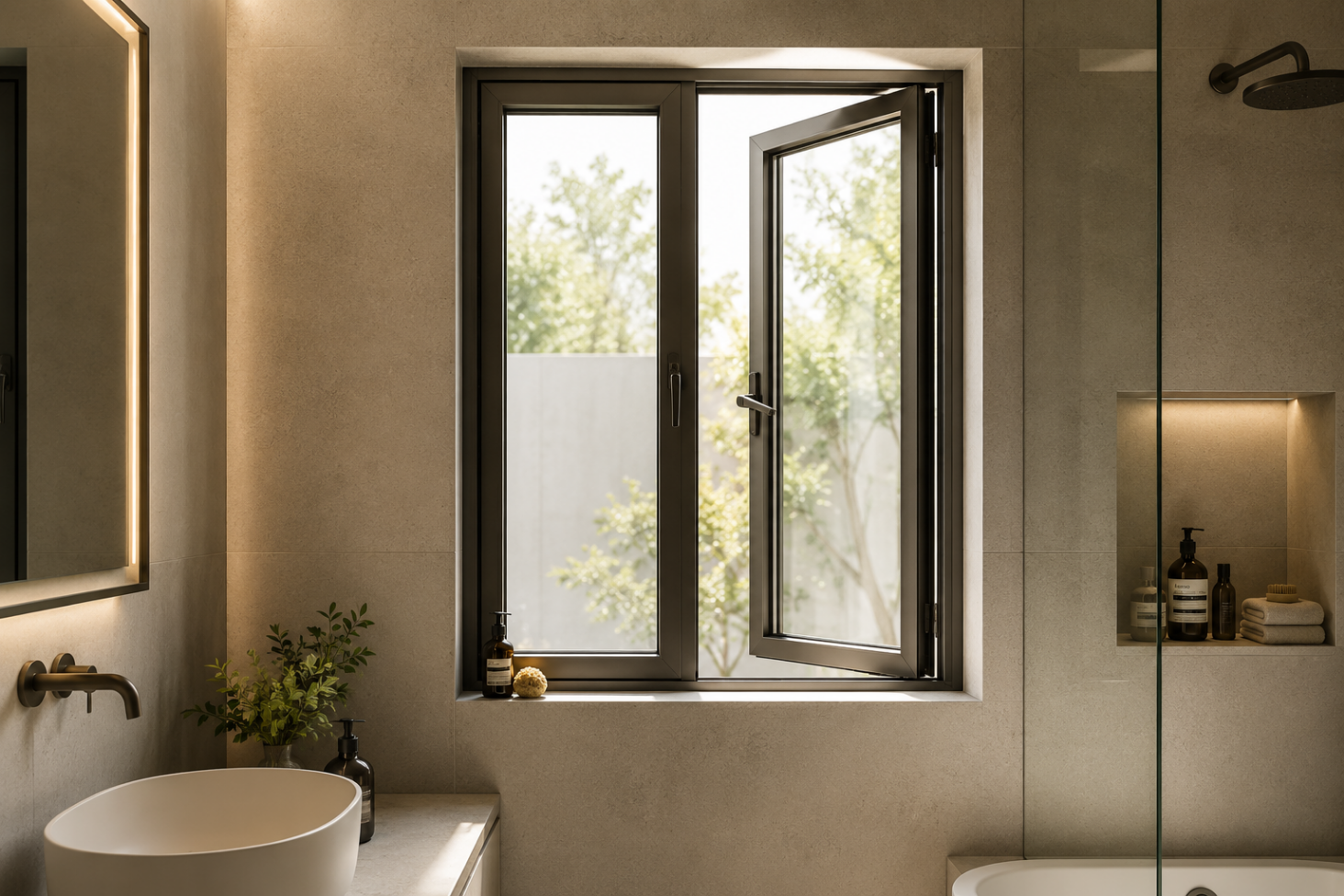
The word casement refers purely to the opening style, a side-hinged sash that swings out like a door, as opposed to sliding horizontally or tilting from the top. Aluminium refers to the frame material holding that sash in place. Put the two together and you get a window that combines full-opening ventilation with a frame that can be manufactured far slimmer than timber or uPVC equivalents, without giving up structural strength.
That slimness isn’t a cosmetic bonus. It’s a direct result of aluminium’s strength-to-weight ratio, which allows manufacturers to hold large glass panels within a narrower profile than would be possible with a bulkier material. For architects working on facades where glass-to-frame ratio actually matters to the design, that difference shows up immediately, especially on elevations where large, uninterrupted glazing is part of the brief.
Aluminium Casement Windows and Other Opening Styles
It’s easy to lump all window types together until you actually need one to perform a specific job. A sliding window moves horizontally within a track and never fully opens the airway, since part of the frame always overlaps. A tilt-and-turn window can swing inward or tilt from the top, offering flexibility but usually at a higher hardware cost. A casement window swings fully outward on hinges, which means when it’s open, the entire opening is genuinely clear, nothing overlapping, nothing partially blocking airflow.
That full clearance is part of why casement remains one of the most specified window types for rooms where ventilation control actually matters, kitchens, bathrooms, and any space where you want the option of a full breeze rather than a partial gap.
How the aluminium-casement-windows Mechanism Actually Works
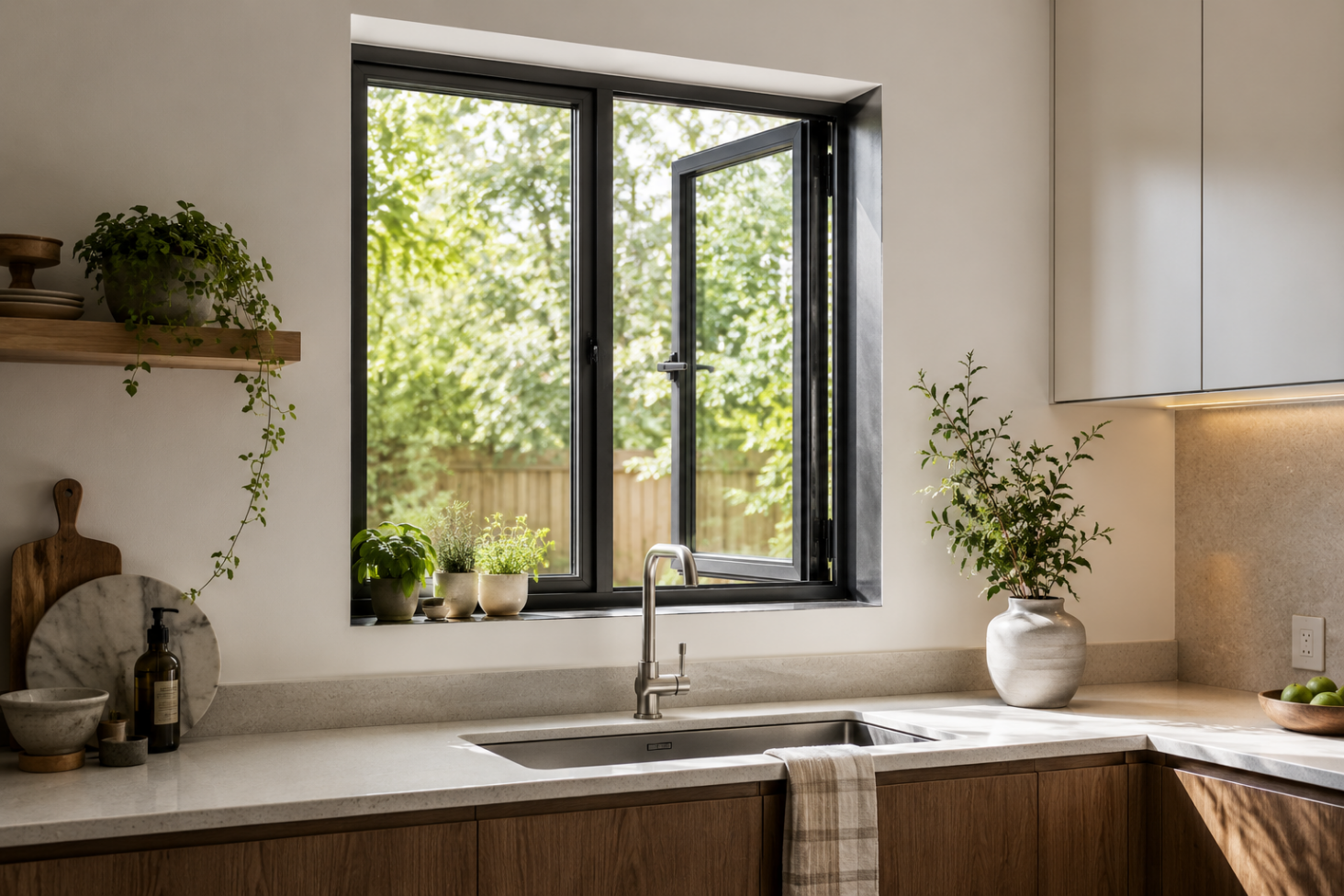
It’s worth understanding the moving parts, since most of the issues that show up later in a window’s life trace back to this stage of specification and installation.
The Frame
The frame is fixed into the wall opening and forms the fixed structure the rest of the system attaches to. It carries the full structural load of the window, including wind pressure, the weight of the sash and glass, and the forces applied every time someone operates the handle.
The Sash
The sash holds the glass and is connected to the frame by hinges, almost always along one vertical edge. The quality of the hinge, and how well it’s set into both the sash and frame, determines whether the window continues to close cleanly after years of daily use or starts to drop and misalign.
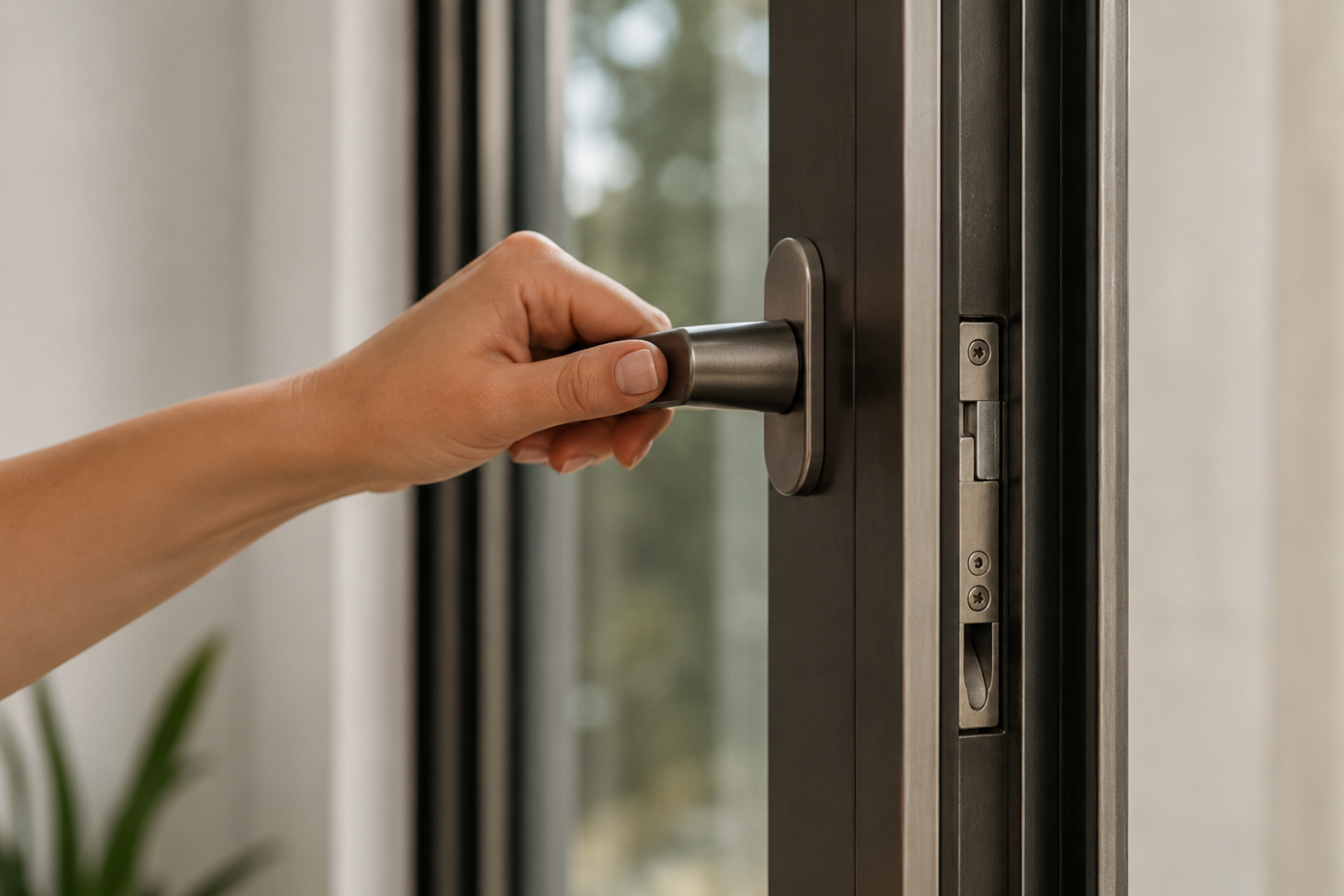
The Crank Handle and Gear Mechanism
The crank handle turns a gear arm that pushes the sash outward in a smooth, controlled arc rather than a sudden swing. This is the part most people interact with daily, and it’s also the first place wear becomes noticeable if the underlying gear mechanism was a lower-quality spec.
The Locking System
The locking mechanism, in most quality systems, engages at multiple points along the frame the moment the handle is turned to the closed position, rather than relying on a single latch. Multi-point locking distributes pressure more evenly around the frame, which improves both the security of the window and the quality of the seal when closed.
Because the sash presses directly against the frame’s seal when closed, rather than sliding past it, a properly installed casement window generally seals tighter against dust, wind, and water than a sliding equivalent. That tighter seal is part of why casement has become the preferred choice for buildings dealing with fine airborne dust, which is a fairly constant condition in this region rather than an occasional inconvenience.
Why Aluminium Casement Windows Are the Default Choice in the UAE
A few years back, timber and uPVC casement windows were still common on residential projects. That’s shifted noticeably, and it’s not really about trend, it’s about what actually holds up under real conditions over years, not just what looks good in a showroom.
Durability Against Heat, Humidity, and Dust
Aluminium doesn’t warp, swell, or rot the way timber can under sustained heat and humidity swings. It doesn’t discolor or soften under prolonged UV exposure the way some uPVC frames eventually do. And because it forms a natural oxide layer, it resists corrosion in coastal and high-humidity conditions far better than most alternatives, without needing the repainting or resealing that timber frames eventually demand.
Thermal Performance Has Genuinely Improved
The thermal performance argument used to cut against aluminium, since metal conducts heat more readily than timber or uPVC on its own. That’s largely resolved now through thermal break technology, an insulating barrier built into the profile between the interior and exterior sections of the frame, which stops heat transferring directly through the metal. Paired with double or triple glazing, a properly specified aluminium casement window performs close to, and in some cases better than, its non-metal equivalents, while keeping the slimmer sightline aluminium is known for.
Low Maintenance Over a Long Lifespan
A quick wipe with soap and water is generally all an aluminium casement frame needs to keep looking new. There’s no sanding, no repainting cycle, and no ongoing concern about moisture-related swelling or rot. Quality powder-coated or anodized finishes are designed to hold their color and protective properties for decades under sustained sun exposure.
Aluminium Casement Windows vs the Alternatives
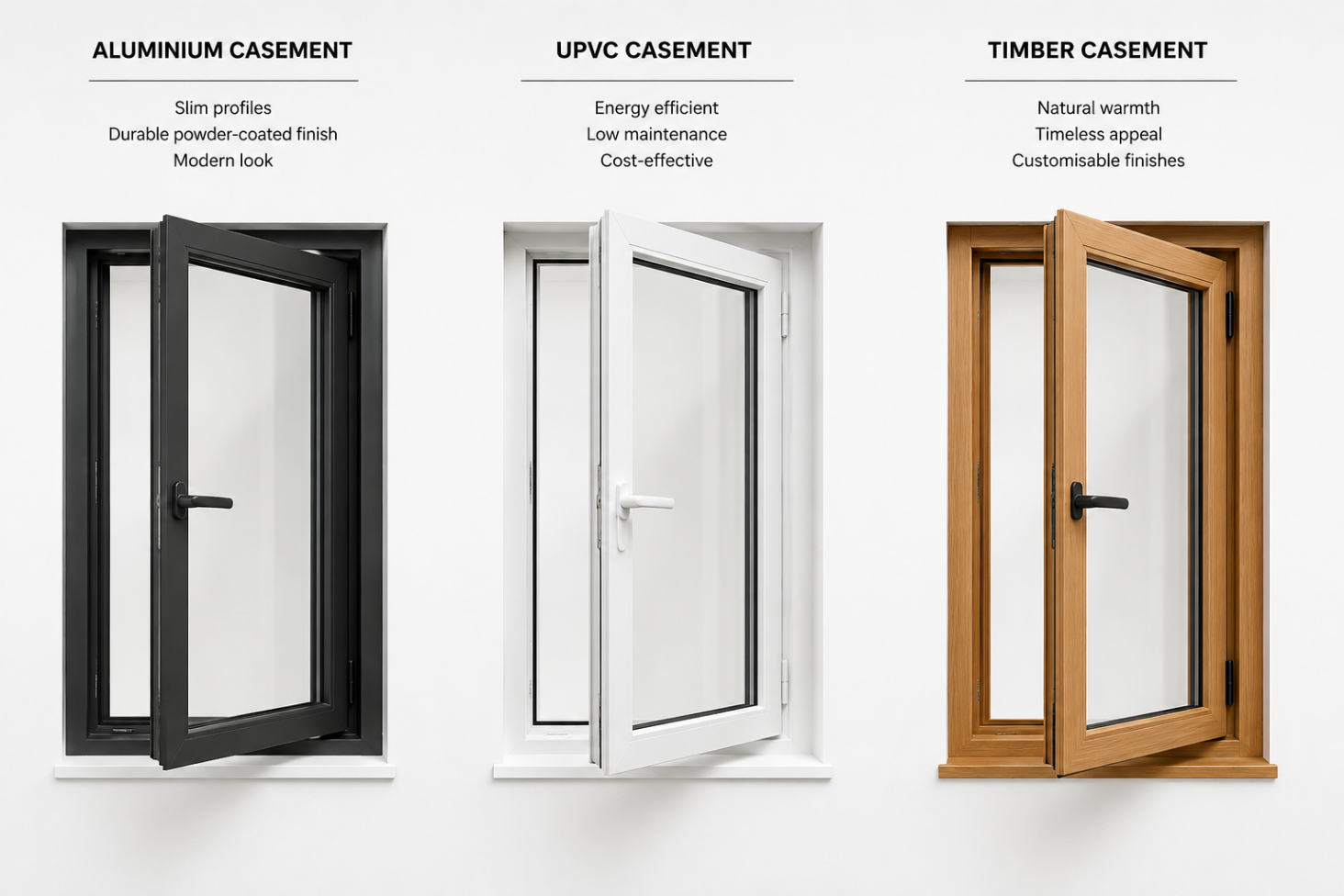
It helps to see this next to what people usually compare it against before making a final decision.
Aluminium Casement vs uPVC Casement
uPVC costs less upfront and insulates reasonably well, but it can’t match aluminium’s strength-to-weight ratio, which means bulkier frames for the same size opening. Over time, uPVC is also more prone to visible discoloration under intense, sustained sun exposure, and it typically doesn’t hold up as long structurally.
Aluminium Casement vs Sliding Windows
Sliding systems save space since the sash doesn’t swing outward, which matters in tight balcony or corridor situations. Casement windows generally offer better ventilation control and a tighter seal when fully closed, since the sash compresses directly against the frame rather than running along a track that can accumulate dust and debris over time.
Aluminium Casement vs Timber Casement
Timber has an undeniable warmth to it, and some clients specifically want that look for interior character. But it demands regular maintenance in this climate, repainting, resealing, checking for swelling, none of which aluminium requires. Wood-effect powder coating finishes now get remarkably close to that aesthetic without the ongoing upkeep timber demands.
Where Aluminium Casement Windows Make the Most Sense
- Villas and low-rise residential builds where ventilation control matters as much as the view
- Coastal or high-humidity properties where corrosion resistance is a genuine long-term concern, not just a spec sheet checkbox
- Commercial and hospitality projects that need a durable, low-maintenance window solution across dozens or hundreds of units
- Renovation projects replacing aging timber or steel casement frames without altering the original opening style
- Kitchens and bathrooms where full, unobstructed ventilation is a practical requirement rather than a design preference
What to Check Before Choosing Aluminium Casement Windows
- Ask whether the thermal break is a genuine polyamide barrier, not just a thin insulating strip inserted for the spec sheet
- Confirm the glazing option, double glazing is standard, triple glazing may be worth the extra cost in particularly exposed locations
- Test the hardware in person if possible, the crank mechanism and lock should feel solid and consistent, not loose or plasticky
- Ask about the finish warranty, powder coating and anodizing both protect against corrosion, but coverage periods vary between suppliers
- Check the wind load and water tightness certification relevant to your building’s height and exposure, especially for anything above a few storeys
- Confirm hinge quality and rated cycle count, since this is usually where lower-cost systems fail first
Aluminium Casement Windows by Arqen Industries
At Arqen Industries, our aluminium casement systems are specified for the conditions this region actually presents, sustained heat, fine airborne dust, and the occasional shamal wind event, rather than adapted from a profile built for a milder climate elsewhere. That means a genuine thermal break as standard, multi-point locking hardware rated for daily use, and frames tested to wind load and water tightness standards appropriate for the UAE.
We work directly with architects, contractors, and developers across residential and commercial projects to figure out where casement is the right opening style for a given facade, and where a different system might actually serve the project better. That conversation is worth having at the design stage, since it affects glazing choice, frame sizing, and overall facade budget together.
Frequently Asked Questions
Is aluminium casement better than uPVC?
Aluminium generally offers a stronger frame at a slimmer profile, along with better long-term durability in heat and humidity. uPVC can be a more budget-friendly option upfront, but it typically needs replacing sooner in this kind of climate.
Do aluminium casement windows rust?
Aluminium doesn’t rust the way steel or iron does. It naturally forms a protective oxide layer, and a quality powder-coated or anodized finish adds a further layer of protection against corrosion.
Are aluminium casement windows energy efficient?
Yes, when manufactured with a genuine thermal break and paired with double or triple glazing, aluminium casement windows can match or exceed the energy performance of most other frame materials on the market.
How long do aluminium casement windows last?
With correct installation and basic upkeep, a well-specified aluminium casement window can reasonably last 30 to 40 years or more before replacement becomes necessary.
Can aluminium casement windows be customized for different facade designs?
Yes. Aluminium’s malleability allows for a wide range of profile shapes, finishes, and sizes, which is part of why it suits both traditional and highly contemporary facade designs without compromising on performance.
Considering Aluminium Casement Windows for Your Project?
Whether you’re specifying windows for a new villa, upgrading an aging facade, or planning a commercial build that needs to perform under this region’s conditions for decades, our team at Arqen Industries can help you work out whether aluminium casement is the right fit for your space and budget.
Get in touch for a free consultation visit arqenindustries.com or reach out to our team directly. We’re happy to talk through your project.