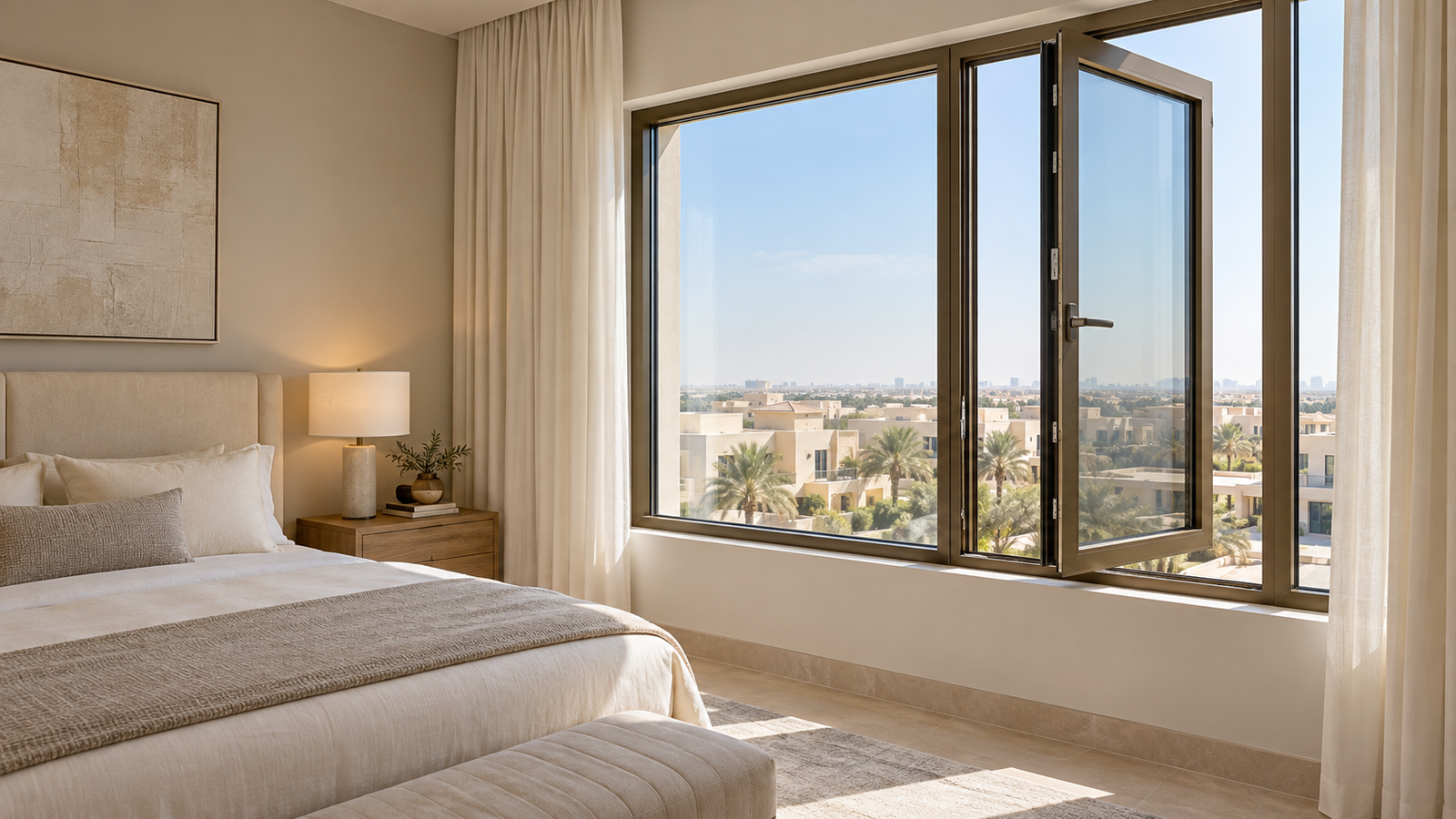
Aluminium Windows UAE | Durable & Modern Window Solutions
Choosing aluminium windows UAE for a home or a commercial building in the UAE is not just about looks. Heat, humidity, sand, and salt air all put real pressure on a window’s frame, seals, and glass over time, and a window that is not built for this climate will show it within a few years through worn seals, sticking sashes, or discoloured frames. This guide walks through what actually matters when choosing aluminium windows for a UAE project, from frame construction to glazing to ventilation style, using Arqen Industries’ own window range, the ARQEN Window System, as a working example throughout.
This is a buyer’s guide, not a spec sheet for a single product, so where a claim is specific to ARQEN it is labelled as such, and general advice applies whichever supplier you end up choosing.
Why the Right Aluminium Window Matters in the UAE
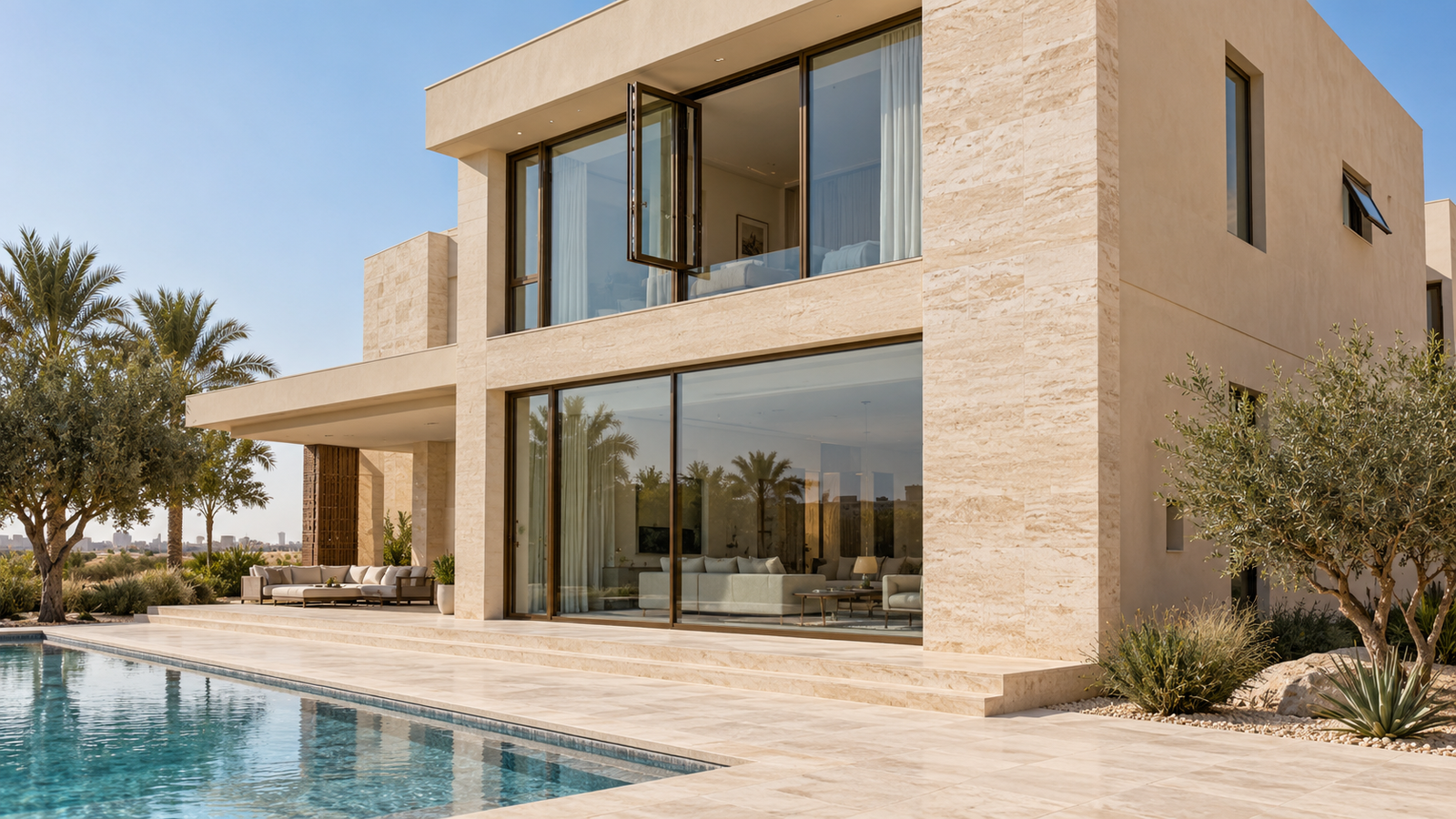
Aluminium is already a sensible base material for this climate: it does not rot, warp, or attract termites the way timber can, and it holds up to UV exposure better than most uPVC. But not all aluminium windows perform the same way once installed. The two features that separate a window built for the UAE from a generic import are the thermal break in the frame and the quality of the perimeter seal.
- A thermal break interrupts the direct path for heat to move through the aluminium frame, which reduces the load on air conditioning and keeps interior surfaces closer to room temperature.
- A well-engineered seal keeps out dust and sand during summer wind events and resists the corrosion that coastal humidity and salt air can accelerate on lower-quality finishes.
- Consistent manufacturing tolerances matter for how smoothly hardware continues to operate after the first year, not just how the window performs on day one.
ARQEN builds its window range around these three points specifically, using thermal break profiles, corrosion-resistant finishes, and manufacturing to European-engineered tolerances across the range.
Types of Aluminium Windows to Consider
Aluminium windows generally fall into a handful of operating styles, and the right one depends on the room, not a single best answer across a whole project. Sliding and minimal sliding windows are also part of ARQEN’s broader product range and are worth a look if a space-saving, wide-opening format is what a project needs. This guide focuses on the four configurations below, since they cover most of the day-to-day decisions a homeowner or specifier needs to make room by room.
Fixed Windows
Fixed windows do not open. They are built purely for light and views, which makes them a common choice for large glass walls, feature windows, or areas where ventilation is already handled by an adjacent opening window. Because there are no moving parts, a well-sealed fixed window offers strong air and water tightness and a very slim sightline. ARQEN’s version of this, the ARQEN Fixed Window System, follows this same approach.
Awning Windows
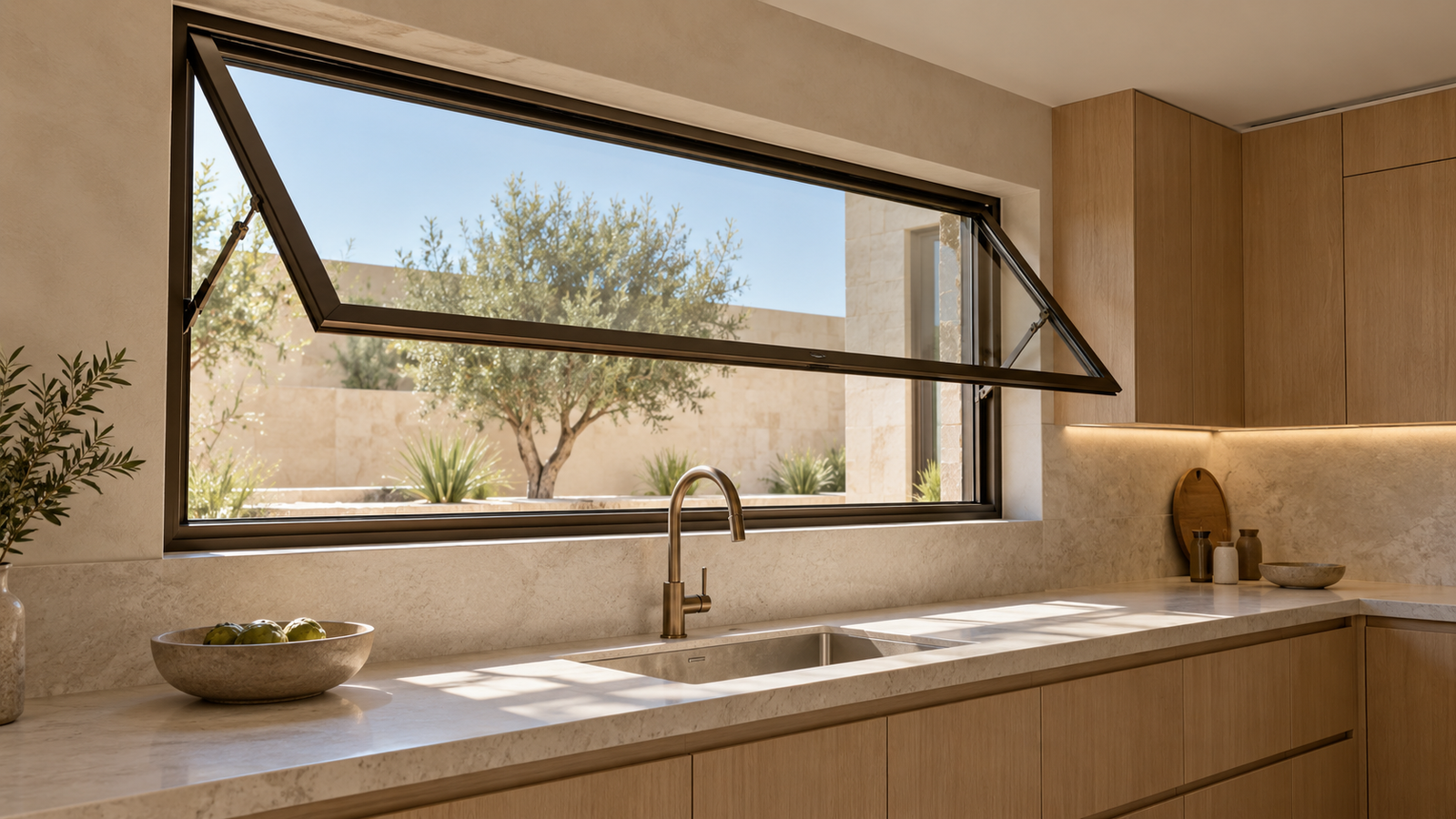
Awning windows are hinged at the top and open outward from the bottom. Because the sash tilts outward rather than swinging inward, it can often stay open for ventilation during light rain, though how much protection that gives depends on wind direction and how exposed the opening is; in gusty or driving rain, water can still get in. Awning windows are commonly specified for bathrooms, kitchens, and spaces where regular ventilation matters. See the ARQEN Awning Window System for ARQEN’s version of this configuration.
Casement Windows
Casement windows are hinged at the side and swing open like a door, using a crank or lever handle. This gives close to full unobstructed airflow when open and, because the crank mechanism draws the sash firmly against the frame, a tight seal when closed. It is one of the most commonly specified configurations for villas and apartments. See the ARQEN Casement Window System for details.
Tilt and Turn Windows
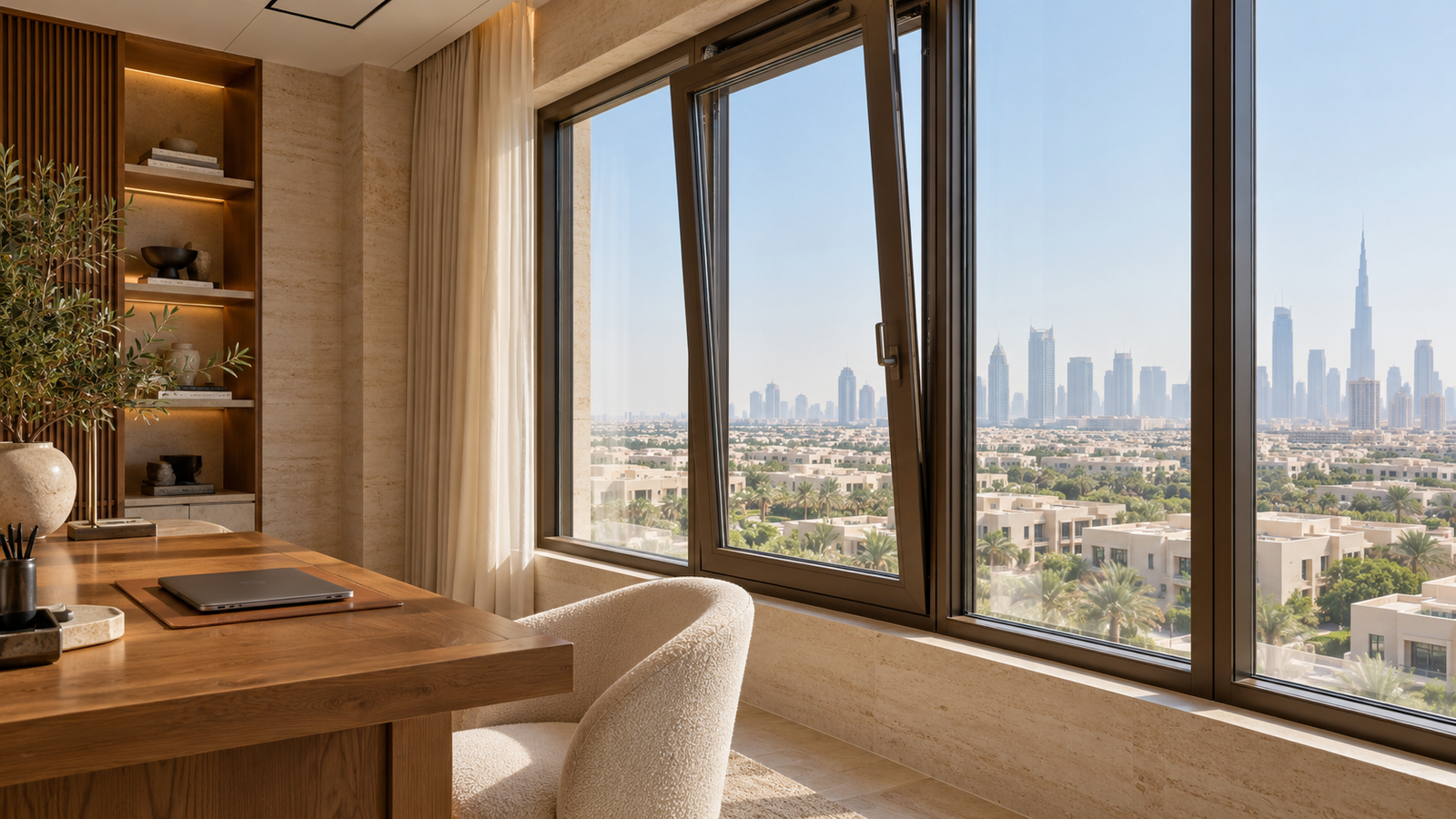
Tilt and turn windows offer two opening modes from a single handle: tilt inward from the top for gentle ventilation, or turn fully inward like a door for cleaning and full airflow. This makes them a practical choice for upper floor apartments and villas where cleaning the outer glass surface from inside the room matters. ARQEN Tilt and Turn Window System is built around this two-mode design.
Window Types at a Glance
| Configuration | Opening Style | Best Suited For |
| Fixed | Does not open | Feature glazing, large glass walls |
| Awning | Hinged top, opens outward | Bathrooms, kitchens, regular venting |
| Casement | Hinged side, swings open | Villas, apartments, full airflow |
| Tilt and Turn | Tilts or swings fully inward | Upper floors, easy-clean access |
Choosing the Right Configuration for Your Project
Start with ventilation needs. If a room needs regular airflow, awning, casement, or tilt and turn are the options to weigh against each other; if full open access matters more, casement or tilt and turn tend to win out. For large, view-focused openings where ventilation is already covered elsewhere, fixed panels keep the sightlines clean.
Next, factor in maintenance access. Tilt and turn windows are worth considering on upper floors specifically because the outer glass can be cleaned from inside the room. Finally, think about the facade as a whole: most real projects combine configurations, for example fixed panels alongside casement or awning units, to balance daylight, ventilation, and design across the same elevation.
Glazing: The Other Half of the Decision
The frame is only half of what determines how a window performs. Picking the right glazing has a real effect on comfort and running costs.
- Single glazed: the most economical option, suitable for internal partitions or spaces where thermal performance is less critical.
- Double glazed: two panes with a sealed gap in between, reducing heat transfer and helping ease the load on air conditioning.
- Solar control glass: a coated glass that reflects a portion of solar heat and glare before it enters the building, worth considering on west and south facing elevations.
- Acoustic glass: laminated glazing that reduces noise transfer, useful for units facing busy roads or construction zones.
- Laminated safety glass: adds impact resistance and holds together if cracked, often specified for ground floor units.
Glazing choice should be matched to orientation and noise exposure project by project rather than applied uniformly across a building; a west-facing wall in direct sun has different needs than a shaded north-facing one.
How Aluminium Windows Are Installed
Installation broadly follows the same sequence regardless of configuration, though hardware and sealing steps vary by type.
- Site measurement and survey, accounting for any variance in the rough opening before manufacturing begins.
- Manufacturing to spec, with frames cut, joined, and fitted with hardware to match the exact opening dimensions.
- Frame fixing: the window is set into the opening, levelled, and anchored so it stays square.
- Sealing and weatherproofing between the frame and the surrounding structure, which has an outsized impact on long-term performance.
- Glazing and hardware fitting, followed by a final check of opening and closing action, lock engagement, and seal continuity.
Actual installation time varies with the number of openings, access, and whether it is new construction or a retrofit, so ask your supplier for a project-specific timeline rather than assuming a fixed figure applies.
Maintaining Aluminium Windows
Aluminium windows are generally low maintenance compared to timber or uPVC, but they are not maintenance free, especially in a climate that deposits dust and salt on exterior surfaces year round.
- Wipe down frames and tracks periodically to prevent sand and dust buildup, which is a common cause of stiffer opening action and worn seals over time.
- Clean glass with a non-abrasive cleaner, avoiding harsh solvents that can degrade seals or coatings.
- On opening configurations, have hinges and locking hardware checked periodically as part of routine upkeep; ask your supplier for the recommended service interval for your specific hardware.
- Inspect weatherstripping periodically and flag any cracking or gaps early, since a failed seal is cheaper to replace than the water damage it can eventually cause.
- Rinse coastal-facing units more frequently to reduce salt deposit buildup on frames and hardware.
What Affects Pricing
Pricing for aluminium windows depends on more than just the configuration chosen. A few factors consistently move cost up or down:
- Size and quantity: larger openings and higher unit counts affect both material cost and production efficiency.
- Configuration: fixed panels are generally the most cost-efficient since they have no operating hardware, while tilt and turn tends to sit at the higher end due to the dual-action mechanism.
- Glazing choice: stepping up from single to double glazed, or adding solar control or acoustic glass, increases cost but also improves comfort.
- Finish and colour: standard powder-coated finishes are more economical than custom RAL colours.
- Access and installation complexity: high-rise or retrofit installations with restricted access typically cost more than straightforward new-build openings.
The most reliable way to get an accurate number is a project-specific quote, since window pricing is rarely a simple per-square-metre figure once configuration and glazing are factored in.
Common Mistakes to Avoid
- Choosing purely on upfront price without checking the glazing specification, since a cheaper single-glazed unit can cost more in running costs over time.
- Ignoring orientation, and using the same glazing on a west-facing wall as on a shaded north-facing wall.
- Ordering fixed panels for rooms that actually need regular ventilation.
- Skipping proper sealing detail at the frame-to-structure junction, a common source of water ingress complaints.
- Overlooking maintenance access, particularly for tilt and turn or awning units on upper floors.
Security Considerations
Security is worth checking rather than assuming. Many aluminium window systems, including ARQEN’s opening configurations, offer multi-point locking as standard on some models and as an upgrade on others; ask your supplier to confirm which locking hardware is standard for the specific configuration you are ordering, rather than assuming it is uniform across a whole range.
- Multi-point locking engages the sash at several points rather than a single latch, which raises the effort required for forced entry.
- Reinforced hinges rated for the glass weight help prevent the sagging that can create exploitable gaps over time.
- Laminated safety glass is an option worth considering for ground-floor units where impact resistance adds a layer of protection.
None of this replaces a full building security plan, but confirming the hardware spec upfront means the windows are not the weak point in that plan.
Customisation Options
- Frame colour: standard powder-coated finishes cover most palettes, with custom RAL colour matching available for projects matching a specific facade scheme.
- Profile depth and sightlines: slimmer sightlines for a minimal, glass-forward look, or deeper profiles for larger openings needing more rigidity.
- Hardware finish: handles and locking hardware can be specified to match interior fittings.
- Grille and division bars: available for projects referencing a more traditional design language.
A short, real installation example does more to build trust than a general claim, and it lets readers see the configuration and glazing spec that produced the result, rather than a number with no context behind it.
Why ARQEN
Arqen Industries brings more than 60 years of legacy in aluminium fabrication to every window that leaves the factory. Profiles are European engineered, and the ARQEN Window System is backed by a manufacturer’s warranty; ask your ARQEN representative for the current warranty term and exactly what it covers before you order, since coverage can vary by component.
Frequently Asked Questions
What should I look for when choosing aluminium windows in the UAE?
Check for a thermal break in the frame, a well-engineered perimeter seal, glazing matched to the wall’s sun exposure, and confirmed warranty coverage. These four factors have the biggest effect on how a window performs after the first year or two.
Which window configuration is best for ventilation?
Casement and tilt and turn generally give the widest opening and the most airflow. Awning windows are a reasonable choice where regular ventilation matters, though how much rain protection they offer while open depends on wind and exposure.
Are aluminium windows suitable for coastal or high humidity areas in the UAE?
Yes, provided the finish is chosen for corrosion resistance. ARQEN’s finishes are selected with coastal humidity and salt exposure in mind, which is worth confirming with any supplier for a coastal project.
Does the ARQEN Window System come with a warranty?
ARQEN’s window range is backed by a manufacturer’s warranty. Ask your ARQEN representative for the current term and exactly what it covers before ordering.
Can different window types be combined on the same building?
Yes, this is common practice. Fixed panels are often paired with an opening configuration such as casement or awning on the same elevation to balance daylight and views with ventilation.
How much do aluminium windows cost in the UAE?
Pricing depends on configuration, size, glazing choice, and finish. Fixed panels tend to be the most cost-efficient, while tilt and turn sits higher due to its dual-action hardware. A project-specific quote is the most accurate way to get a number.
Get a Specification and Quote
Whether the project calls for fixed glazing, easy-clean tilt and turn units, ventilated awning windows, or full-opening casement windows, ARQEN’s range covers the configuration. Share your opening dimensions, project location, preferred window types, and glazing requirements with the team to get a suitable specification and quote: get in touch with Arqen Industries.
3 Comments
Tilt and Turn Windows UAE | Modern & Energy Efficient
October 1, 2026
[…] Arqen Industries manufactures its tilt and turn system as part of its wider aluminium window range. Warranty coverage should be confirmed and stated precisely by component, and the company’s background described using ARQEN’s approved wording. […]
Fixed Aluminium Windows UAE | Modern & Durable Windows
October 1, 2026
[…] vs. steel: steel framing can achieve very slim sightlines similar to structural silicone glazed aluminium, but typically at a higher cost and with its own corrosion-protection requirements in a coastal […]
Aluminium Casement Windows in the UAE | Free Quote
October 1, 2026
[…] comes from the frame, the glass, the seals and the installation working together. In the UAE, glazing usually has the biggest effect on heat […]