Tilt and Turn Windows UAE: A Buyer’s Guide | ARQEN
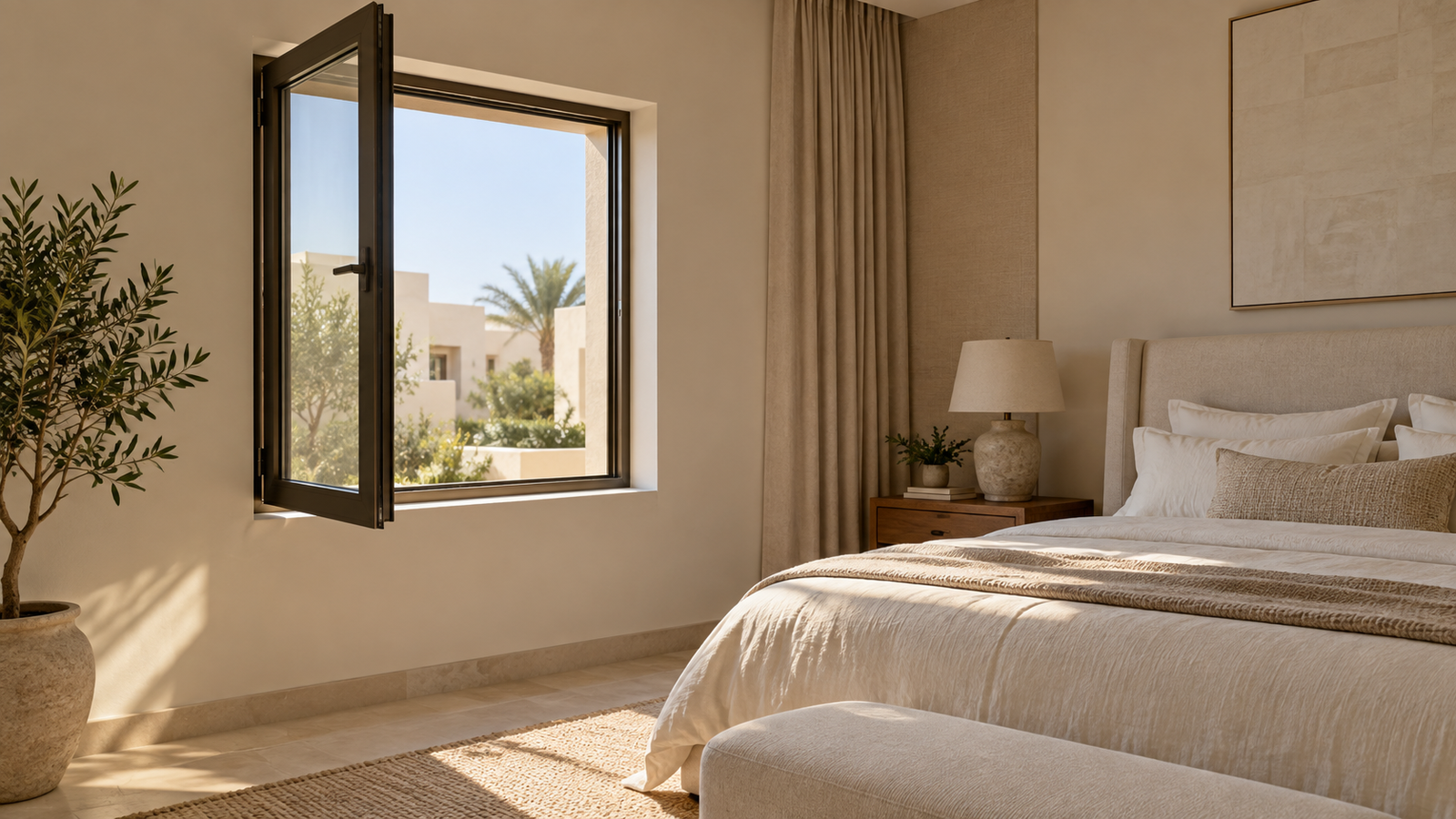
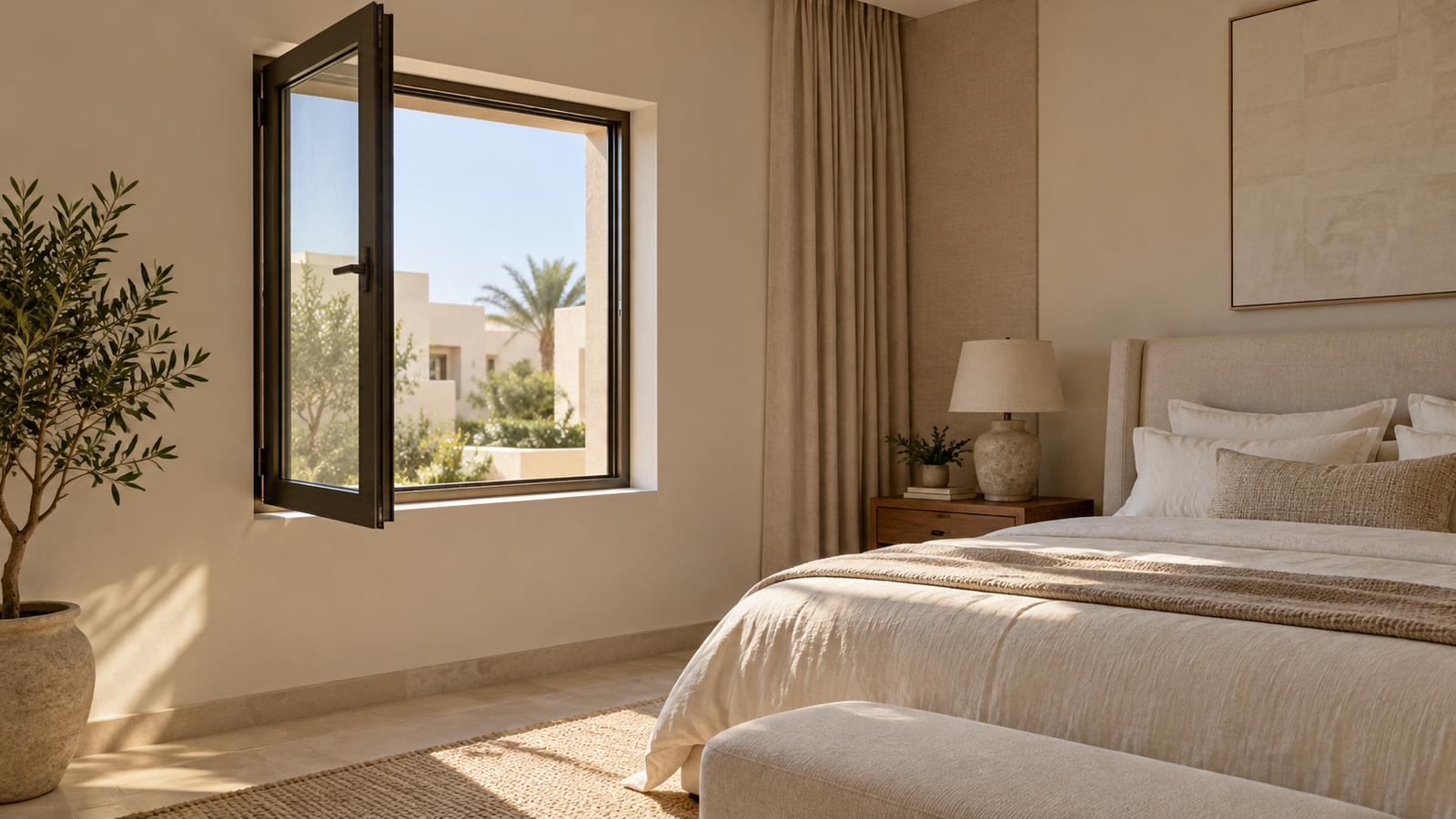
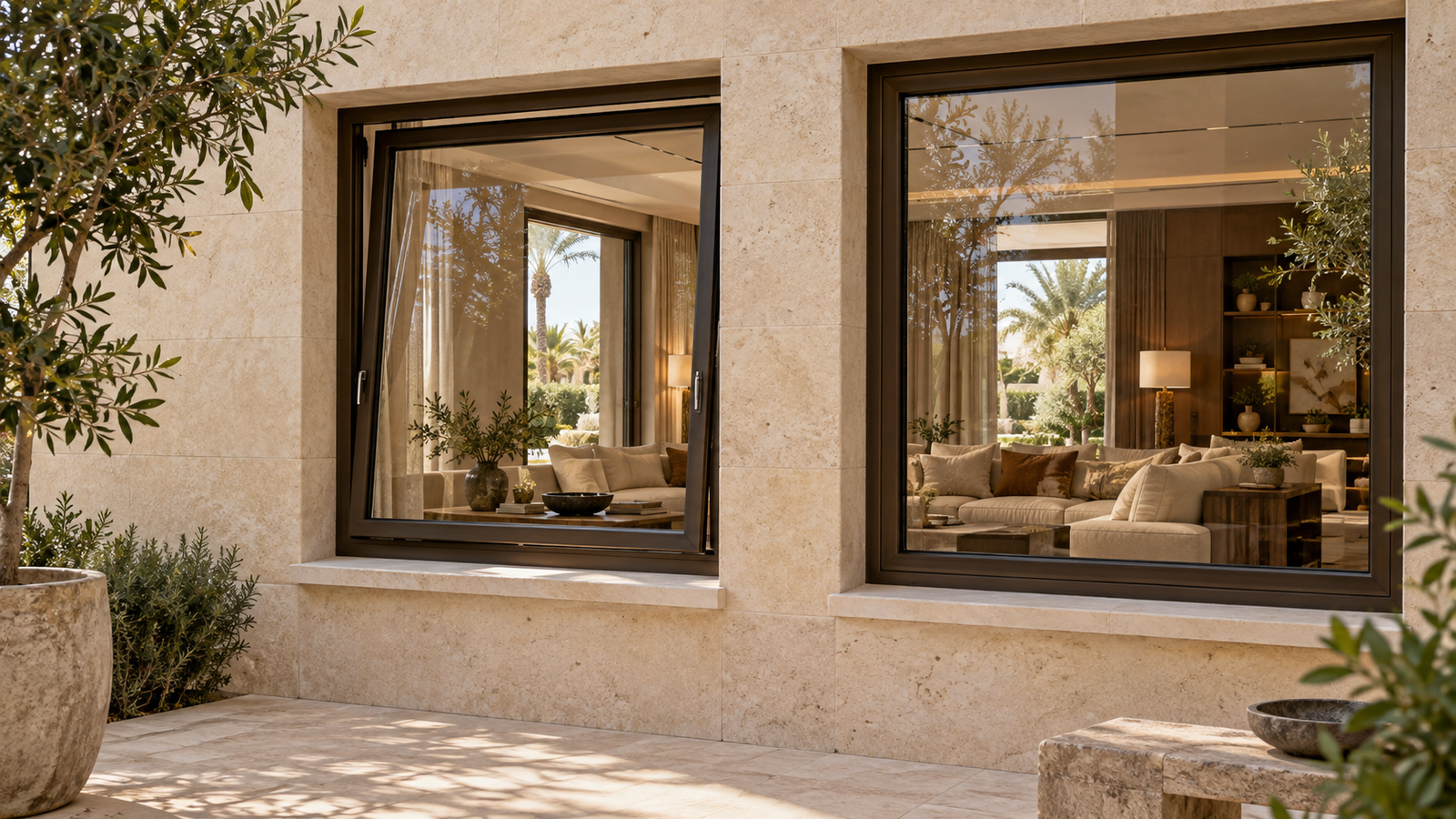
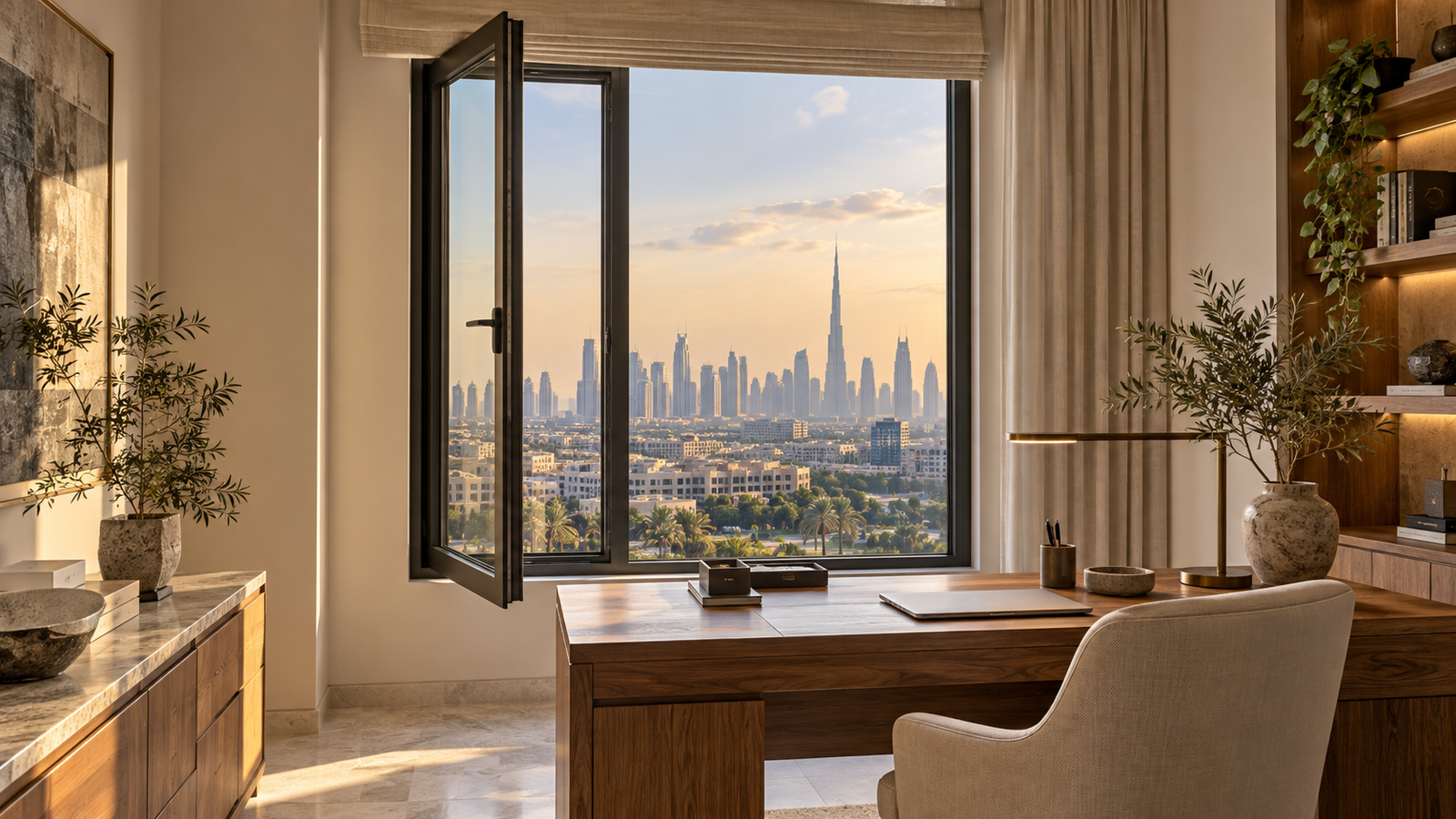
A tilt-and-turn window UAE opens in two ways from a single handle. In one position, the top of the sash tilts inward to leave a gap along the upper edge for controlled ventilation. In the other, the whole sash swings inward on its side hinges like a door, giving access to both faces of the glass and a wider opening. That dual action gives residents more control over how a room is ventilated and makes it possible to clean the outer glass from inside, which matters on upper floors.
The same design brings trade-offs, especially in a UAE home: the sash needs clear room inside to swing, the hardware is more complex than a single-mode window, and the ventilation benefit has to be weighed against outdoor heat, humidity, and dust. This guide covers where tilt-and-turn windows work well, where they do not, and what to check before ordering, using ARQEN’s tilt and turn system as the working example.
How a Tilt and Turn Windows UAE Works
One handle controls the window, and its position selects the mode: closed and locked, tilt, or turn. The exact handle positions and the sequence of movements differ between hardware systems, so confirm ARQEN’s specific mechanism before describing it to customers rather than assuming a standard layout.
In tilt mode, the sash stays attached to the frame at the bottom and opens only at the top, so the opening is limited. In turn mode, the sash swings fully inward, and the opening is limited mainly by the sash size and the space available inside the room.
Where Tilt-and-Turn Windows Work Well
- Ventilation control: tilt mode gives a small, adjustable gap for background airflow, while turn mode allows a larger opening when outdoor conditions favour it. Having both options in one window suits rooms where ventilation needs change through the day or the season.
- Interior cleaning access: in turn mode, the outer face of the glass can be reached from inside the room, which removes the need for external access on many upper-floor openings. Confirm the sash size and weight are manageable for the people who will actually clean it.
- Tight exterior spaces: because the sash opens inward, it does not swing into a balcony, walkway, or shading device outside, which can make it easier to fit where outward-opening sashes would collide with something.
- Rooms that can spare the interior clearance: bedrooms and living spaces where the sash can swing fully open without hitting furniture or fittings.
Each of these depends on the room layout. The inward swing that helps outside becomes a constraint inside, so clearance needs checking on both sides of the wall.
- Interior clearance: the open sash sweeps into the room, so it needs space clear of furniture, curtains, blinds, and fittings. Window treatments in particular need planning, since they can obstruct or be caught by an inward-opening sash.
- Hardware complexity: the dual-action mechanism has more moving parts than a fixed, awning, or single-mode window, which is worth factoring into maintenance and long-term upkeep.
- Sash size and weight: larger sashes place more load on the hardware, and the maximum approved size depends on the specific hardware and glazing specified.
- Cost: dual-action hardware is generally more involved than single-mode alternatives, though the actual difference depends on the size, hardware, and glazing being compared, so equivalent quotations are the only reliable way to judge it.
Ventilation in UAE Conditions
A tilted window is not automatically the right choice on every day. Outdoor heat and humidity can put extra load on cooling systems when a window is open, and dust and sand can enter through any opening. Whether to ventilate through a window at all depends on the time of year, the time of day, and how the building is cooled.
In practice, tilt mode is most useful when outdoor conditions are mild enough to ventilate naturally, such as cooler evenings or winter months, with the window closed during the hottest, most humid, or dustiest periods. Bathrooms and kitchens still need their own mechanical extraction where required, and an opening window should be treated as part of the ventilation plan, not a replacement for it.
Tilt and Turn Windows UAE Compared with Other Window Types
Comparisons are most useful when they look at specific features and verified ratings, not at window names alone. Sliding, casement, and other windows vary widely between manufacturers and ranges, so general statements about which type is airtight, secure, or efficient do not hold across the board.
- Vs. casement: both open on a side hinge, but a casement typically opens outward while a tilt-and-turn opens inward and adds a tilt position. Which is easier to fit depends on whether exterior or interior clearance is the tighter constraint.
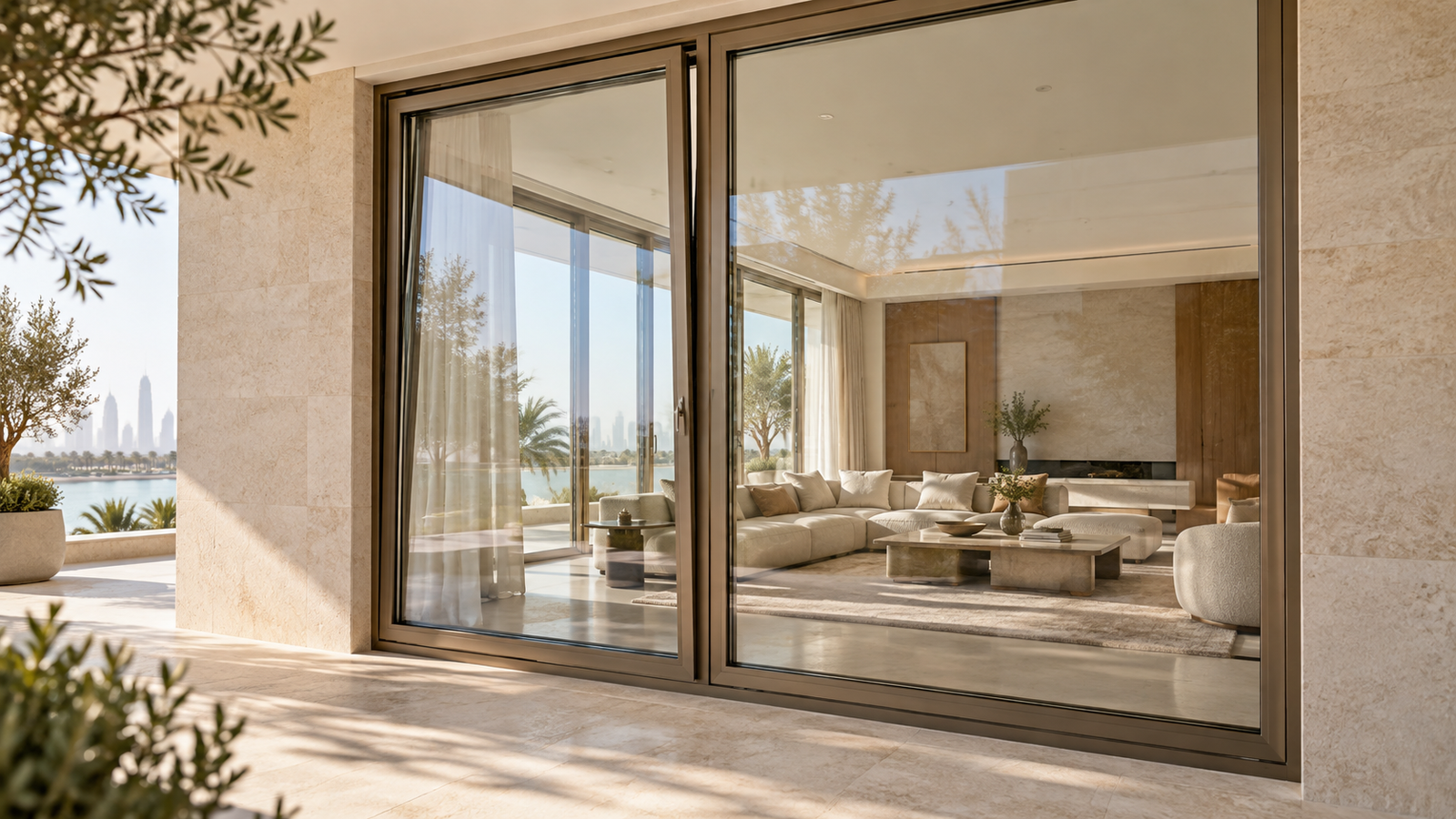
- Vs. sliding: a sliding window uses a track rather than a hinge, and how much of the opening is usable depends on the panel arrangement. Locking and sealing performance vary by system, so compare the specific locking hardware and test ratings of each rather than assuming one type has a single-point lock or weaker sealing.
- Vs. awning: an awning window is top-hinged and opens outward, giving a limited opening at the bottom edge; tilt and turn offers a limited tilt opening and a full inward opening from the same handle.
- Vs. fixed: fixed windows offer no ventilation at all, which is why they are often paired with an opening configuration.
Tilt and Turn at a Glance
| Attribute | Detail | Note |
| Opening modes | Tilt inward at top, or swing fully inward | Single handle selects the mode |
| Handle positions | To confirm against ARQEN’s mechanism | Do not copy generic positions |
| Locking | To confirm: standard vs optional multi-point | State once, consistently |
| Frame construction | To confirm against datasheet | Steel reinforcement and chamber count unverified |
| Glazing | To confirm current range | Double and triple glazing to be verified |
| Gaskets | To confirm material and configuration | Do not name a material until confirmed |
| Warranty | Manufacturer’s warranty, scope to confirm | Distinguish structural, hardware, glazing, seals |
Product Features to Verify
Features commonly associated with tilt-and-turn systems in general are not the same as confirmed specifications of a particular product. For ARQEN’s system, the following should be checked against the approved datasheet before they are stated as fact.
- Frame construction, including any steel reinforcement and the number of profile chambers.
- The glazing options actually offered, such as double or triple glazing, and any low-emissivity or solar control coatings.
- The gasket material and how the sash and frame seals are configured.
- The locking hardware, including how many locking points are fitted and whether that is standard or an upgrade.
Thermal, Acoustic and Weather Performance
Thermal and acoustic performance belongs to the whole window assembly, meaning the frame, glazing, seals, hardware, and installation working together, not to any single component. It also generally refers to the closed position: once the sash is tilted or turned open, outside heat, humidity, dust, and noise enter through the opening regardless of the glass or frame specification.
In the UAE, where cooling demand and solar exposure drive most of the energy consideration, the glazing specification and its solar control properties usually matter more than any general claim about the frame. Where performance figures are quoted, they should be attached to the specific glazing and configuration they were measured on, and terms such as airtight, weatherproof, or soundproof should be avoided in favour of tested, supported descriptions.
Tilt mode alone should not be treated as making a window safe for children or pets. Safety around opening windows depends on the specific hardware, whether the handle can be locked or restricted, how high the window sits, and how the sash is supervised in use. If child safety is a priority, ask ARQEN which opening controls and approved hardware are available for the system, such as lockable handles or restrictors, and confirm their tested function before relying on them.
Practical Details to Check Before Ordering
- Interior swing clearance: measure the space the sash needs when fully open, including any curtains, blinds, or furniture nearby.
- Handle reach: confirm the handle is comfortably operable from a normal standing position, especially on taller openings.
- Approved sash size and weight: ask for the tested maximum for the hardware and glazing being specified.
- Screens: confirm whether and how an insect screen can be fitted to an inward-opening sash on the specific system.
- Exposure: for coastal or highly exposed openings, confirm the frame finish and hardware are rated for that level of exposure.
- Cleaning routine: confirm who will clean the glass and how, particularly on upper floors.
Installation
Installation quality strongly affects how any window performs, so it is worth understanding what a sound installation involves.
- Accurate measurement of the opening, so the frame can be fitted correctly and the installation joint between frame and wall can be properly designed and sealed.
- Frame fixing that keeps the frame square and level, so the sash operates and closes evenly.
- Weatherproofing at the frame-to-wall joint, which is a separate matter from the gaskets around the sash itself; the two do different jobs and both need to be right.
- Correct adjustment of the hardware so the locking points engage evenly and the sash closes fully.
- Final checks of tilt mode, turn mode, and locking before handover.
Ask your installer for a project-specific timeline and whether the project is new construction or a retrofit, since both affect the approach.
Maintenance
Follow the maintenance instructions supplied with the specific hardware, including the recommended intervals and which points to lubricate with which products, rather than a generic routine. In general, keep the frame, seals, and hardware area clear of dust and sand, check the seals periodically for damage, and rinse coastal-facing units more often to reduce salt buildup.
What Affects Pricing
- Size: larger sashes need hardware rated for the additional weight.
- Hardware and locking specification: the dual-action mechanism and any additional locking or restrictor options affect cost.
- Glazing: the choice of glazing build-up and any solar control or acoustic coatings changes both cost and performance.
- Finish: standard powder-coated finishes are generally more economical than custom colour matching.
- Quantity and access: ordering several units together and straightforward access typically reduce the per-unit cost.
Whether a tilt-and-turn window costs more than another configuration depends on the actual size, hardware, and glazing compared, and any claim that its energy savings will offset a higher price needs to be tested against the specific project. A project-specific quote is the most reliable guide.
Why ARQEN
Arqen Industries manufactures its tilt and turn system as part of its wider aluminium window range. Warranty coverage should be confirmed and stated precisely by component, and the company’s background described using ARQEN’s approved wording.
Frequently Asked Questions
Do Tilt and Turn Windows UAE cost more than other windows?
Often they do, because the dual-action hardware is more involved, but it depends on the size, hardware, and glazing being compared. Any long-term saving from energy performance depends on the specific glazing, orientation, and how the building is cooled, so it should be assessed for the project rather than assumed.
Can they be fitted to an existing building?
Retrofits are possible in many cases, but the opening needs accurate measurement and a properly designed installation joint, and the interior needs enough clearance for the sash to swing.
Are they suitable for the UAE climate?
Suitability depends on the complete specification, including glazing, solar control, seals, finish, and installation, and on how the building is cooled and how exposed the opening is. Ask for the tested performance of the specific configuration rather than a general answer.
Is tilt mode safe for children and pets?
Tilt mode alone should not be relied on for safety. Ask which opening controls and approved hardware, such as lockable handles or restrictors, are available for the system and confirm how they are tested.
Is a tilted window secure and rain-resistant?
Not automatically. Security and rain protection in the tilt position depend on the hardware, the opening, the exposure, and the tested specification, so confirm these with the manufacturer.
How long do tilt and turn windows last?
Lifespan depends on the quality of the hardware and finish, the installation, the exposure, and how the window is maintained. Ask ARQEN for the written warranty terms and what they cover by component, instead of relying on a general lifespan figure.
Get a Specification and Quote
For ARQEN’s full tilt and turn specification, see the ARQEN Tilt and Turn Window System product page. For help comparing configurations, see How to Choose Aluminium Windows in the UAE. Share your opening dimensions, installation height, project location, and ventilation needs with the Arqen Industries team to get a suitable specification and quote: get in touch.
4 Comments
Aluminium Windows UAE | Durable & Modern Window Solutions
October 1, 2026
[…] thermal break interrupts the direct path for heat to move through the aluminium frame, which reduces the load on air conditioning and keeps interior surfaces closer to room […]
Fixed Aluminium Windows UAE | Modern & Durable Windows
October 1, 2026
[…] need less routine maintenance than opening configurations, but less is not the same as none. Follow Arqen’s manufacturer maintenance instructions, which generally include the points […]
Aluminium Casement Windows in the UAE | Free Quote
October 1, 2026
[…] Casements come as single sashes or as pairs that meet in the middle, often called French casements. Which arrangements are available for a given opening depends on its width and the hardware used. […]
Aluminium Awning Windows in the UAE: Benefits and Limitations
October 1, 2026
[…] an awning window compares with casement, tilt and turn, or fixed glazing depends on the actual dimensions, opening […]