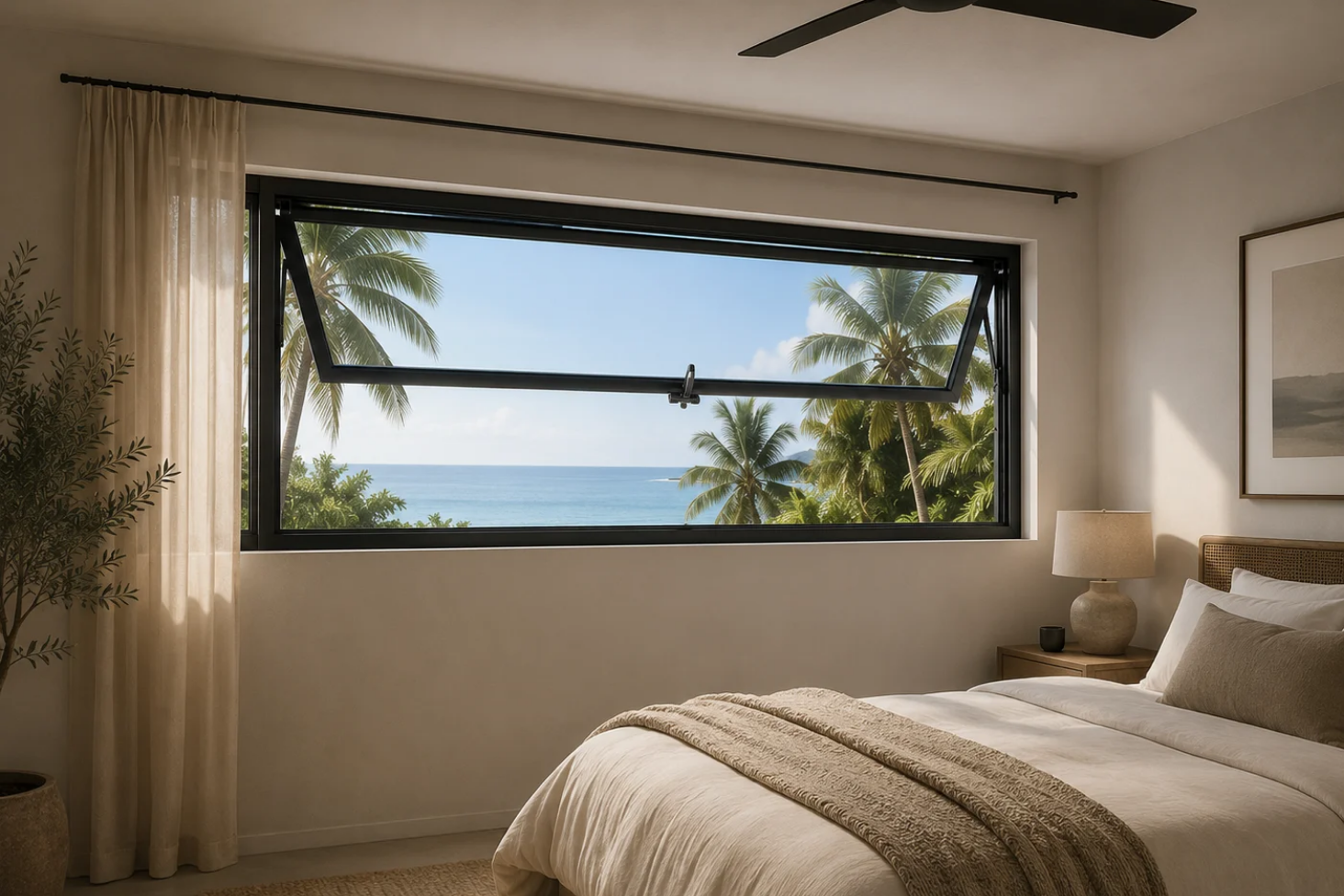
Awning window in Dubai :The one window you can leave open during a storm
A client building a villa in Arabian Ranches asked me something I hadn’t really thought about before: could she leave a awning-window open overnight without worrying about a sudden gust pushing rain straight into her bedroom? With most window types, the honest answer is no, not really, not without some risk. With an awning window, the answer changes completely, and that difference is really the entire reason this window type exists.
An awning window is hinged at the top and swings outward from the bottom, like a small overhang you create yourself rather than building separately above the window. Because the open sash tilts outward and slightly upward, it acts as its own little shield; rain hits the glass and slides off the bottom edge instead of dripping straight into the room. That’s the whole mechanical idea, and it’s a surprisingly elegant solution to a problem that Dubai’s weather creates more often than people expect: sudden downpours, dust-laden gusts, and the kind of wind-driven rain that turns a normal open window into a small disaster.
This blog is going to walk through exactly how awning windows work, why they’ve become such a common choice across Dubai villas and apartments, where they make the most sense, and what’s actually worth paying attention to before specifying one for a project.
How an awning-window Actually Works
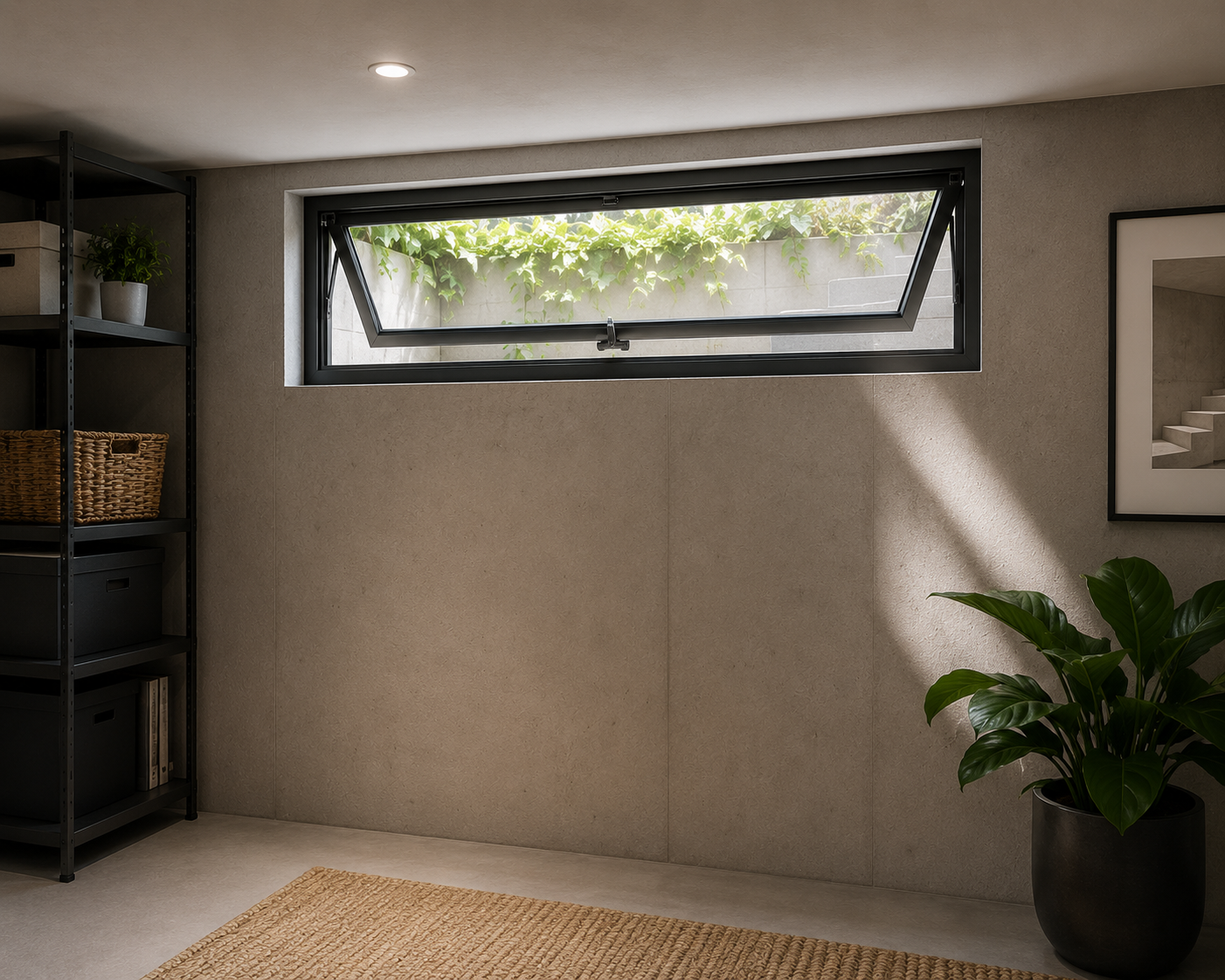
The mechanism is simpler than people expect once they see it explained. A hinge runs along the top edge of the window frame, and the sash, the moving part holding the glass, pushes outward from the bottom on a pair of extension arms or a scissor-style mechanism. As the bottom of the sash swings out, the top stays anchored to the frame, creating a sloped opening that lets air in from below while the angled glass panel deflects rain coming from above.
Most awning windows use a crank handle to control the opening, which lets you set the sash at a partial angle for gentle airflow or open it fully for maximum ventilation. Some newer systems use a push-bar or even a motorized opener instead, particularly for windows positioned somewhere awkward to reach, high up on a wall or above a kitchen counter, for instance. Either way, the control mechanism lets you fine-tune exactly how much air comes through without needing to fully open or close the window.
The seal is the other part worth understanding. When closed, an awning window’s sash presses directly against weatherstripping around the entire frame, similar to how a casement window seals. Because the sash closes by pressing inward and downward rather than sliding, awning windows tend to achieve a genuinely tight seal, which matters a lot when you’re trying to keep dust and driving rain out during a sandstorm or a winter squall.
Why This Window Type Fits Dubai So Well
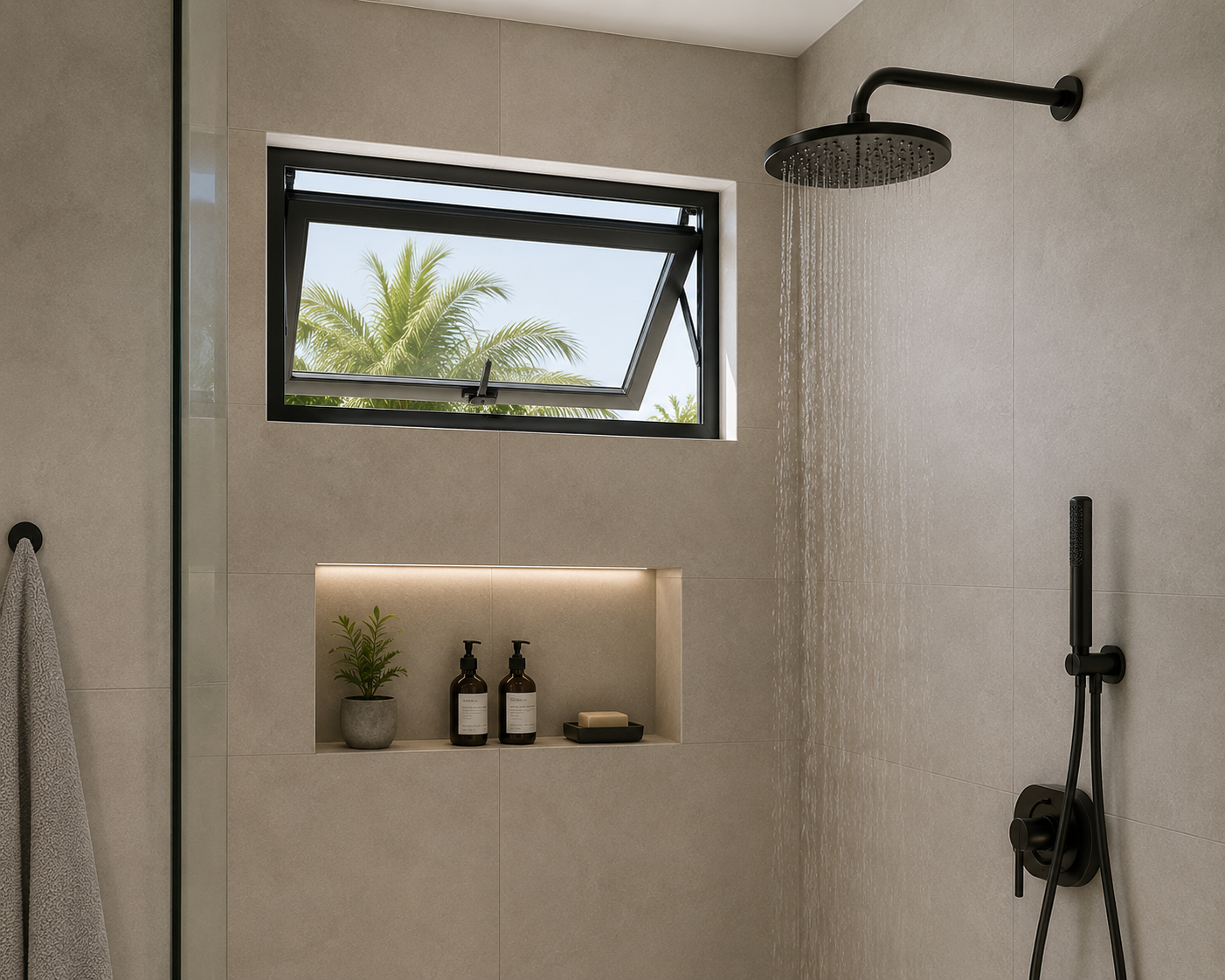
Dubai’s climate doesn’t follow a gentle, predictable pattern. Most of the year is dry and intensely hot, but the winter months bring occasional heavy rain, sometimes arriving suddenly and sometimes with strong gusts attached. Sandstorms can roll in with little warning too, kicking up dust that finds its way through any gap it can. An awning window handles both of these conditions better than most other window types, specifically because of how the sash angles when open.
Because the glass tilts outward and up, rain striking the open sash gets deflected away from the room rather than funneled straight in, the way it would with a window that opens flat or slides sideways. This means a homeowner can genuinely leave an awning window cracked open during a light rain shower without water making its way inside, something that simply isn’t true of most sliding or casement configurations. For ventilation during sandstorm conditions, a partially opened awning window also creates a narrower gap than a fully swung casement, which helps reduce how much dust gets pulled through compared to opening a window wide.
There’s a practical security angle, too, which matters more in ground-floor and accessible window placements. Because the sash only opens to a limited angle and doesn’t create a full opening the way a casement or sliding window can, awning windows are sometimes specified specifically for security-sensitive openings where some ventilation is wanted without leaving a wide-open gap someone could climb through.
Where Awning Windows Get Used Most
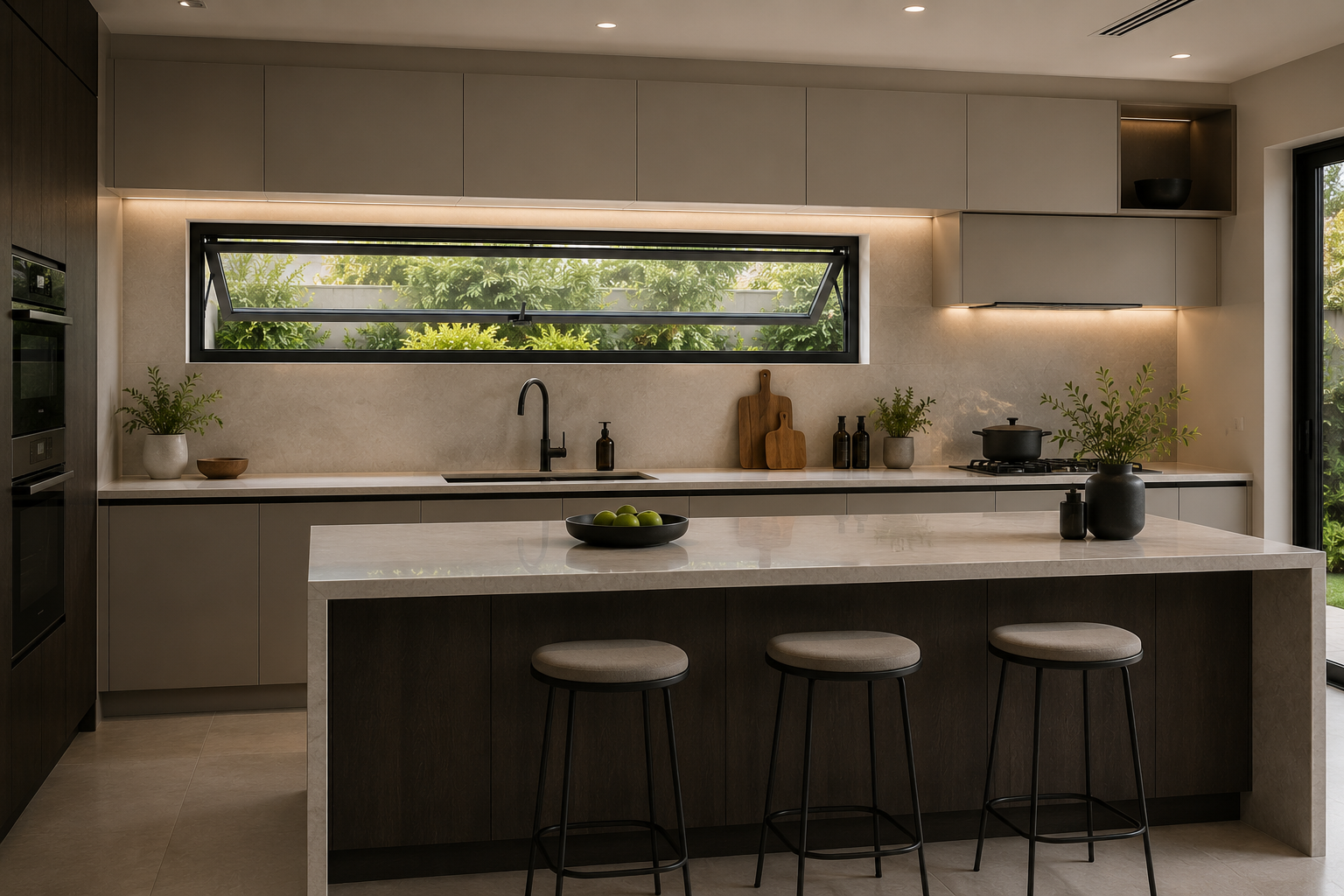
Bathrooms and Kitchens
These two rooms come up constantly in awning window installations, and for good reason. Both spaces need reliable ventilation, often more than other rooms in a home, but both are also rooms where you genuinely don’t want rain blowing in while a window is cracked open for airflow. An awning window positioned above a bathroom shower or a kitchen sink lets steam and cooking odors escape without worrying about a sudden downpour ruining the moment.
Above Other Windows or Doors
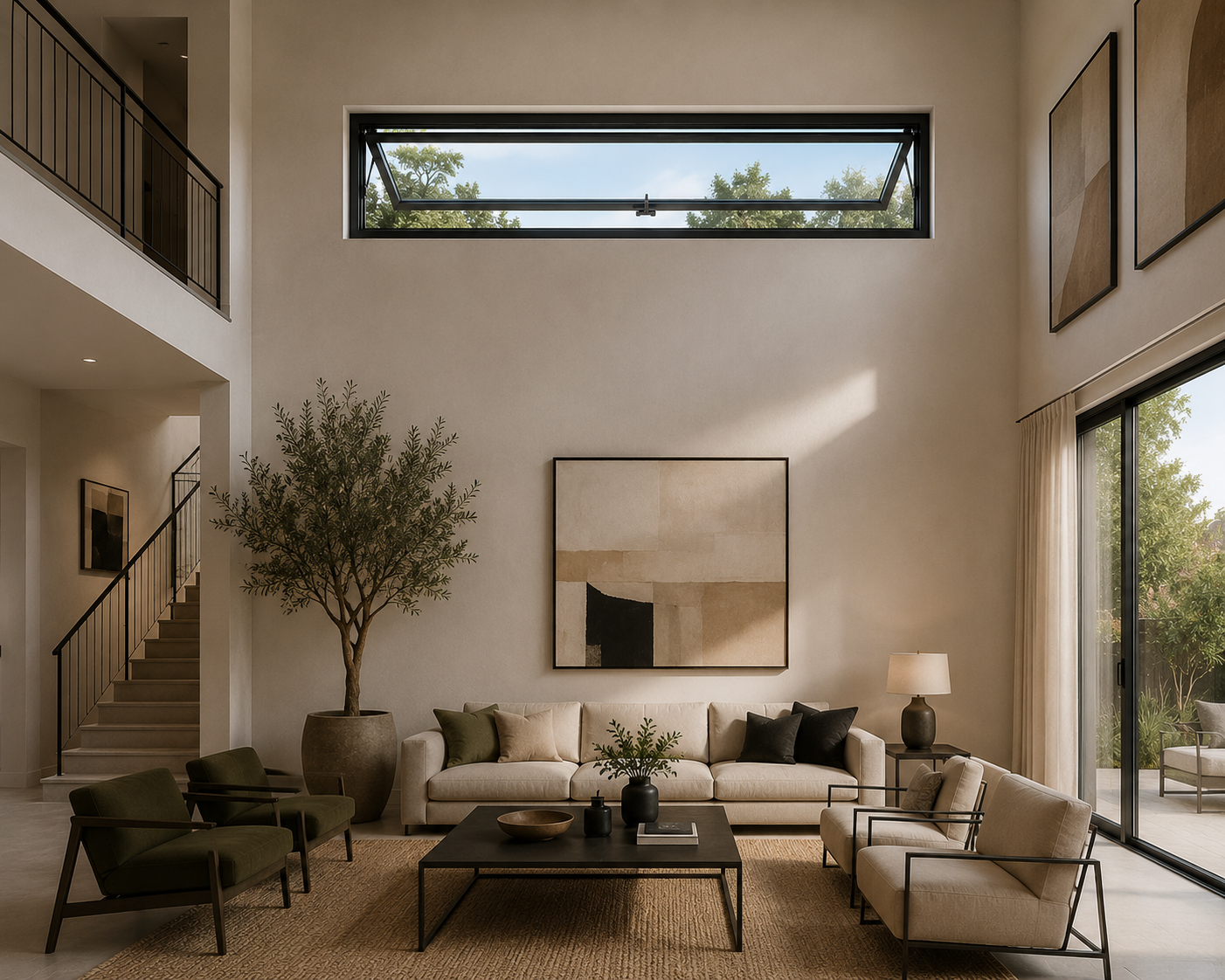
A common configuration in Dubai villas pairs a large fixed or sliding window with a smaller awning window positioned above it. This gives the room the expansive glass and view that fixed or sliding panels provide, while the awning unit above handles ventilation independently, since it can stay open for airflow even when the lower window stays shut for security or weather reasons.
Basements and Hard-to-Reach Openings
Smaller awning windows are a practical choice for basement-level openings or windows positioned high on a wall, places where you want some natural light and airflow but where a full-sized opening window wouldn’t make sense. The compact, controlled opening of an awning style works well in these tighter or less accessible spots.
Bedrooms in Coastal or Exposed Locations
Villas closer to the coast or in more exposed locations, where wind-driven rain is more common, often specify awning windows in bedrooms specifically so a window can stay open overnight for airflow without the homeowner needing to check the weather forecast first.
awning-window Compared to Casement and Sliding Types
It’s worth being clear about how an awning window differs from the other styles people are usually choosing between, since they all solve slightly different problems. A casement window is hinged on the side and swings outward like a small door, offering a wider, more complete opening for airflow, but with no built-in protection against rain coming from above once it’s open. A sliding window moves horizontally and doesn’t project outward at all, which makes it space-efficient but offers essentially no weather protection while open.
An awning window trades some of that maximum airflow for genuine rain protection while still being able to stay open. It’s not the right choice everywhere; a living room built around a panoramic view is usually better served by a large fixed or sliding configuration, but for rooms where ventilation needs to keep working even when the weather turns, it does something neither casement nor sliding windows can really replicate on their own.
What to Actually Check Before Choosing One
- Confirm the hardware, crank handles, and hinges should be corrosion-resistant, since this window type sees more direct rain exposure than most
- Ask about the maximum opening angle, since this affects both airflow and how much weather protection the window provides when open
- Check that the frame includes a proper thermal break, since this matters as much here as it does for any other window type in Dubai’s heat
- Verify the seal quality around the full perimeter of the sash; this is what determines real-world dust and water resistance
- Think through accessibility, windows placed high or in awkward spots may need a motorized or extended-reach opener rather than a standard crank
Manual vs Motorized Operation
Most awning windows still use a manual crank, and for good reason: it’s reliable, cheap to maintain, and rarely fails outright the way a motor eventually can. For windows within easy reach, a manual crank is usually the more sensible choice; there’s simply less that can go wrong over a fifteen- or twenty-year lifespan. Motorized operation earns its place mainly when the window sits somewhere genuinely inconvenient, high above a stairwell, behind a kitchen island, or in a double-height living space where a ladder would be the only other option. Some homeowners also like the convenience of closing a window remotely the moment a forecast shifts, rather than needing to physically reach it before a storm arrives. It’s worth weighing the added cost and occasional maintenance of a motor against how often that convenience would actually get used in your specific layout.
It’s also worth a quick word on glazing choice here. Because awning windows in Dubai are frequently specified for bathrooms and kitchens, rooms with higher humidity and, for ground-floor placements, more privacy sensitivity, frosted, tinted, or obscured glass options are common pairings. None of this changes how the window opens or seals, but it’s a detail worth raising with your supplier early, since not every glazing option is available across every frame profile.
A Few Things People Get Wrong About awning-window
One common misconception is that awning windows can’t handle large openings, which isn’t really true anymore. While they were traditionally used for smaller window openings, modern hardware and reinforced frames mean larger awning configurations are increasingly common, particularly when paired with fixed glass below for a combined large-window effect.
Another misunderstanding is around maintenance. Because the hinge and arm mechanism sits exposed to more direct weather than a sliding track tucked into a frame, people sometimes assume awning windows need more upkeep. In practice, quality hardware with a proper corrosion-resistant finish holds up well in this climate, the same way good aluminium hardware does across any window type; it’s the quality of the components that matters far more than the window style itself.
Awning Window By arqen industries
At Arqen Industries, our awning window systems are built with the same climate-first approach that runs through our full window range. Reinforced hinge points, corrosion-resistant hardware, and a proper thermal break frame come as standard, not as an upgrade tucked behind a higher price tier. We see these specified often in bathrooms, kitchens, and as ventilation companions to larger fixed or sliding glass in both villas and commercial projects across the UAE.
Our team works directly with architects, interior designers, and homeowners to figure out where an awning configuration genuinely solves a problem in a layout, and where a different window type would honestly serve the space better. That conversation tends to save people money and frustration down the line, rather than ending up with the wrong window type in the wrong room.
Frequently Asked Questions
Can an awning window really stay open during rain without leaking?
Yes, within reason. Because the sash tilts outward and slightly upward when open, light to moderate rain typically slides off the angled glass rather than dripping into the room. Extremely heavy, wind-driven rain at certain angles can still find its way into some degree, but awning windows handle far more rain exposure while open than casement or sliding types.
Are awning window good for security?
They can be a reasonable security choice for ground-floor or accessible openings, since the limited opening angle doesn’t create a full-sized gap the way a casement window can. That said, security ultimately comes down to the quality of the locking hardware, so it’s worth confirming the lock specification regardless of window type.
Do awning windows work well for large openings, or only small ones?
Modern awning systems with reinforced frames and quality hardware can handle larger openings than people often assume, though very large single panels are still less common than smaller or mid-sized configurations. They’re frequently paired with fixed glass for a combined large-window look with awning ventilation built in.
How does an awning window differ from a casement window?
A casement window hinges on the side and swings outward like a door, offering a wider opening for airflow but no real protection from rain falling from above. An awning window hinges at the top and swings outward from the bottom, which gives it natural rain deflection that a casement window doesn’t have.
What maintenance do awning windows need?
Routine cleaning of the hinge and arm mechanism, along with periodic lubrication, keeps the opening action smooth over time. It’s worth checking the weatherstripping seal annually too, since wear here is what typically leads to drafts or reduced water resistance before anything else does.
Are awning window energy efficient?
With a proper thermal break frame and double glazing, yes, an awning window performs comparably to other quality aluminium window types. The tight seal achieved when closed, similar to a casement window’s seal, also helps minimize air leakage compared to some sliding configurations.
Considering Awning Window for Your Project?
Whether you’re planning ventilation for a bathroom, a kitchen, or a bedroom in a more exposed location, our team at Arqen Industries can help you figure out whether an awning window is the right fit for your space and climate exposure.
Get in touch for a free consultation — visit arqenindustries.com or reach out to our team directly. We’re happy to talk through your project.