Bioclimatic Pergola Dubai | Smart Shading by Arqen
Bioclimatic Pergola Dubai Walk through the old Bastakiya quarter in Dubai, near the creek, and you’ll notice the buildings were solving this exact problem long before anyone had aluminium or motors to work with. Wind towers, narrow shaded alleyways, courtyards positioned to pull air through a home without a single fan running, all of it built around one idea: work with the climate instead of fighting it constantly with mechanical cooling. A bioclimatic shading system is really just that same idea, rebuilt with modern materials and a motor doing the work that wind towers and clever orientation used to do on their own.
The term sounds technical, and in a way it is, but the concept underneath it is simple enough to explain in one sentence. A Bioclimatic Pergola Dubai adjusts itself, or lets you adjust it, in response to what’s actually happening outside, rather than sitting in one fixed position regardless of whether it’s blazing hot, raining, or perfectly mild. That single difference is what separates it from a standard fixed louver, and it’s worth understanding before you decide whether it’s the right fit for a project.
What Makes a Shading System ‘Bioclimatic’
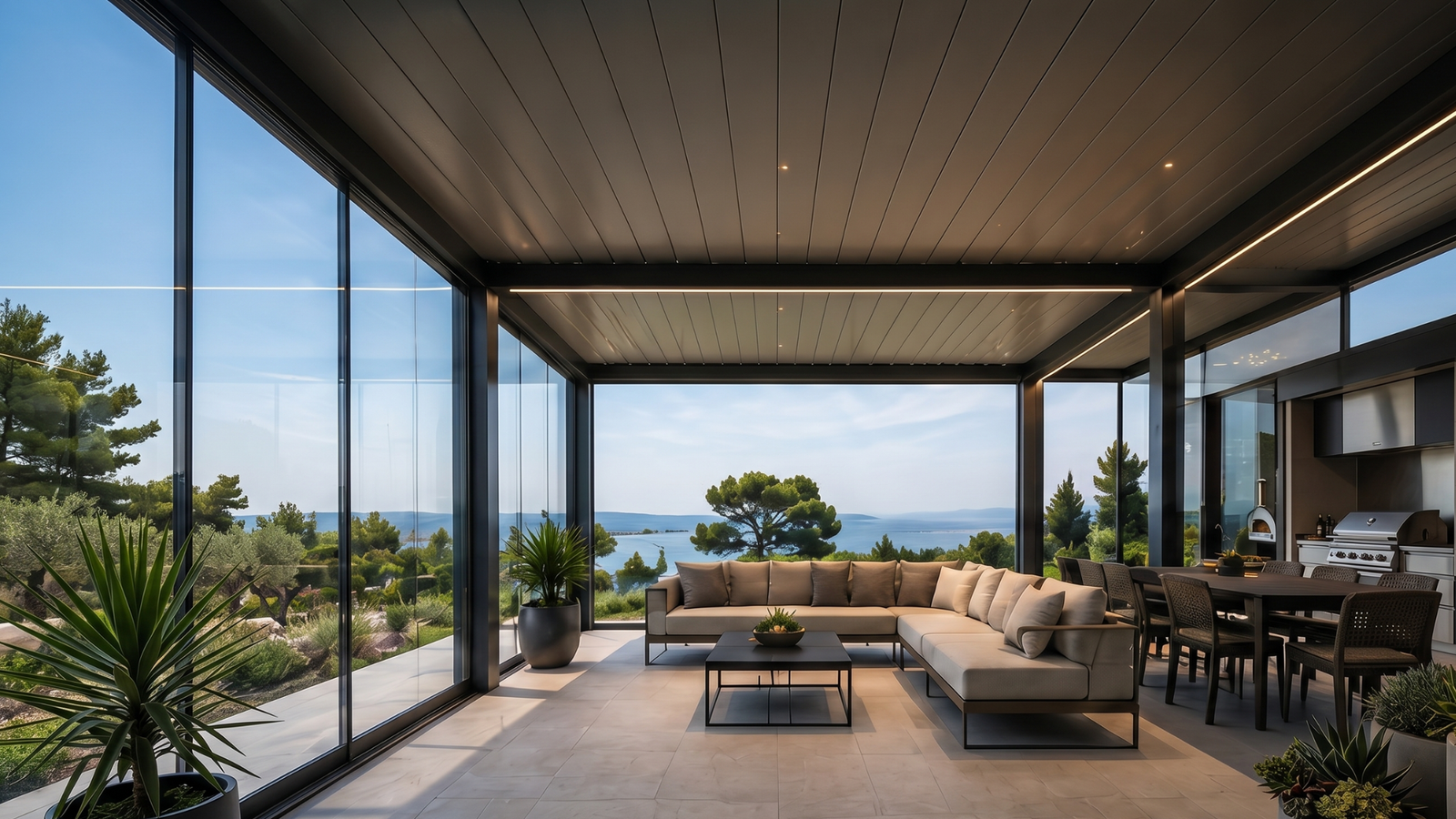
- Plenty of shading systems block the sun. A bioclimatic system goes further; it’s designed to respond to multiple conditions at once, sun angle, rain, wind, and sometimes temperature, and adjust accordingly rather than offering one fixed setting all year round.
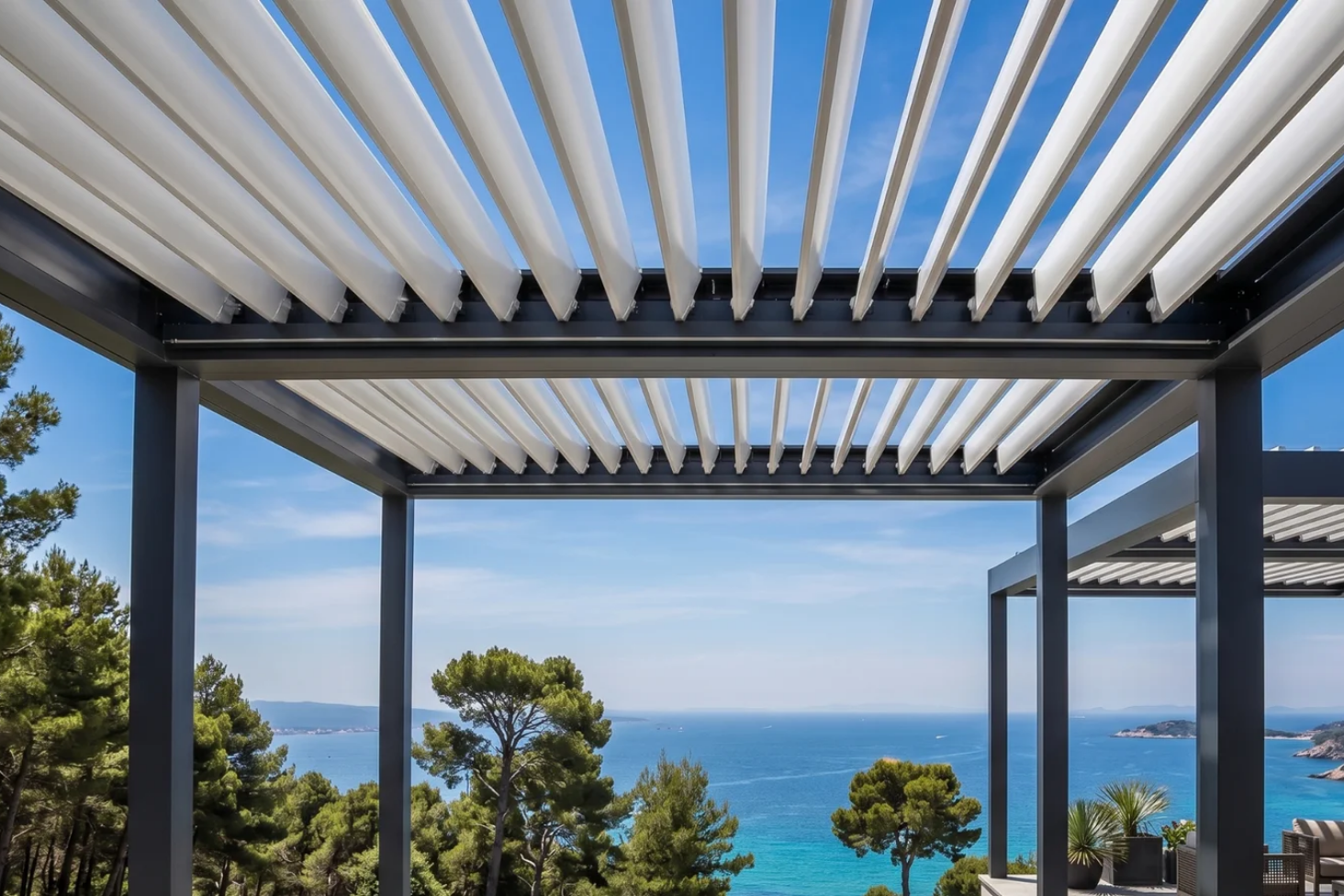
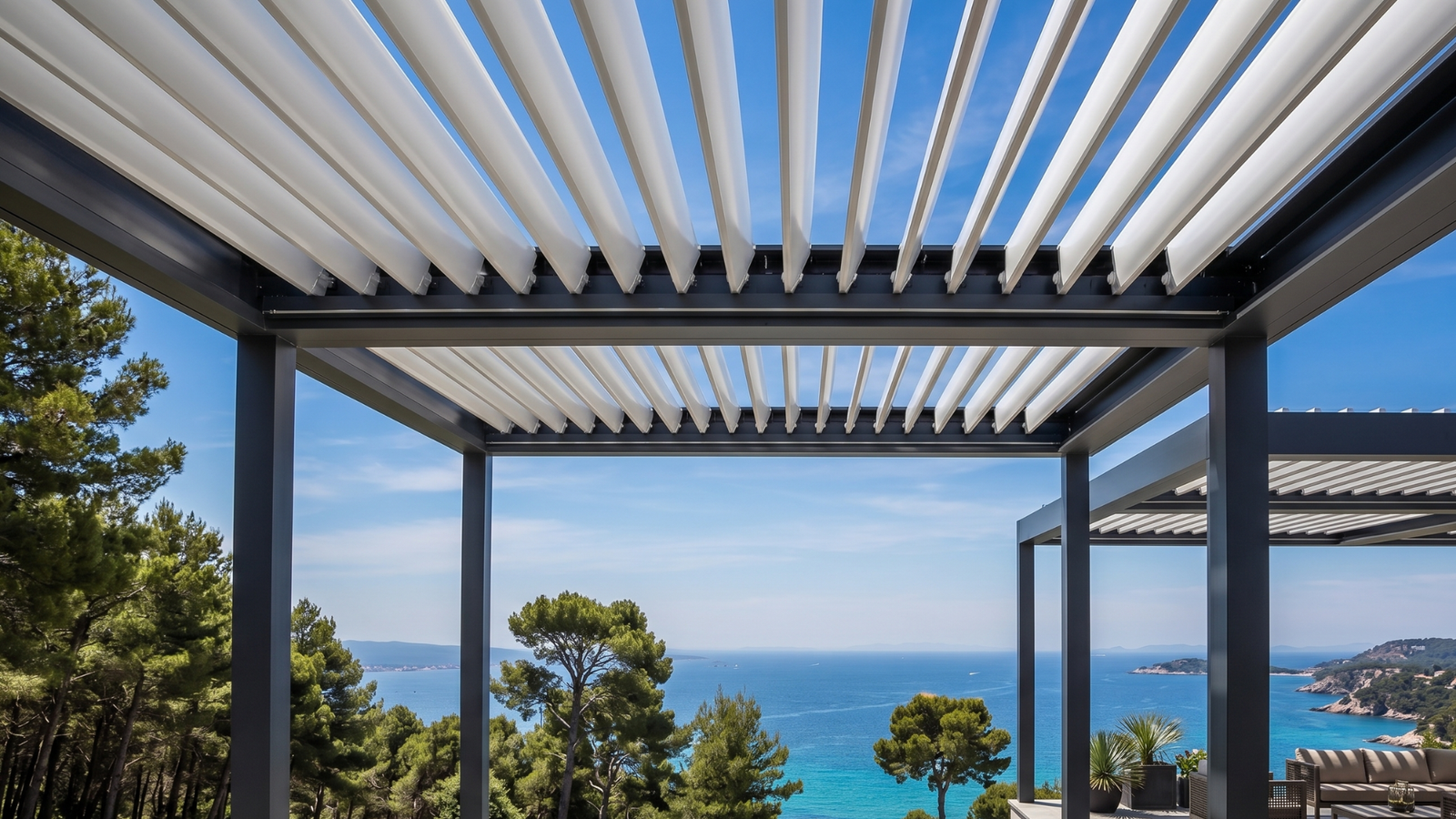
- The most common form of this is a louvered roof, usually built over an outdoor terrace, pool deck, or transitional space between indoor and outdoor areas, with aluminium blades that rotate open or closed.
- Open, the blades let light and air move freely through, which matters during Dubai’s milder months when people actually want to sit outside without feeling roasted.
- Closed, the same blades form a near-solid roof that blocks direct sun and sheds rain through an integrated gutter system, so the space underneath stays dry and shaded even during a sudden downpour.
- Some systems take this further with built-in rain sensors that close the louvers automatically the moment they detect moisture, and wind sensors that adjust the blade angle if gusts pick up, so nobody has to run outside mid-storm to deal with it manually.
How the Mechanism Actually Works
- Most bioclimatic louver systems use a central drive mechanism connected to a series of aluminium blades, usually capable of rotating somewhere between 90 and 135 degrees depending on the specific system.
- A motor drives the rotation, controlled either through a wall switch, a remote, or increasingly through an app that lets someone adjust the louvers from inside the house without stepping outside at all.
- The blades themselves are engineered with overlapping edges, so when fully closed, there’s no gap for water to slip through, the same principle as overlapping roof tiles, just motorized and adjustable.
- A gutter channel built into the frame catches whatever runoff comes off the closed louvers and directs it away from the structure rather than letting it pool or drip onto whatever’s underneath.
- It’s a more mechanically involved system than a fixed louver, which is exactly why it costs more, but it’s also why it can do considerably more.
Where Bio climatic Pergola Dubai Make the Most Sense
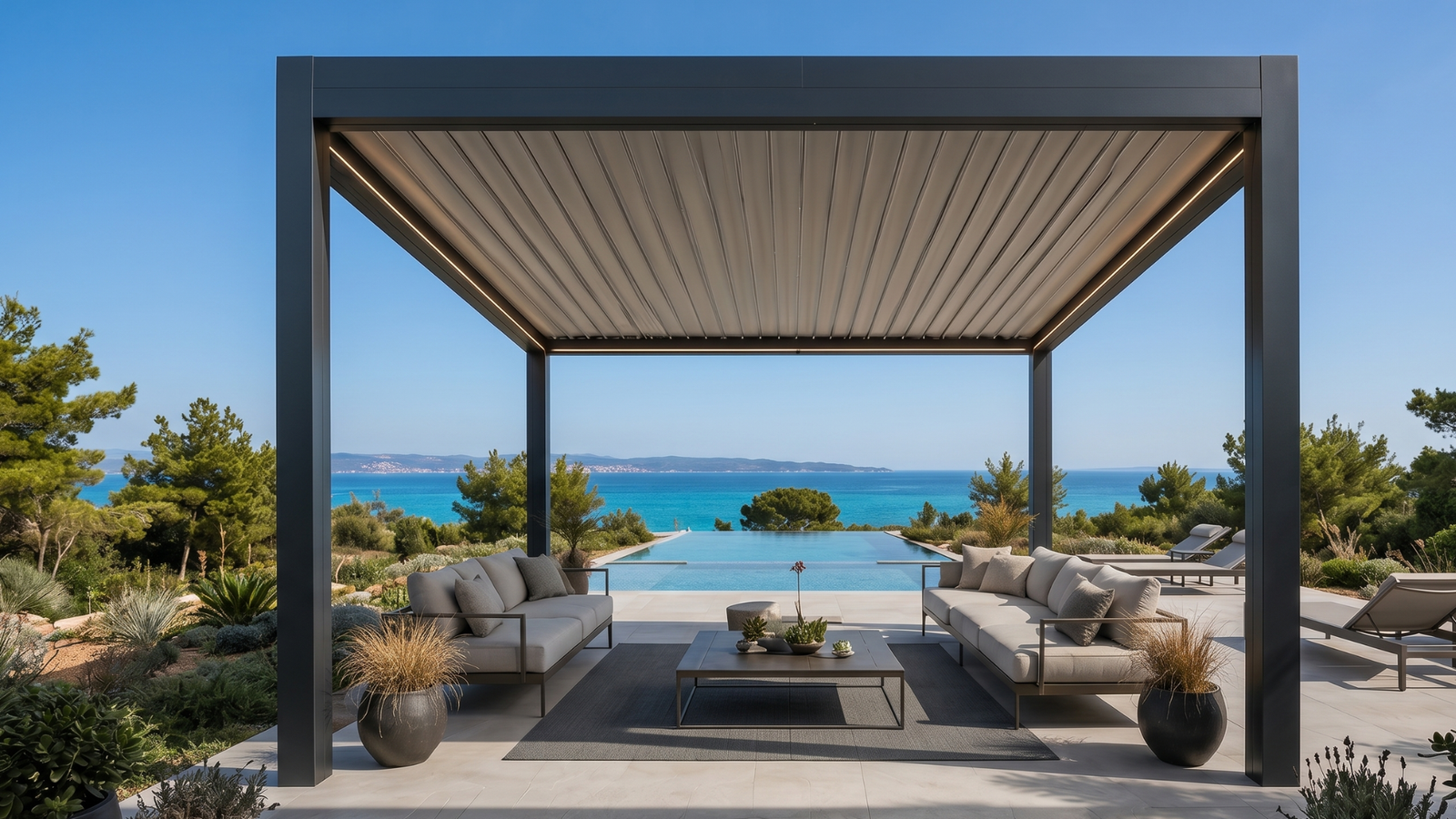
Villa Terraces and Pool Decks
This is probably the single most common application in residential projects across Dubai right now. A villa with a pool deck or outdoor seating area benefits enormously from a louvered roof that can open on a pleasant evening and close completely during peak afternoon heat or an unexpected rain shower, turning what would otherwise be a seasonal, fair-weather space into something usable across far more of the year.
Restaurant and Cafe Terraces
Outdoor dining is a huge part of hospitality in this region, and a bioclimatic system lets a restaurant keep its terrace open and inviting on a cool evening while still having a real answer for a sudden gust of wind or rain without scrambling to move tables indoors.
Hotel Pool and Lounge Areas
Hospitality projects increasingly specify these over fixed shading specifically because guest comfort changes throughout the day, what works at noon under direct sun isn’t what guests want at sunset, and a system that adjusts on demand handles both without needing two separate structures.
Office Breakout and Courtyard Spaces
Commercial projects with internal courtyards or rooftop breakout areas use bioclimatic shading to keep those spaces genuinely usable year-round, rather than becoming an unused architectural feature that only works for a few months of mild weather.
Bioclimatic Pergola Dubai vs Fixed Louvers: What’s the Real Tradeoff
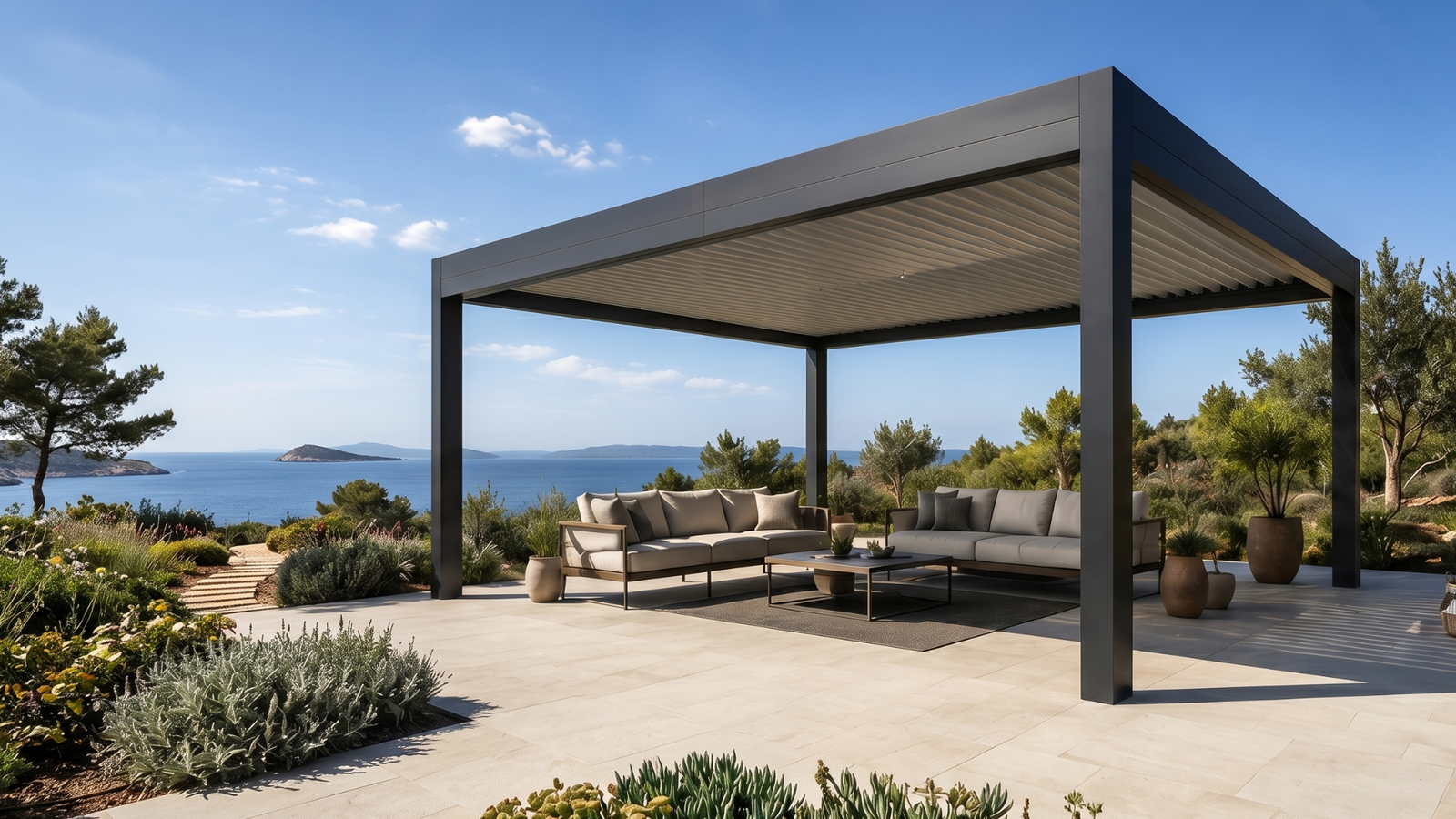
A fixed louver, the kind covered in a more general facade shading conversation, is set at one angle permanently, calculated for a specific orientation and sun path. It’s simpler, cheaper, and has effectively nothing to maintain beyond occasional cleaning.
For a building facade where the sun angle doesn’t shift dramatically enough to justify moving parts, that’s often the smarter, more cost-effective choice.
A Bioclimatic Pergola Dubai earns its higher price tag specifically in spaces where conditions change throughout the day or across seasons, and where the same space needs to function differently depending on what’s happening outside.
An outdoor terrace is the clearest example; it needs to handle blazing midday sun, a pleasant evening breeze, and an unexpected rain shower, sometimes all within the same day.
A fixed system can really only optimize for one of those conditions. A bioclimatic system handles all three.
Things Worth Knowing Before Specifying One
Motorized systems need periodic maintenance on the drive mechanism, not just the blades. Budget for an annual check
Rain and wind sensors add real convenience but also add cost. Decide early whether automation is worth it for the specific space
Structural support matters more than people expect. A louvered roof carries real weight and wind load, especially when closed during a storm
Integration with the surrounding architecture should be planned early, not bolted on as an afterthought once the rest of the structure is finished
Manual override should always be available as a backup in case of a power or sensor fault
The Climate Argument, Beyond Just Comfort
There’s a reason passive and responsive cooling strategies have been part of Gulf architecture for centuries, long before anyone called it sustainable design.
Wind towers in old Dubai neighborhoods like Shindagha pulled air through homes without any mechanical input at all, and projects like Madinat Jumeirah have deliberately revived some of those same principles in a modern context, using shading, orientation, and airflow together rather than relying purely on air conditioning to do all the work.
A Bioclimatic Pergola Dubai fits squarely into that same logic, just executed with motors and sensors instead of wind towers and courtyards.
By letting a space adapt to outdoor conditions instead of staying fixed regardless of them, it reduces unnecessary heat gain when conditions don’t call for full shade, and it cuts down on the times someone reaches for a mechanical fan or portable AC unit just to make an outdoor space tolerable for an extra hour.
Bioclimatic Pergola Dubai by Arqen Industries
At Arqen Industries, our Bioclimatic Pergola Dubai is built around the same climate-first thinking that runs through our door, window, and broader facade shading work.
Aluminium louver structures engineered for rotation, proper water shedding, and long-term reliability under constant sun exposure, not adapted from a system built for a milder climate somewhere else.
We work with homeowners, architects, and hospitality developers across the UAE to figure out whether a bioclimatic system, a simpler fixed louver, or some combination of both makes the most sense for a specific terrace, courtyard, or outdoor space.
The right answer depends on the space, the budget, and how it’s actually going to be used, and that’s exactly the kind of conversation our team is set up to have.
Frequently Asked Questions
What’s the difference between a Bioclimatic Pergola Dubai and a regular pergola?
A regular pergola typically has a fixed roof, whether that’s open slats, fabric, or a solid covering, with no ability to adjust. A bioclimatic pergola has a louvered roof with blades that rotate open or closed, letting the same structure handle full sun, full shade, and rain protection depending on how it’s adjusted.
Can Bioclimatic Pergola Dubai louvers handle heavy rain without leaking?
Yes, when properly engineered. The blades are designed with overlapping edges that seal tightly when fully closed, and an integrated gutter system channels water away rather than letting it collect or drip through. Quality of construction matters a lot here; a poorly made system is far more likely to leak at the seams.
Do these systems need a power connection?
Most motorized Bioclimatic Pergola Dubai do need an electrical connection to drive the rotation mechanism, along with low-voltage wiring for any sensors or remote controls. This is usually planned in during installation, particularly for new builds, where wiring can be routed before finishing work begins.
How much maintenance do bioclimatic shading systems actually need?
Beyond regular cleaning to remove dust buildup, which happens quickly in this climate, the motor and drive mechanism should get a basic check once a year to make sure everything is rotating smoothly, and the seals are still closing tightly. Sensors, if installed, are worth testing periodically too.
Thinking About a Bioclimatic Pergola Dubai for Your Space?
Whether it’s a villa terrace, a restaurant courtyard, or a hospitality pool deck, our team at Arqen Industries can help you figure out whether a bioclimatic shading system fits your space, your budget, and how you actually plan to use it.
Get in touch for a free consultation — visit arqenindustries.com or reach out to our team directly. We’re happy to talk through your project.