Aluminium Awning Windows UAE: A Buyer’s Guide | ARQEN
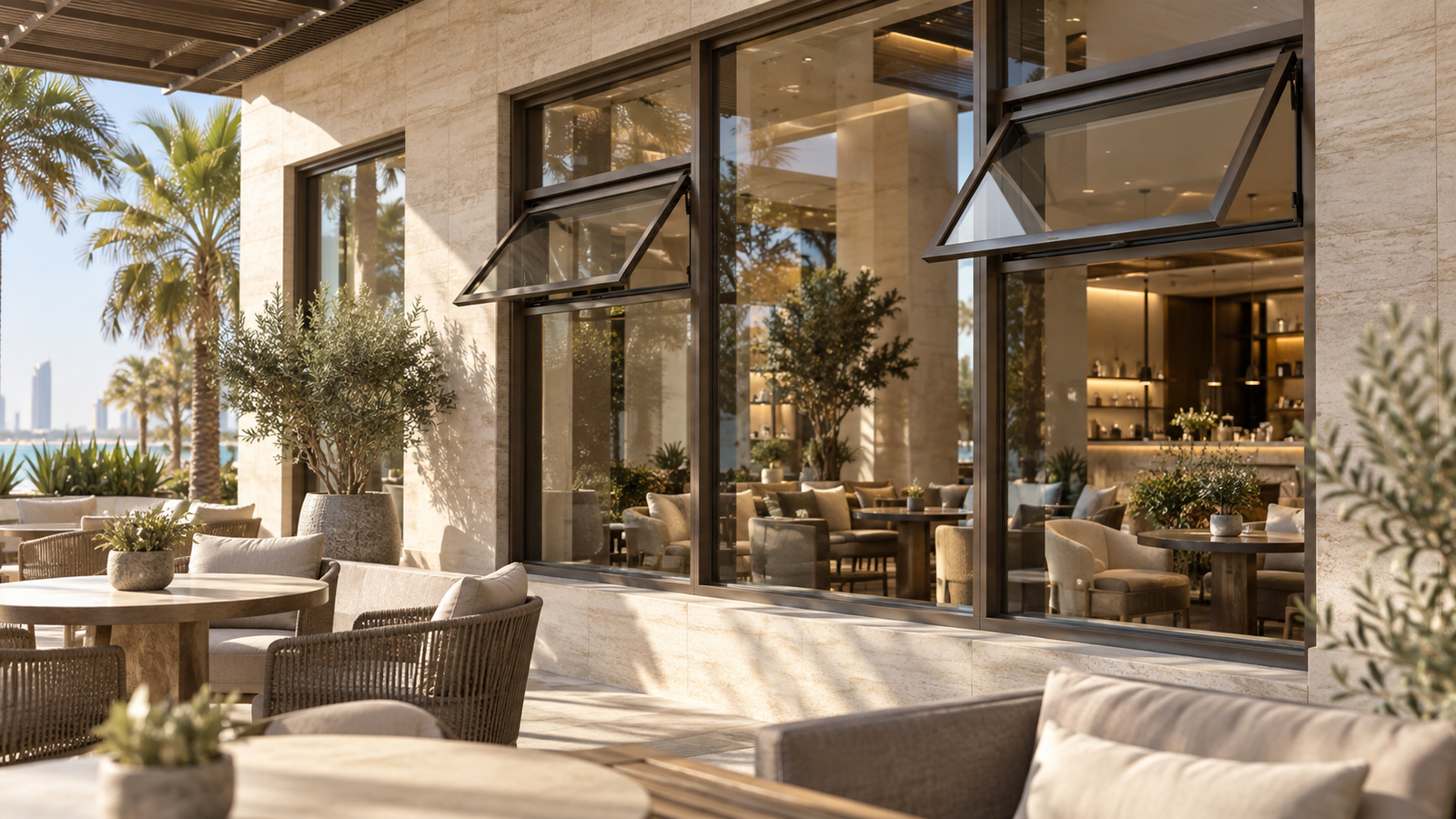
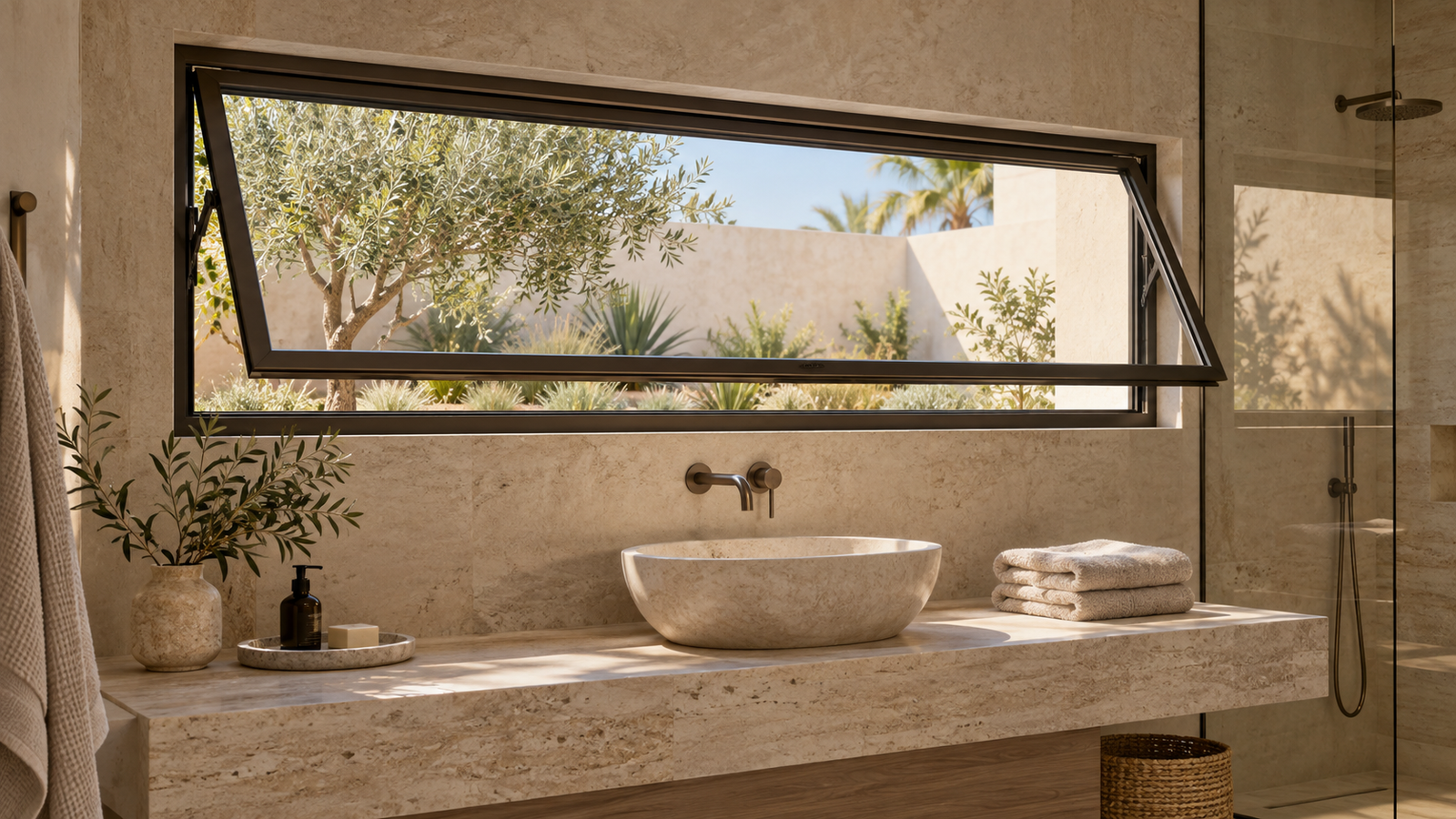
An Aluminium Awning Windows in the UAE is hinged along the top of the frame, with the bottom edge opening outward. That hinge position is what defines the style: because the sash swings out from the bottom while staying fixed at the top, it can help shelter the opening and support ventilation in light rain, though it does not guarantee that water stays out, since wind direction and how exposed the opening is both affect the result. This guide looks at where awning windows work well in a UAE project, where they fall short, and what to check before ordering, using ARQEN’s own awning system as the working example.
An awning product page already covers ARQEN’s specific system in detail; this article focuses on the buying decision, comparisons, and questions worth asking before you order.
What an Aluminium Awning Window
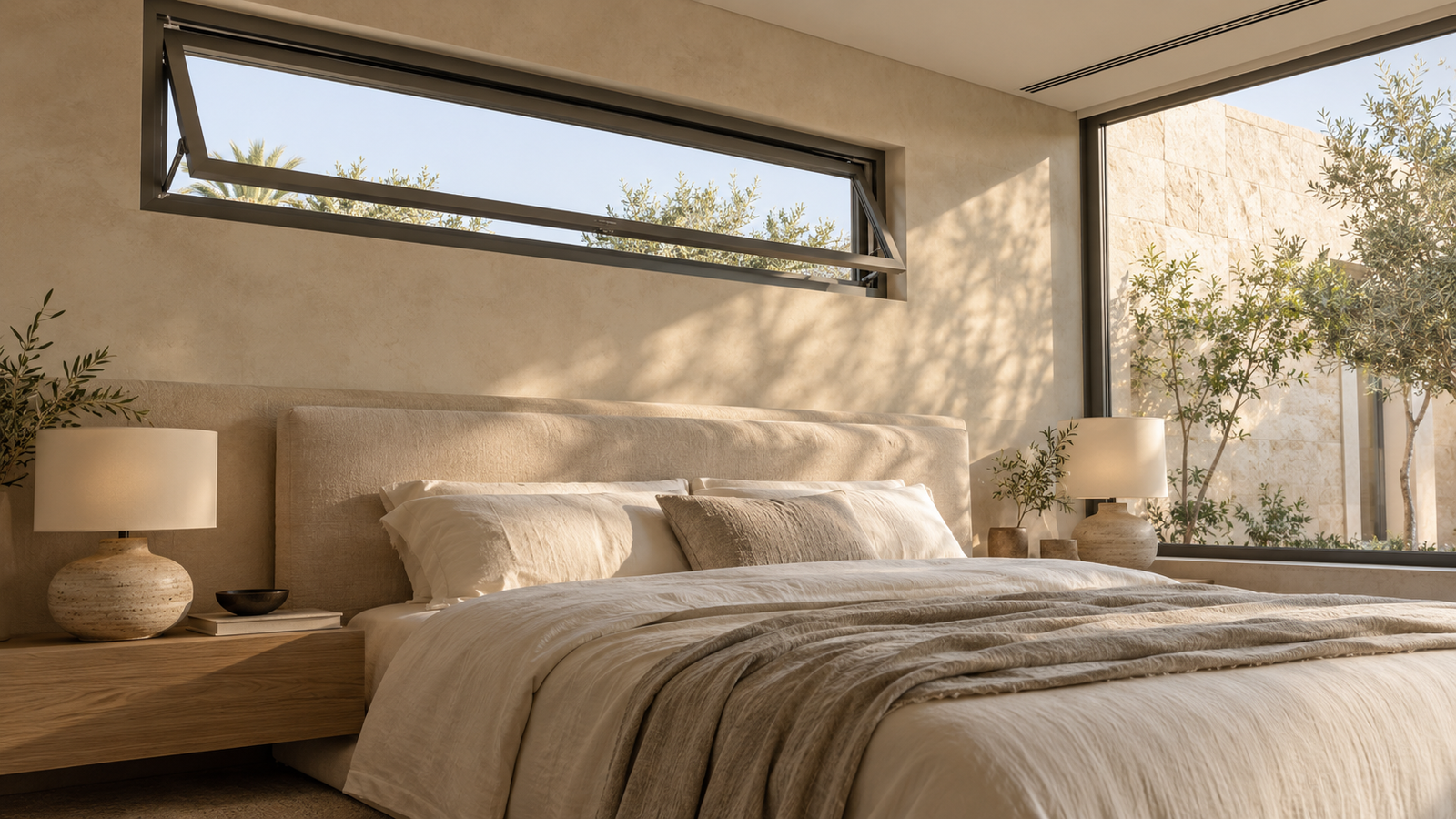
The sash is hinged at the top of the frame and opens outward from the bottom, typically using friction stays that hold the sash at a set angle, a locking handle to secure it closed, and in some cases a restrictor that limits how far it can open. Some ranges also offer optional motorised opening. Confirm with your supplier exactly which of these your project’s units include, since hardware varies by size and specification, and the opening mechanism should not be assumed to be a hand crank without checking.
Where Aluminium Awning Windows in the UAE Work Well
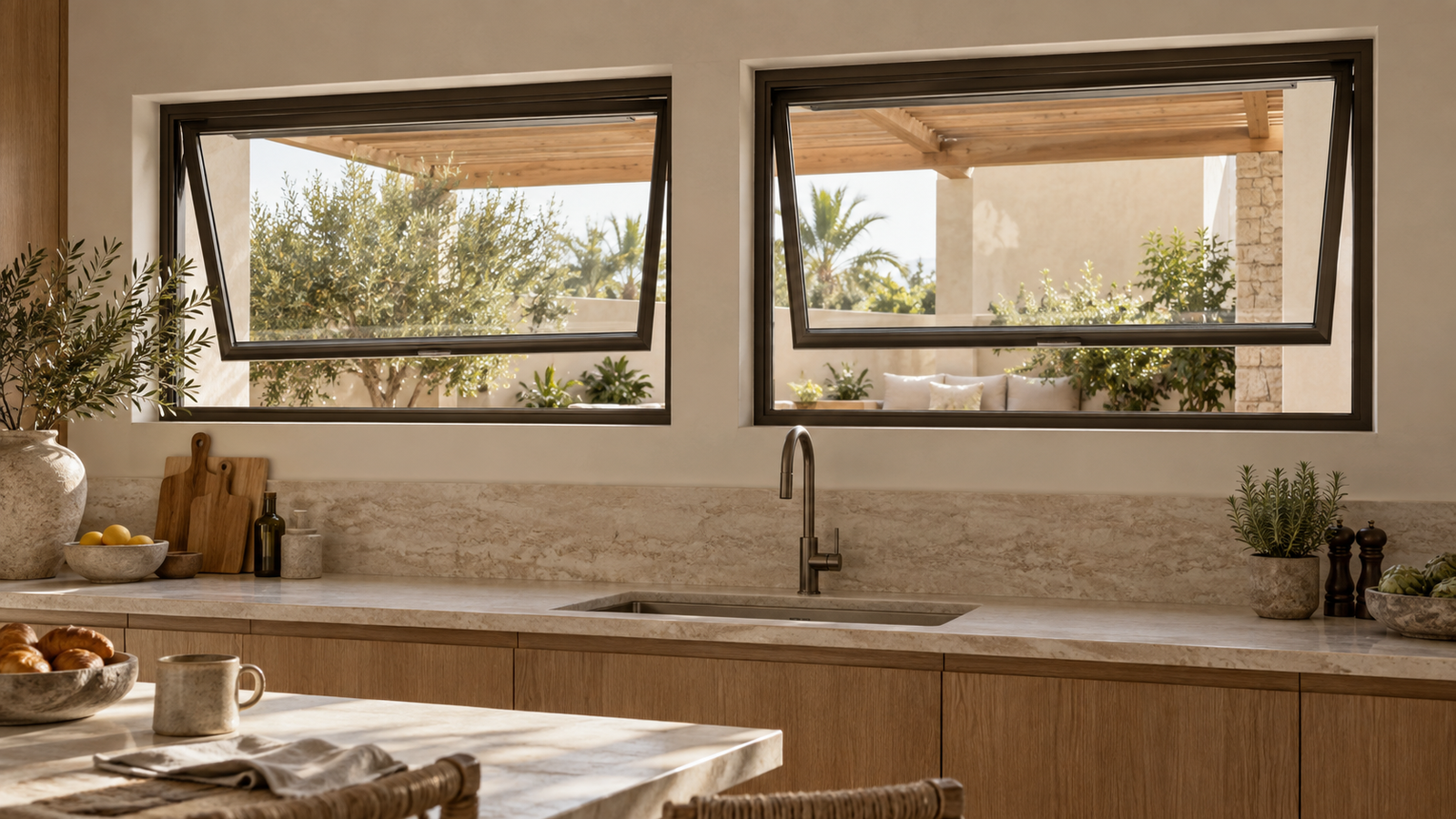
- Bathrooms and kitchens, where a ventilation opening is wanted as part of the room’s overall ventilation plan, alongside rather than as a replacement for mechanical extraction.
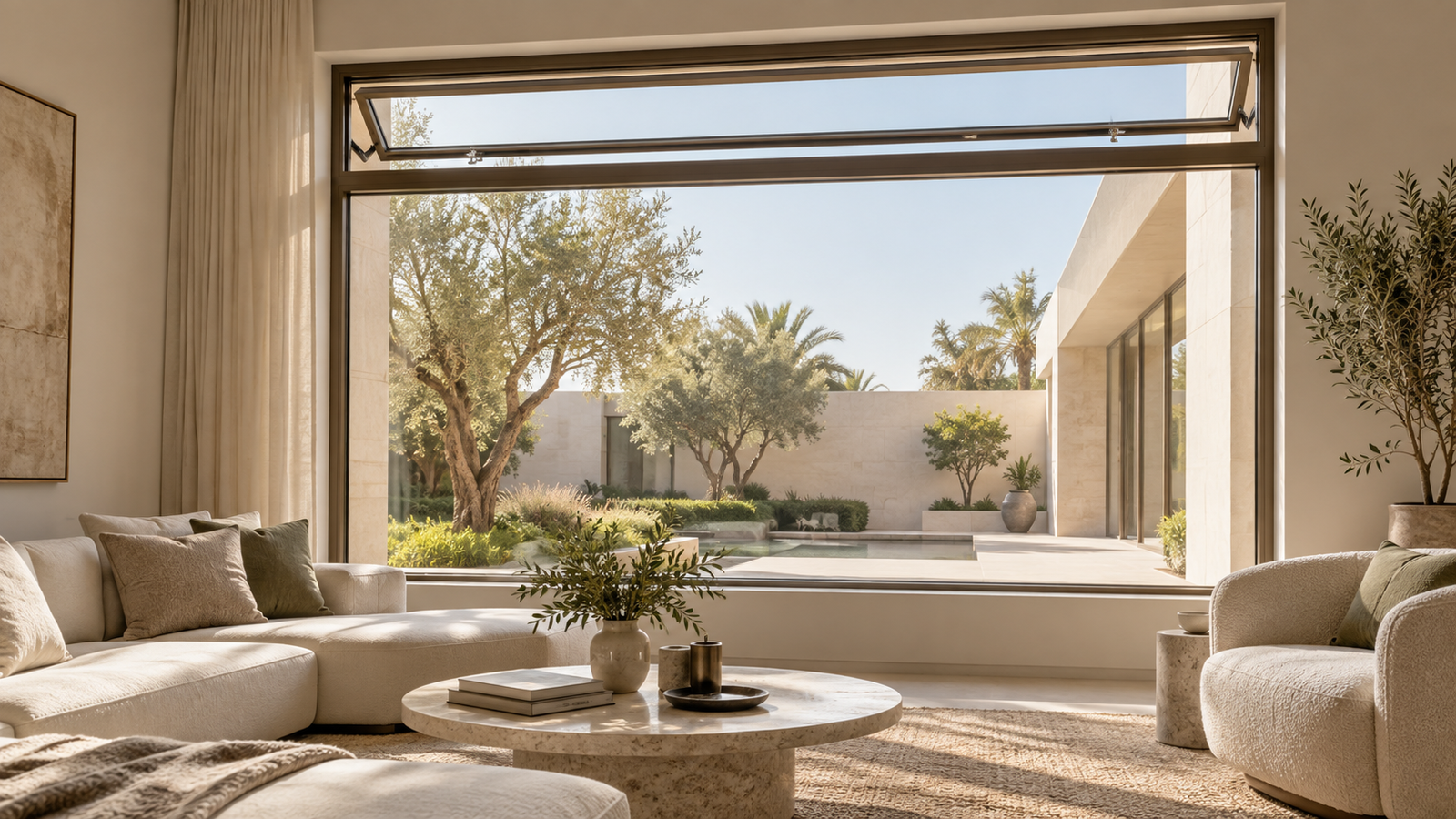
- Positions above a fixed picture window, where a narrow awning strip adds a ventilation option without breaking up the main glazed view.
- Rooms where a smaller, higher opening suits the layout better than a full-height opening configuration, such as above a countertop or fitted furniture.
- Situations where the sash needs to stay open a controlled amount rather than fully, using a restrictor or friction stay setting.
Ventilation decisions in the UAE should account for outdoor heat, humidity, and dust levels, and how the space is cooled overall. An open window is not automatically beneficial in every condition; on a hot, dusty, or humid day, keeping a space sealed and relying on mechanical cooling and extraction may be the more practical choice, with the awning opened when outdoor conditions actually favour it.
What “Helps Protect from Light Rain” Actually Means
Because the sash opens outward from a top hinge, an open awning window can help shelter the gap during light, fairly vertical rain. This is a real characteristic of the design, but it is not a guarantee. Wind-driven rain, heavier downpours, or an exposed position facing prevailing weather can still let water past an open sash. Treat this as a helpful characteristic to weigh when deciding whether to leave a window open in changeable weather, not as a reason to leave it open unattended or assume it will stay dry.
Awning Windows vs. Other Configurations
How an awning window compares with casement, tilt and turn, or fixed glazing depends on the actual dimensions, opening limits, hardware, and glazing specified for each, rather than the configuration name alone. A few general points are worth keeping in mind, with the specifics confirmed project by project.
- Vs. casement: casement windows generally open to a larger, unobstructed area when fully swung out; an awning window’s opening is limited by its friction stay or restrictor setting. Whether one offers meaningfully more or less ventilation than the other depends on the actual sash size and opening angle, not a blanket rule.
- Vs. tilt and turn: tilt and turn offers a tilt position plus a full turn-open position from one handle. Comparing its ventilation area against an awning window’s open position again depends on the specific units, not a general assumption that one always ventilates more than the other.
- Vs. fixed: fixed panels offer no ventilation at all, which is why awning windows are often paired with a large fixed panel to add an airflow option without disturbing the main view.
Aluminium Awning Windows in the UAE at a Glance
| Attribute | Detail | Note |
| Hinge position | Top-hinged, opens outward from bottom | Defines the style |
| Hardware | Friction stays, locking handle, optional restrictor, optional motorised opening | Confirm exact spec per order |
| Glazing | Double and triple glazing per published range | Confirm current options before publishing |
| Rain performance | Helps protect from light rain | Not guaranteed in wind-driven or heavy rain |
| Warranty | Manufacturer’s warranty, term and coverage to confirm | Distinguish structural, hardware, glazing, seals |
Glazing Options
Double glazed: two panes with a sealed gap, reducing heat transfer relative to single glazing, and the likely default for most external UAE applications.
- Triple glazed: an additional pane for further thermal and acoustic performance, worth considering where either is a priority, subject to sash weight and hardware rating.
- Solar control and acoustic coatings, where available, can be added to either build-up; confirm which coatings are offered on the awning configuration specifically.
Acoustic Performance: What Acoustic Glazing Does and Does Not Do
Acoustic glazing reduces noise transmission through the glass when the window is closed. It does not help while the window is open, since an open gap lets outside sound in regardless of the glass specification. If noise control matters for a room, such as a bedroom facing a road, the acoustic benefit applies to the closed position, and there is a real trade-off to weigh: opening the window for ventilation reduces the noise control that closed acoustic glazing otherwise provides. Deciding between natural ventilation and consistent noise control for a given room is a genuine choice, not one where acoustic glazing solves both at once.
Energy Efficiency: Closed Performance vs. Open Ventilation
These are two separate questions and worth treating separately. With the window closed, energy performance depends on the frame’s thermal break, the glazing specification, and the quality of the compression seal around the sash; these are the factors that determine how much heat transfers through the window when it is shut. Once the window is opened for ventilation, outside air, heat, and humidity move through the gap directly, and no frame or glazing specification changes that while it is open.
In practice this means a well-specified awning window can perform well when closed, but opening it for ventilation is a deliberate trade against that performance, made when the ventilation benefit outweighs the cooling cost at that particular time. Avoid assuming a closed-position specification tells you anything about performance while the window is left open.
Practical Details Worth Checking Before Ordering
- Outward swing clearance: confirm nothing external, such as a balcony rail, shading device, or planter, will obstruct the sash when it opens.
- Handle reach: for windows positioned higher on a wall, check that the handle or any motorised control is genuinely reachable and operable, or specify motorised opening where it is not.
- Exterior cleaning access: an outward-opening sash does not always give full access to its own outer face; confirm how the specific unit is intended to be cleaned, especially at height.
- Insect screen compatibility: confirm whether a screen can be fitted to the specific awning configuration you are ordering, since compatibility can depend on the hardware used.
Installing Awning Windows
- Precise opening measurement and survey before manufacturing, accounting for the outward swing clearance the sash will need.
- Frame setting and levelling into the rough opening, checked for square before final fixing.
- Hardware fitting, including the friction stay, locking handle, and any restrictor or motorised opening component, calibrated for smooth and correctly limited operation.
- Perimeter sealing between the frame and the surrounding structure, separate from the sash’s own weatherstripping.
- Final testing of the opening and closing action, lock engagement, and restrictor function before handover.
Maintaining Awning Windows
Follow the hardware maintenance schedule supplied with your specific units rather than a generic routine, since lubrication points and appropriate products vary by hardware type and manufacturer.
- Confirm with your supplier which hardware points require periodic lubrication and which products are suitable, rather than applying a generic lubricant to the friction stay or handle mechanism.
- Clean the track and hinge area of dust and sand buildup periodically, which can affect smooth operation over time.
- Check the weatherstripping around the sash periodically for cracking or compression loss.
- Rinse coastal-facing units more frequently to reduce salt buildup on hardware.
What Affects Pricing
- Size: larger sashes require hardware rated for the additional glass weight.
- Hardware specification: friction stays, restrictors, and optional motorised opening all affect cost, and should be compared like for like against any alternative configuration rather than assumed to be cheaper or more expensive by default.
- Glazing choice: moving from double totriple glaz ing, or adding solar control or acoustic coatings where available, increases cost alongside performance.
- Finish: standard powder-coated finishes are more economical than custom RAL colour matching.
- Quantity and access: ordering multiple units together is typically more cost-efficient per unit, and difficult-access installations add to labour cost.
Avoid assuming awning units are cheaper or more expensive than an equivalent casement or tilt and turn unit without comparing the actual size, hardware, and glazing specified for each. A project-specific quote remains the most reliable way to get an accurate number.
Why ARQEN
Arqen Industries manufactures its awning system as part of its wider aluminium window range. Warranty coverage and the company’s stated years of experience should be confirmed and stated precisely, distinguishing structural coverage from hardware, glazing, finish, and seal coverage, rather than repeated as a single blanket figure.
Frequently Asked Questions
Do Aluminium Awning Windows in the UAE keep rain out while open?
They can help shelter the opening during light, fairly vertical rain because the sash opens outward from a top hinge, but this is not guaranteed. Wind-driven rain or an exposed position can still let water in, so treat this as a helpful characteristic rather than a promise.
Is it safe to leave an awning window open when nobody is home?
Security should be assessed with the window closed and locked. A restricted opening from a friction stay or restrictor is a ventilation-control feature, not a verified security measure, so avoid relying on a partially open window as a security setting unless the manufacturer has specific data supporting that.
Does acoustic glazing help if the awning window is left open?
No. Acoustic glazing reduces noise transmission through closed glass; it does not help once the window is open, since sound enters through the gap regardless of the glass. There is a genuine trade-off between ventilation and noise control for any open window.
What hardware comes with ARQEN’s awning windows?
Published options include friction stays, locking handles, restrictors, and optional motorised opening. Confirm the exact specification for your order, since it can vary by size and project.
What glazing options are available?
Double and triple glazing are listed for the current range; confirm with ARQEN whether solar control or acoustic coatings are available on awning units specifically.
How much maintenance do awning windows need?
Follow the maintenance schedule supplied with your specific hardware, since lubrication points and suitable products vary by hardware type. Periodic cleaning of the track and hinge area and a check of the weatherstripping are generally recommended.
Does the ARQEN awning system come with a warranty?
Yes, backed by a manufacturer’s warranty. Ask ARQEN for the exact term and what it covers by component before ordering, since structural, hardware, glazing, and seal coverage may differ.
Get a Specification and Quote
For ARQEN’s full awning specification, see the ARQEN Awning Window System product page. For help choosing between configurations, see How to Choose Aluminium Windows in the UAE and the ARQEN Fixed Window System guide for a common pairing. Share your opening dimensions, installation height, project location, and ventilation needs with the Arqen Industries team to get a suitable specification and quote: get in touch.