
How to Clean Aluminium Window Frames: The Complete Step-by-Step Guide (2026)
Knowing how to clean aluminium window frames properly is one of the simplest ways to keep a home or building looking its best. Aluminium frames are known for being low maintenance, but low maintenance doesn’t mean no maintenance. Dust, sea salt, hard water, and pollution can build up on frames over time, leaving behind dull patches, white powdery residue, or streaky stains that make even a new window look tired. Left unchecked for long enough, these deposits can also work their way into tracks and seals, making windows harder to open and closing gaps less tightly than they should. The good news is that once you know the right steps and the right products to avoid, cleaning aluminium window frames is quick and straightforward.
This guide walks through exactly how to clean aluminium window frames, what causes the most common stains, how often you should be cleaning depending on where you live, and how to keep your frames looking new for years, whether they’re on a home, an office, or a commercial building. We’ll also look at why some frames stay cleaner for longer than others, and what that comes down to.
Cleaning aluminium window frames is simple when you use the right method and gentle cleaning products. Start by removing loose dust, cobwebs, and debris with a soft brush, microfiber cloth, or a vacuum cleaner fitted with a brush attachment, paying extra attention to the corners and window tracks. Next, mix a few drops of mild dish soap with warm water and wipe the frames from top to bottom using a soft sponge or microfiber cloth. For stubborn stains, water spots, or light oxidation, spray a 1:1 solution of white vinegar and water onto the affected areas, leave it for 5–10 minutes, then gently scrub with a soft toothbrush. Once the dirt has loosened, wipe the frames with a clean damp cloth to remove any soap or vinegar residue, then dry them thoroughly with a soft towel to prevent streaks and water marks. Finally, inspect the drainage holes and sliding tracks, removing any trapped dirt or debris with a cotton bud or soft brush to ensure proper water drainage. Avoid using abrasive scrubbers, steel wool, bleach, ammonia, or harsh chemical cleaners, as these can scratch or damage the aluminium surface, especially on powder-coated finishes. Regular cleaning every three to six months helps aluminium window frames maintain their appearance, prevents corrosion, and extends their lifespan, making them look clean and perform efficiently for years.
Why Learning How to Clean Aluminium Window Frames Properly Matters

Aluminium naturally forms a thin oxide layer that protects it from corrosion, which is part of why it holds up so well outdoors. But when dust, salt air, and grime sit on the surface for too long, that protective layer can start to look dull or develop white, chalky patches known as oxidation. This is exactly why learning how to clean aluminium window frames the right way, and doing it regularly, matters so much: it removes these deposits before they build up, keeps the frame’s finish looking sharp, and helps seals and hardware last longer by keeping grit out of tracks and hinges.
There’s also a cost side to this. Frames that are cleaned regularly rarely need anything beyond soap and water, while neglected frames often end up needing stronger treatments, polishing compounds, or even professional restoration to bring the finish back. A five-minute wipe-down every few weeks is a lot cheaper and easier than dealing with years of built-up oxidation later, and it protects the resale value of a property too, since chalky, stained frames are one of the first things buyers notice on a facade.
What You’ll Need to How to Clean Aluminium Window Frames
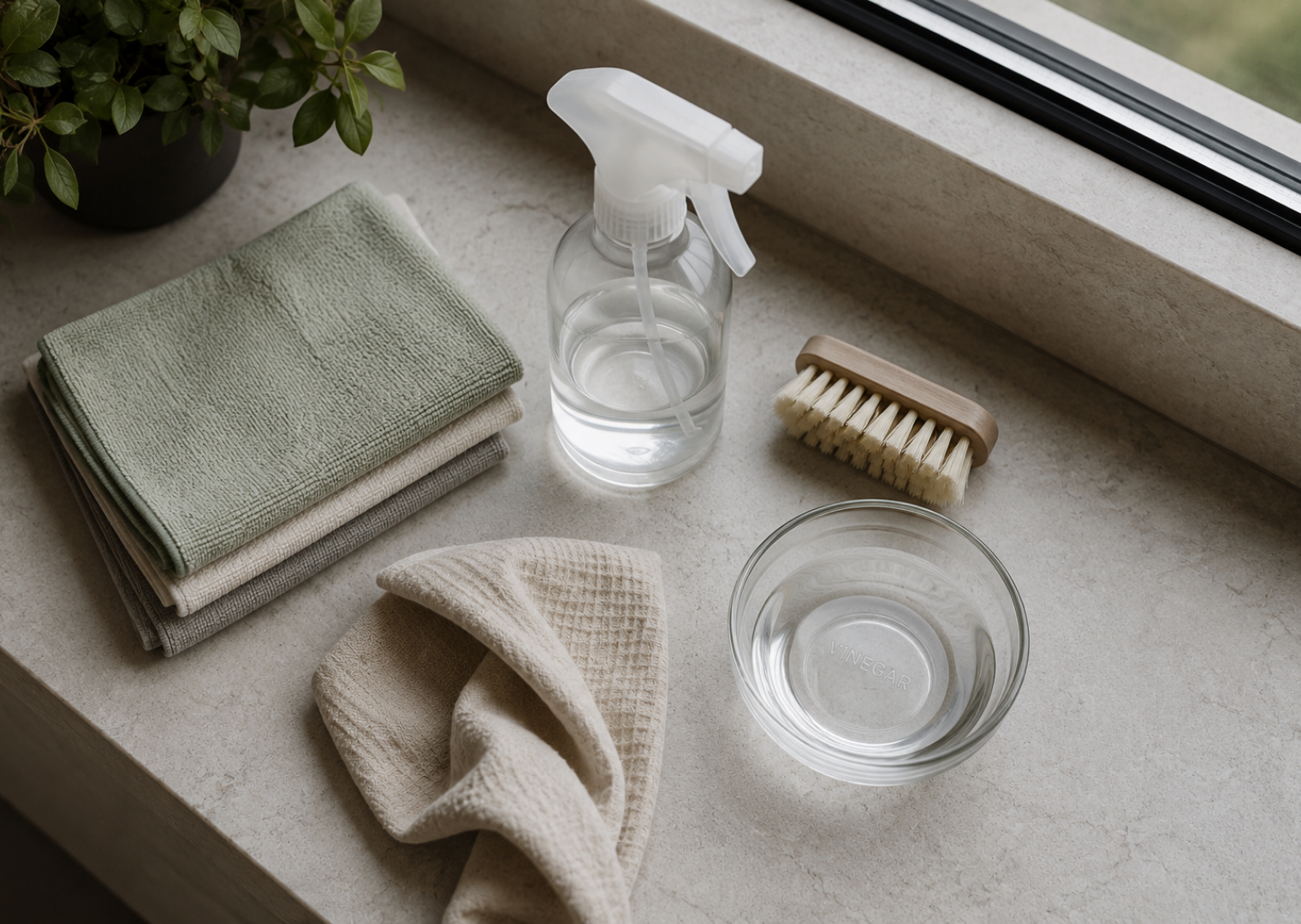
Before you start, it helps to have the right materials on hand so you’re not switching between products halfway through. Everything on this list is affordable and widely available, and none of it requires specialist tools.
- A soft microfibre cloth or sponge, to avoid scratching the surface
- Warm water, which helps loosen dirt without harming the finish
- A mild dish soap or pH-neutral cleaner, for everyday grime
- A soft-bristled brush for tracks and corners, such as an old toothbrush
- A dry microfibre cloth for final buffing, to prevent water spots
- White vinegar or a specialist aluminium cleaner, for stubborn stains and oxidation
How to Clean Aluminium Window Frames Step by Step

Once you have your materials ready, cleaning aluminium window frames properly comes down to five simple steps. Working through them in order helps avoid dragging dirt and grit across the surface, which is one of the most common causes of scratches and dull patches.
Step 1: Remove Loose Dust and Debris
Start by brushing or wiping away loose dust, sand, and cobwebs from the frame and tracks with a dry cloth or soft brush. Clearing this away first stops you from grinding gritty particles into the finish once you add water, which is one of the easiest ways an otherwise careful clean ends up leaving fine scratches behind.
Step 2: Wash with Warm, Soapy Water
Mix warm water with a small amount of mild dish soap. Using a soft cloth or sponge, wipe down the entire frame in the direction of the metal’s grain, paying extra attention to corners and joints where dirt collects. Work in manageable sections rather than the whole frame at once, so the soap doesn’t have time to dry before you rinse it off. Avoid abrasive pads or scouring sponges, since these can scratch the aluminium’s protective finish.
Step 3: Clean the Tracks and Hardware
Use a soft-bristled brush, such as an old toothbrush, to clean out window tracks, hinges, and locks. This is usually where the most debris builds up, and leaving it can affect how smoothly the window opens and closes, and can eventually strain the rollers or hinges. A small handheld vacuum can also help lift out loose debris before you brush the tracks.
Step 4: Rinse Thoroughly
Rinse the frame with clean water to remove any leftover soap residue, since dried soap can leave its own dull film on the surface if it’s left to sit. A damp cloth works well for this if you’d rather not use a hose, especially on upper-floor windows.
Step 5: Dry and Buff
Dry the frame with a clean microfibre cloth, then buff gently to bring back its shine. Letting aluminium air-dry can leave water spots, so a manual dry is worth the extra couple of minutes, particularly if your local water supply is hard or mineral-rich.
How to Clean Aluminium Window Frames: Removing Stubborn Stains and Oxidation
For white, chalky oxidation or mineral deposits that soap and water alone won’t shift, mix equal parts white vinegar and water and apply it to the affected area with a soft cloth. Let it sit for a few minutes, then gently wipe and rinse thoroughly, since vinegar is acidic and shouldn’t be left on the surface too long. For heavier oxidation, a specialist aluminium cleaner or a very fine automotive polishing compound can help restore shine, but always test on a small, hidden section of frame first, in case the finish reacts differently than expected.
If a section of frame doesn’t respond to any of these methods, it’s often a sign that the oxidation has gone deeper than a surface clean can reach, in which case light sanding and re-coating by a professional may be the only real fix.
How to Clean Aluminium Window Frames in Coastal and Dusty Climates
In coastal cities and desert climates, including much of the UAE, aluminium window frames face a tougher combination of salt air, fine sand, and intense heat than frames in milder climates. Salt air speeds up oxidation, while fine desert dust can work its way into every groove and track. If you live near the coast or in a particularly dusty area, rinsing frames with plain water between full cleans helps stop salt and grit from settling in and reacting with the metal. It’s also worth checking window tracks after sandstorms, since sand that isn’t cleared out can scratch the frame every time the window opens or closes.
Direct summer sun can also make cleaning trickier, since cleaning solutions can dry and streak on hot metal before you’ve had a chance to rinse them off. Cleaning frames in the early morning or evening, when the surface is cooler, usually gives a better, streak-free result.
Mistakes to Avoid When Cleaning Aluminium Window Frames

A few habits are responsible for most of the scratching, dullness, and premature staining seen on aluminium window frames. Avoiding these is often more effective than any specific cleaning product.
- Skipping the rinse step, which leaves soap residue to dry into a dull film
- Cleaning in direct, harsh sunlight, which causes streaking and uneven drying
- Using the same cloth for glass and frames, which can transfer glass cleaner chemicals onto the aluminium finish
- Ignoring tracks and hinges, which lets grit build up until it starts affecting how smoothly the window operates
- Waiting too long between cleans, which allows light dust to turn into stubborn, bonded oxidation
Sticking to mild, pH-neutral products and a consistent schedule is the safest way to keep an aluminium frame’s factory finish intact for years.
How Often Should You Clean Aluminium Window Frames?
A general wipe-down every four to six weeks is enough for most homes. In coastal areas or dusty environments, such as much of the UAE, cleaning every two to three weeks helps stop salt and sand from settling in and causing oxidation. A deeper clean, including tracks and hardware, is worth doing at least twice a year, ideally before and after the hottest months, when heat and dust exposure are at their peak.
Arqen Industries:
How to Clean Aluminium Window Frames Built to Stay Cleaner for Longer
How easily a window frame cleans up, and how long it keeps its finish, depends heavily on the quality of the aluminium and the coating used in the first place. This is where Arqen Industries makes a real difference. Rather than treating cleaning tips as a substitute for frame quality, Arqen focuses on manufacturing aluminium window frames that need less maintenance to begin with. Here’s what sets Arqen’s frames apart:
- Decades of aluminium manufacturing experience: Arqen’s background spans over 60 years in construction and architectural aluminium, with dedicated expertise in windows, doors, curtain walls, and facade systems, so every frame is built by a team that specialises in exactly this product.
- High-grade profiles and factory-applied powder coatings: Arqen manufactures its aluminium window frames with high-grade profiles and factory-applied powder coatings, which resist oxidation and staining far better than lower-grade, thinly coated aluminium.
- Engineered for demanding climates: Arqen’s coatings and profiles are tested against the UAE’s heat, humidity, and salt air, rather than being a generic specification imported from a milder climate.
- In-house manufacturing and quality control: Because Arqen fabricates its own aluminium components rather than outsourcing production, every window frame goes through the same quality checks, resulting in a more consistent coating and a longer-lasting finish.
- Backed by a 20-year warranty: Arqen’s aluminium window frames are backed by a 20-year structural warranty, giving homeowners and developers long-term confidence in how the frames will perform and age.
The practical result is simple: a well-coated Arqen frame needs less scrubbing, holds its colour longer, and is far less likely to develop the chalky white residue that’s common with cheaper, thinner coatings. A budget aluminium profile with a thin or inconsistent coating can start showing oxidation within a year or two in a hot, humid, or salty environment, no matter how carefully it’s cleaned, while a properly coated, higher-grade profile can go years with nothing more than the routine cleaning covered in this guide. If you’re noticing that your current windows stain or oxidise no matter how often you clean them, it may be worth having the frame quality checked rather than just cleaning more often.
Frequently Asked Questions How to Clean Aluminium Window Frames
What causes white powder on aluminium window frames?
The white, chalky powder on aluminium window frames is a form of oxidation, caused when the metal’s surface reacts with moisture and air over time. It’s more common on uncoated or lower-quality aluminium and can usually be removed with a vinegar and water solution or a specialist aluminium cleaner.
Can I use vinegar to clean aluminium window frames?
Yes, a diluted mix of equal parts white vinegar and water is safe and effective for removing mineral deposits and light oxidation from aluminium frames. It should be rinsed off promptly, since leaving vinegar on the surface for too long can affect the finish.
How do I stop my aluminium window frames from staining?
Regular cleaning every few weeks, prompt rinsing after dusty or salty weather, and avoiding harsh chemicals all help prevent staining. Frames with a high-quality factory coating, like those Arqen manufactures, also resist staining far better than uncoated or poorly finished aluminium.
Is it safe to pressure wash aluminium window frames?
Pressure washing can be used at a safe distance and low setting, but holding the nozzle too close can force water past the seals and into the frame cavity. A soft cloth or sponge with warm, soapy water is a safer and equally effective option for most homes.
How do I clean aluminium window frames without scratching them?
Use a soft microfibre cloth or sponge rather than abrasive pads, and stick to mild, pH-neutral cleaners. Always wipe in the direction of the metal’s grain and avoid steel wool or wire brushes, which can permanently scratch the finish.
How often should aluminium window frames be cleaned in a coastal or desert climate?
In coastal or desert climates, aluminium window frames benefit from a light rinse every couple of weeks and a full clean every two to three weeks, since salt air and fine dust speed up staining and oxidation compared to milder climates.
Why do my aluminium window frames keep oxidising even though I clean them?
If oxidation keeps coming back shortly after cleaning, the issue is often the quality of the aluminium or its factory coating rather than the cleaning routine itself. Lower-grade profiles with thin coatings tend to oxidise faster, especially in hot, humid, or salty conditions, and may need to be reassessed by a professional.
Final Thoughts
Once you know how to clean aluminium window frames properly, it doesn’t need to be complicated. A simple routine of dusting, washing with mild soap and water, and drying thoroughly every few weeks will keep frames looking sharp and prevent oxidation from taking hold. If stains keep coming back no matter how carefully you clean, it’s often a sign of frame quality rather than cleaning technique, and worth getting checked by a professional. With high-grade profiles, factory coatings, and a 20-year warranty, Arqen Industries builds aluminium window frames designed to stay cleaner for longer in the first place.
Have windows that keep staining despite regular cleaning? Get a free consultation: