What are the best aluminium doors in Dubai? (2026 guide)
Aluminium Doors in Dubai are doors built with an extruded aluminium frame, often thermally broken and glazed, valued in Dubai for its corrosion resistance, energy efficiency, and ability to support large, slim-profile openings such as sliding, pivot, and bi-fold doors. Prices in the UAE typically range from budget powder-coated systems to premium thermally broken European profiles, depending on size, glazing, and finish.
Choosing the right Aluminium Doors in Dubai is not just a design decision it directly affects your home or building’s energy bills, security, resale value, and how well it holds up against the UAE’s heat, humidity, and coastal air. This guide covers every type of aluminium door available in the UAE market today, realistic 2026 price expectations, thermal and security performance, and a practical checklist for choosing a reliable aluminium door supplier in Dubai so you can make a confident, informed decision.
Aluminium Doors in Dubai are available in a wide range of styles, including sliding, hinged, pivot, bi-fold, French, and lift-and-slide systems. Whether you’re designing a modern villa, apartment, office, or commercial building, choosing the right aluminium door system improves energy efficiency, security, durability, and everyday comfort while complementing contemporary architecture.
What Is an Aluminium Door in Dubai?
An aluminium door is built around an extruded aluminium profile frame, typically infilled with single or double-glazed glass, though solid-panel and louvered variants are also common in the UAE. Most modern systems used in Dubai include a thermal break a non-conductive polyamide barrier inside the frame, which slows heat transfer between outdoor and indoor air. The aluminium frame can be powder-coated or anodized in a wide range of colours and textures, including matte, metallic, and wood-effect finishes, making it as much a design element as a functional one.
Why Aluminium Doors Are the Top Choice for Dubai Homes in 2026
- Corrosion and rust resistance: Aluminium forms a natural oxide layer, making it far more durable than steel in Dubai’s coastal, high-salinity air.
- Energy efficiency: Thermally broken aluminium doors paired with double glazing reduce solar heat gain, easing strain on air conditioning and lowering DEWA bills.
- Low lifetime maintenance: Unlike timber, aluminium does not warp, swell, or need repainting under intense UAE heat.
- Slim, modern sightlines: Aluminium supports large glass spans with minimal frame bulk the look most in-demand for Dubai villas, towers, and boutique retail fronts.
- High strength-to-weight ratio: Ideal for oversized entrance doors, pivot systems, and wide sliding or folding openings without excessive frame thickness.
- Better resale and rental appeal: Modern aluminium glazing is now an expected feature in premium UAE villas and apartments, directly impacting property value.
Types of Aluminium Doors in Dubai Market
Each aluminium door type suits a different part of the home or building. Before the detailed breakdown, here is a quick summary of where each type works best and what makes it stand out:
Sliding Aluminium Doors in Dubai
The most requested aluminium door style in Dubai villas and apartments, sliding doors connect indoor living spaces to a garden, terrace, or pool deck without swing clearance. Slim-frame sliding systems maximise glass area, natural daylight, and unobstructed views.
Hinged Aluminium Doors
A traditional swing-open door well suited to primary entrances, offices, and internal partitions where a classic operating style and strong weather seal matter more than a wide opening.
Pivot Doors
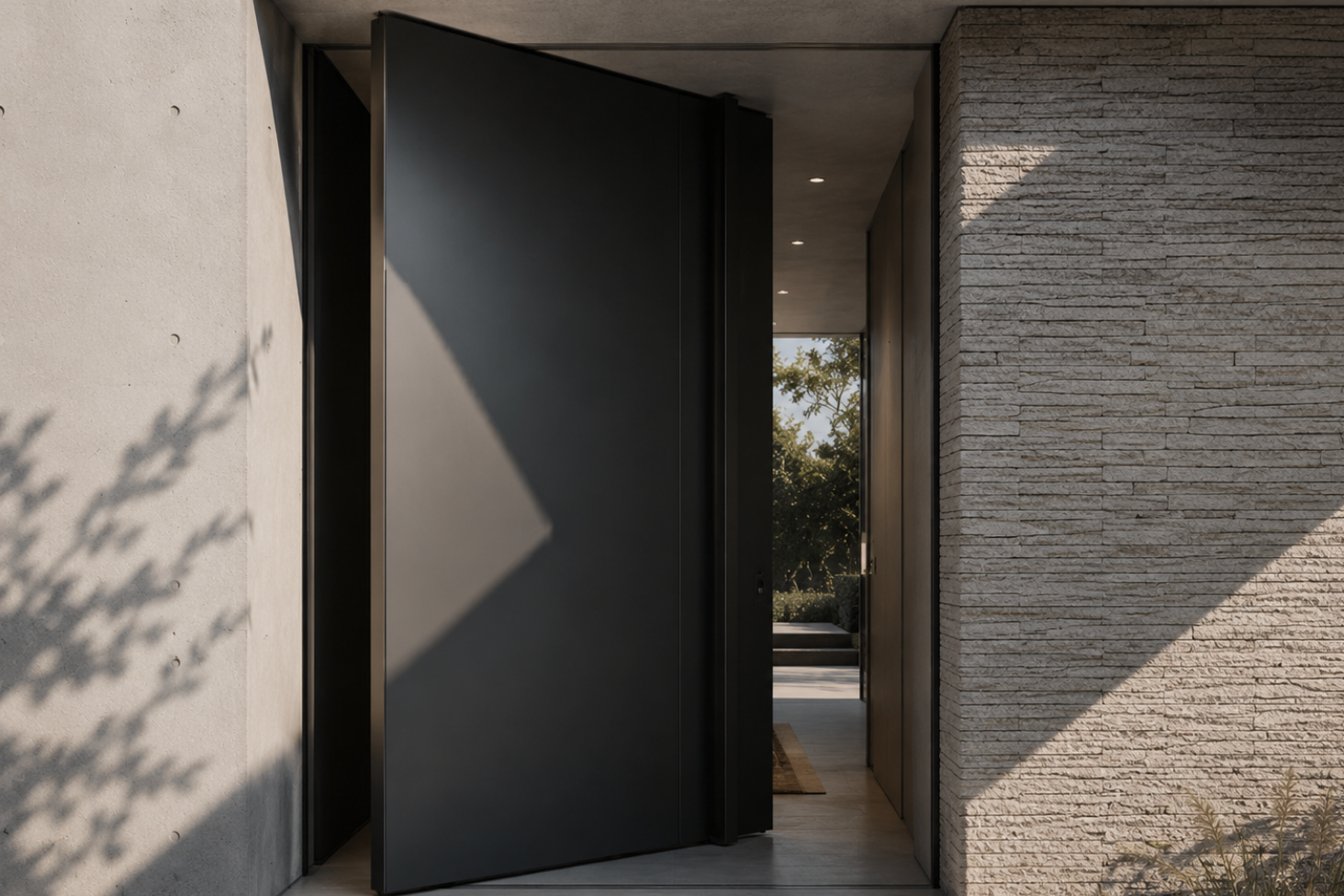
Pivot doors rotate on a top-and-bottom pivot point rather than side hinges, allowing oversized, heavy door panels up to several metres tall. They have become the signature entrance feature for high-end UAE villas and hospitality projects.
Bi-Fold / Folding Aluminium Doors
Multiple glazed panels fold and stack to one side, opening an entire wall to the outdoors. This is one of the most searched aluminium door styles for Dubai villas with a majlis, terrace, or pool area, since it blurs the boundary between indoor and outdoor living.
French Doors
A pair of hinged doors opening outward or inward from the centre, offering a timeless look for bedrooms, studies, and boutique commercial entrances.
Casement Aluminium Doors
A simpler, cost-effective swing door commonly used for utility rooms, staff entrances, and secondary access points, while still offering good ventilation and a clean finish.
Aluminium vs uPVC vs Wooden Doors: Which Is Best for Dubai?
Aluminium, uPVC, and wood behave very differently once they’re exposed to Dubai’s heat, humidity, and coastal air, and that difference shows up over years, not days.
On heat and humidity resistance, aluminium performs excellently, uPVC performs well, and wood struggles without heavy upkeep. In terms of lifespan, a quality aluminium door typically lasts 25 to 30 years or more in the UAE climate, uPVC around 15 to 20 years, and wood roughly 10 to 15 years before major refurbishment is needed. Maintenance follows the same pattern: aluminium needs very little upkeep, uPVC needs slightly more, and wood requires the most ongoing care, from resealing to repainting.
Aluminium also supports the largest panel sizes and widest spans, making it the natural choice for oversized sliding, pivot, and bi-fold doors, whereas uPVC suits medium spans and wood is best kept to smaller, traditional openings. On price, aluminium and wood both tend to sit in the mid-to-premium range, while uPVC is generally the most budget-friendly option. Where aluminium clearly pulls ahead is design flexibility its slim frames suit the modern villa and tower aesthetic that dominates Dubai, while uPVC offers a moderate range of styles and wood leans toward a more traditional look.
For most Dubai villas, towers, and commercial facades, aluminium remains the preferred long-term choice because it combines strength, a slim modern profile, and minimal upkeep three factors that matter most in the UAE’s climate.
Aluminium Door Prices in Dubai (2026): What Affects the Cost
Aluminium door pricing in the UAE varies widely because it depends on several specifications working together, not a single per-square-metre number. The main cost drivers are:
- Profile system and brand: European thermally broken systems typically cost more than standard local aluminium profiles.
- Glass specification: single glazing vs. double glazing vs. solar-control, acoustic, or laminated safety glass.
- Size and panel count: sliding and bi-fold systems with more panels or wider spans increase material and hardware cost.
- Finish: standard powder coating vs anodised or wood-effect finishes.
- Hardware: multi-point locking, soft-close mechanisms, and handle finish quality.
In practical terms, these cost drivers group into three broad tiers. Standard-tier aluminium doors suit budget villas, secondary doors, and utility areas, and sit at the entry-level end of pricing. Mid-range systems, which cover most residential villas and apartments, offer a balanced cost-to-performance ratio and are the most common choice across Dubai. Premium-tier systems used for signature entrances and large pivot or bi-fold spans with high-spec glazing represent a higher upfront investment but deliver the best long-term performance and longevity.
These tiers are directional only exact pricing depends on your project drawings and specification. Request a site-specific quotation rather than relying on a generic rate, since two doors of the same size can differ significantly in price based on glazing and hardware alone.
Thermal Performance & Security: What to Check Before You Buy Aluminium Doors in Dubai
- Thermal break: Confirm the aluminium profile includes a polyamide thermal break to reduce heat transfer and support Dubai’s Al Sa’fat / Estidama energy targets.
- Glazing type: Double-glazed, solar-control glass significantly reduces heat gain compared to single glazing.
- Wind load rating: Important for high-rise balconies and coastal-facing facades.
- Locking system: Multi-point locking is now standard on quality aluminium doors and adds meaningful security over single-point locks.
- Water and air infiltration rating: Look for tested performance data, especially for ground-floor sliding and folding systems.
How to Choose the Right Aluminium Door Supplier in Dubai
- Check UAE project experience — ask for completed villa, tower, or commercial references you can verify.
- Confirm thermal break and glazing specifications match Dubai’s climate and building-code requirements.
- Ask about warranty coverage on both the aluminium frame and the glass unit separately.
- Review installation and after-sales support — correct fitting affects both performance and the door’s lifespan.
- Request a detailed, itemized quotation rather than a single lump-sum price, so you can compare specifications fairly across suppliers.
Why Choose Arqen Industries aluminium-doors-in-dubai
Arqen Industries designs, manufactures, and installs aluminium doors, windows, curtain walls, and facade systems engineered specifically for the UAE’s climate from slim sliding doors and bi-fold systems to full-height pivot entrances and commercial curtain wall facades. Every project is specified with the right thermal break, glazing, and hardware combination for Dubai’s heat, humidity, and coastal conditions, backed by local project experience across villas, residential towers, and commercial developments.
If you’re planning a villa, apartment, or commercial project in Dubai and want an aluminium door system built for long-term performance rather than the lowest upfront price, our team at Arqen Industries can help you choose the right type, glazing, and finish for your space.
Frequently Asked Questions
What is the aluminium-doors-in-dubai for a villa entrance?
Pivot doors and thermally broken hinged doors are the most popular choices for main villa entrances in Dubai, offering a strong visual statement along with good thermal and security performance.
Are aluminium doors better than uPVC in Dubai?
Aluminium generally offers greater strength, larger achievable spans, and a more contemporary look, while uPVC can be more budget-friendly for smaller openings. The right choice depends on span size, design intent, and budget.
Do Aluminium Doors in Dubai rust in coastal areas like Dubai Marina or Palm Jumeirah?
Aluminium does not rust the way steel does. It forms a stable oxide layer that resists corrosion, making it a strong choice for Dubai’s coastal, high-salinity conditions.
How long do aluminium doors last in the UAE climate?
With proper installation, correct thermal break specification, and standard maintenance, quality aluminium door systems typically last 25-30 years or more, even under Dubai’s heat and humidity.
How much do aluminium doors cost in Dubai?
Pricing depends on the door type, size, glazing specification, and hardware. Standard systems sit at the entry-level end, while premium thermally broken pivot or bi-fold systems with solar-control glazing represent the higher end. Always request a project-specific quotation for an accurate figure.
What should I check before buying an Aluminium Doors in Dubai?
Confirm the thermal break specification, glazing type, wind-load rating, and locking system, and ask your supplier for verifiable UAE project references and a clear warranty on both the frame and the glass.
Ready to upgrade your doors, windows, or facade?
Get in touch with Arqen Industries today for a free consultation and project-specific quotation. Visit arqenindustries.com to explore our full range of aluminium doors, windows, curtain walls, and facade systems designed for Dubai and the wider UAE.