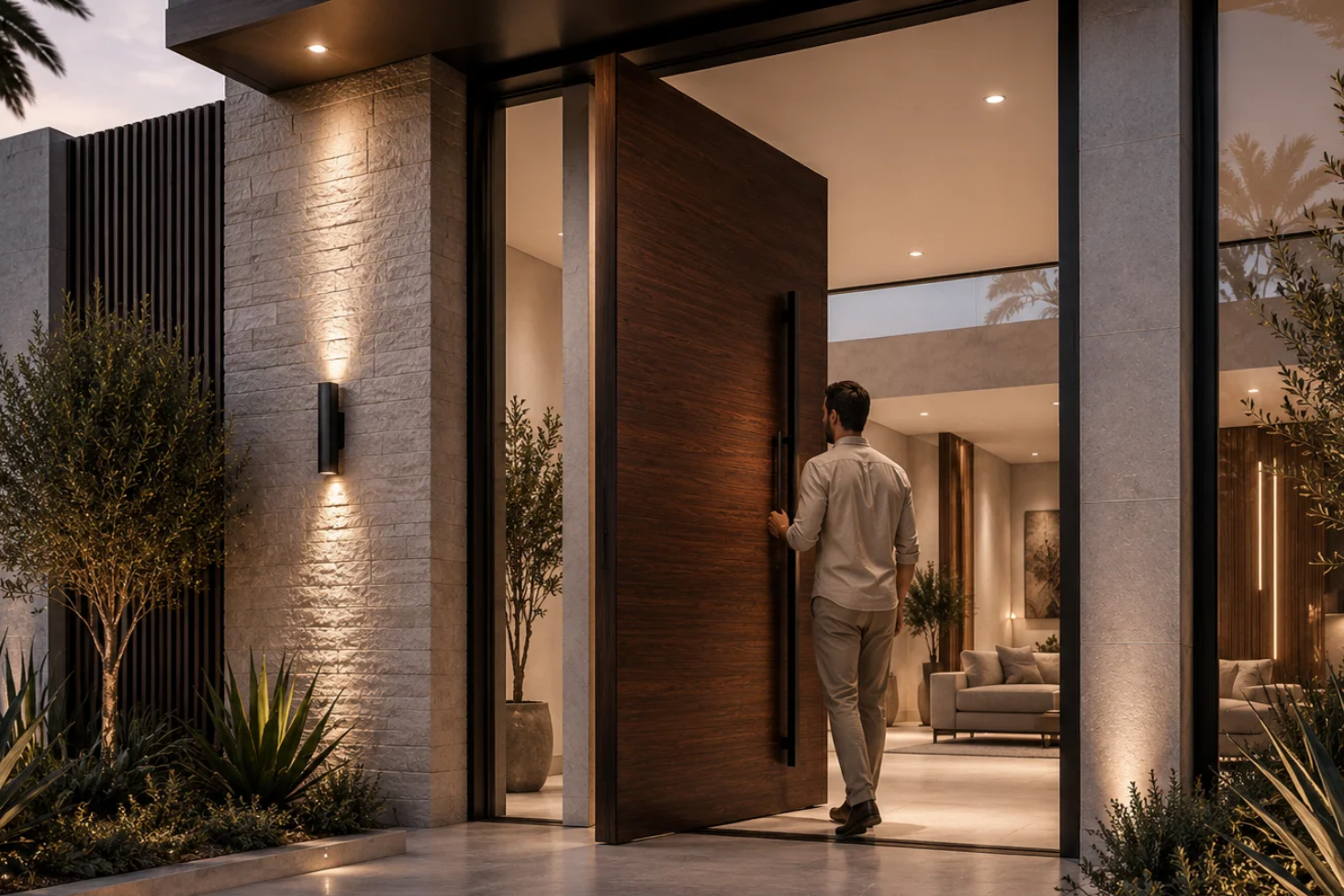
What is a pivot door? Everything you need to know
A Pivot Door is unlike anything you’ve seen in conventional architecture. If you’ve ever walked into a luxury hotel or a beautifully designed home and noticed a door that swings in a way that just feels… different there’s a good chance it was a pivot door. There’s something almost theatrical about the way they move, and once you’ve seen one in action, standard doors start to look a little ordinary by comparison.
So what exactly makes a pivot door different? Is it the right choice for your project? Let’s break it all down.
What Is a Pivot Door?
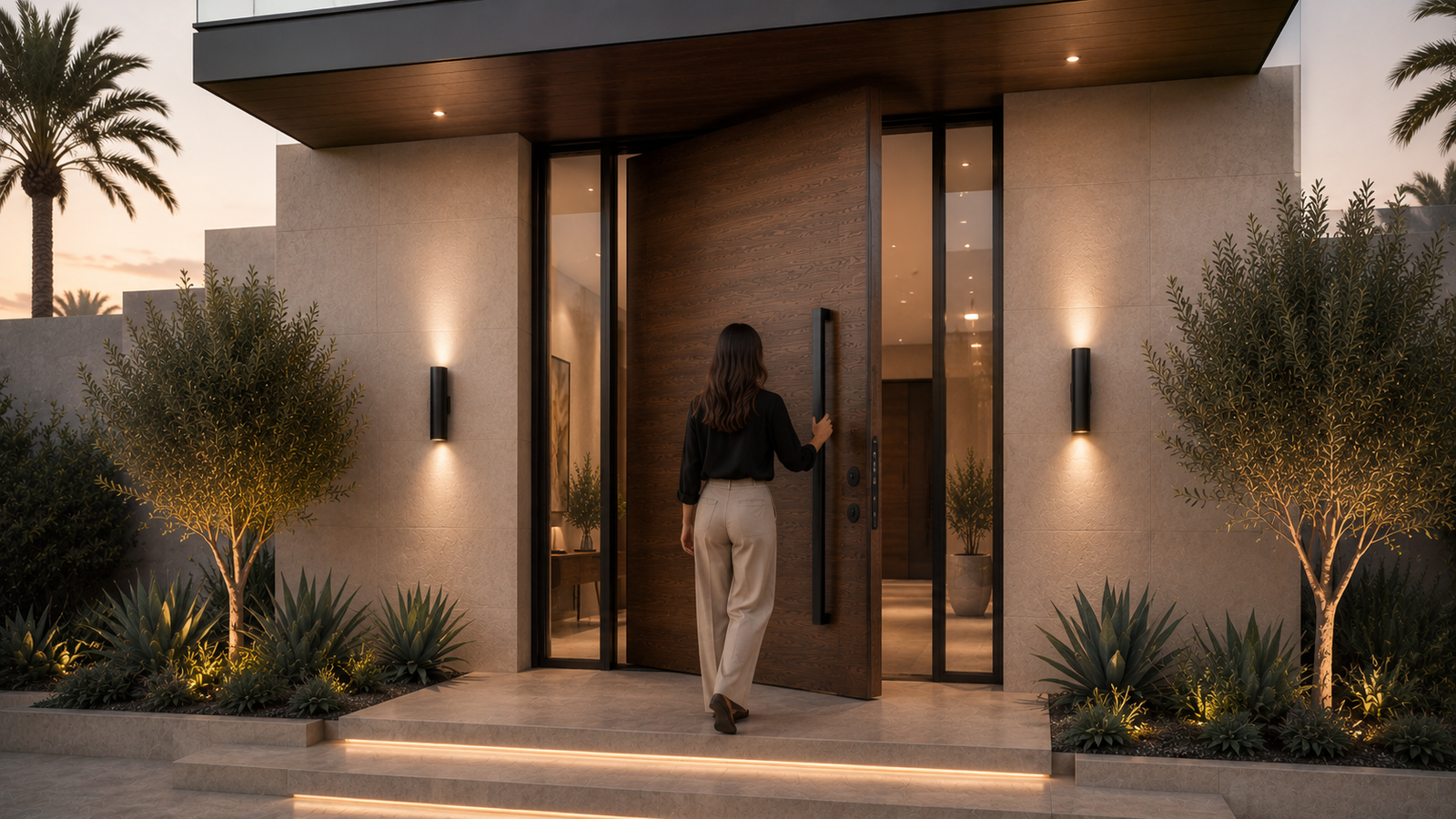
A pivot door rotates on a vertical axis using pivot points fixed at the top and bottom of the door frame, not on the side like a traditional hinged door. That single mechanical difference changes everything: how the door looks, how it moves, how much weight it can carry, and the kind of entrance it creates.
Because the load is carried through the floor and ceiling rather than through a side frame, a pivot door can be built much taller and heavier than standard doors. We’re talking panels that can reach three, four, even five metres in height something a conventional hinge simply couldn’t support.
In Dubai and across the UAE, pivot doors have become a go-to choice for architects, villa owners, and commercial developers who want an entrance that does more than just open and close. They want a statement
How Does a Pivot Door Actually Work?
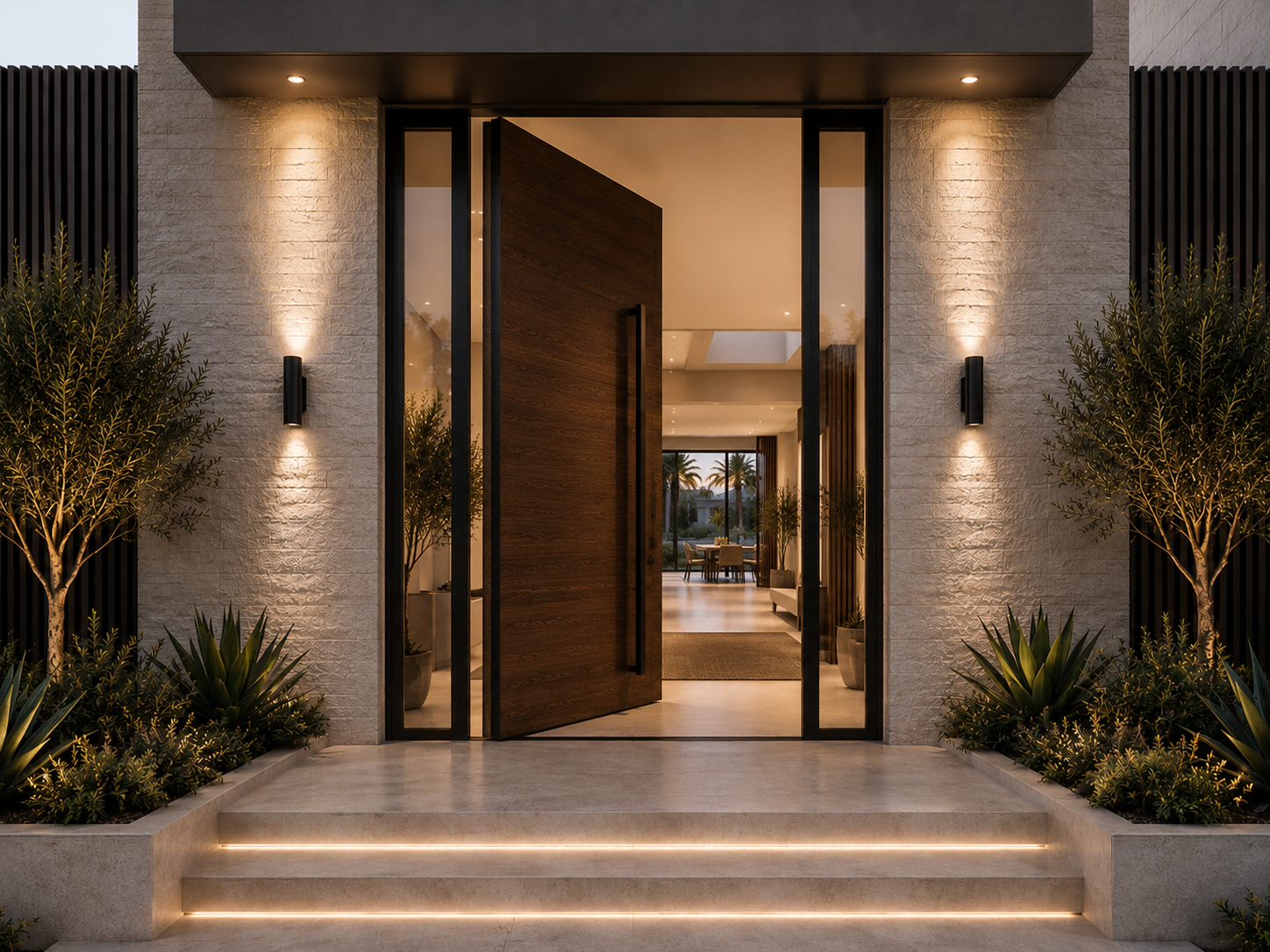
The mechanics are straightforward once you see them. A bottom pivot plate is set into the floor, a top pivot is anchored into the ceiling or header, and the door panel rotates around that vertical axis. The pivot point is usually offset slightly from the centre, meaning a small portion of the door swings one way while the larger portion swings the other.
This offset is part of what makes pivot doors so visually striking. The movement is smooth, almost slow-motion, and because the weight is distributed vertically rather than pulling on a side hinge, even a 200kg door can glide open with minimal effort.
A complete pivot door system typically includes the door panel itself, the concealed pivot hardware, a top pivot assembly, a bottom plate, and sometimes ceiling reinforcement, depending on the panel’s weight. All of this is engineered to work together, which is why professional installation matters so much.
The Features That Make Pivot Door Special
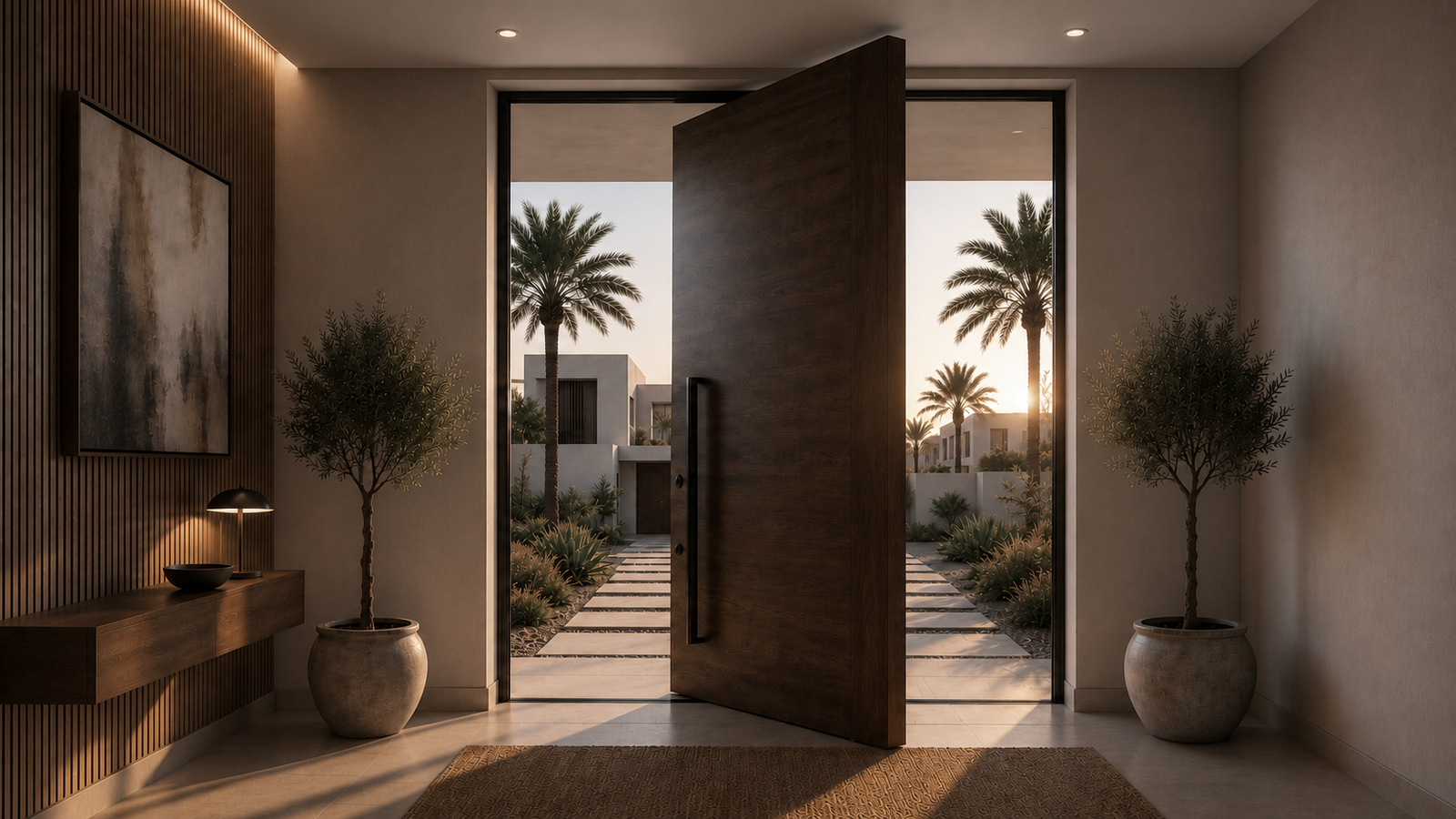
They Handle Sizes Standard Doors Can’t
This is probably the biggest practical advantage. Traditional hinged doors have real size limits go too tall or too heavy and the hinges start to fail over time. Pivot doors don’t have this problem. The vertical pivot system distributes weight far more efficiently, which is why you see them used for those dramatic double-height entrances in luxury villas and five-star hotels.
The Hardware Is Hidden
No visible hinges. No exposed metalwork cluttering the edge of the door. Pivot doors use fully concealed hardware, which is a big reason why they look so clean and architectural. The door becomes the feature not the mechanism holding it up.
They’re Built for Customisation
Every project is different, and pivot doors are designed with that in mind. You can specify them in timber, steel, aluminium, glass, or combinations of materials. Finishes range from raw concrete textures to brushed metal to painted lacquer. Heights, widths, and configurations are all made to order. If you have a specific vision, a good pivot door supplier can build it.
Natural Light Becomes Part of the Design
Glass pivot doors have become increasingly popular in modern homes particularly in Dubai, where indoor-outdoor living is such a big part of contemporary architecture. Floor-to-ceiling glass panels let light flood into a space while creating a visual connection between the interior and the garden, pool, or terrace beyond.
They’re More Durable Than You Might Expect
Because the weight isn’t concentrated on side-mounted hinges, there’s far less mechanical stress on the frame and hardware over time. That means less sagging, less misalignment, and less maintenance. A well-installed pivot door should perform reliably for decades.
Security Is Built In
Modern pivot door system aren’t just beautiful, they’re engineered to be secure. Multi-point locking systems, reinforced frames, and high-performance glazing options are all available. In fact, because the door panel is supported top and bottom rather than on one side, it can be harder to force than a conventional hinged door.
Energy Performance Matters Too
For a market like Dubai, where air conditioning is running most of the year, thermal performance is a genuine concern. Premium pivot doors are available with thermal breaks, insulated cores, and weather-sealed perimeters that help keep conditioned air in and heat out. It’s not just about looks it’s about long-term running costs too.
Types of Pivot Door
Timber Pivot Doors
Wood brings warmth and character that no other material quite matches. Timber pivot doors work beautifully in contemporary homes where the goal is to balance modern architecture with natural texture. They can be stained, painted, or left with a natural finish, depending on the look you’re going for.
Steel Pivot Doors
If strength and a raw industrial aesthetic are what you’re after, steel is hard to beat. Steel pivot doors are incredibly durable, resistant to warping, and carry a visual weight that suits bold, minimalist architecture. They’re common in commercial developments and high-security applications.
Aluminium Pivot Doors
Aluminium offers a good middle ground, lightweight for its size, resistant to corrosion (important in coastal UAE locations), and available in virtually any powder-coat finish. It’s one of the most popular materials for pivot doors in Dubai for exactly these reasons.
Glass Pivot Doors
Full-glass pivot doors are as much about architecture as they are about function. They blur the boundary between inside and outside, maximise daylight, and create a sense of openness that’s hard to achieve any other way. Often combined with aluminium or steel frames for structure.
Why Architects Love Pivot Doors
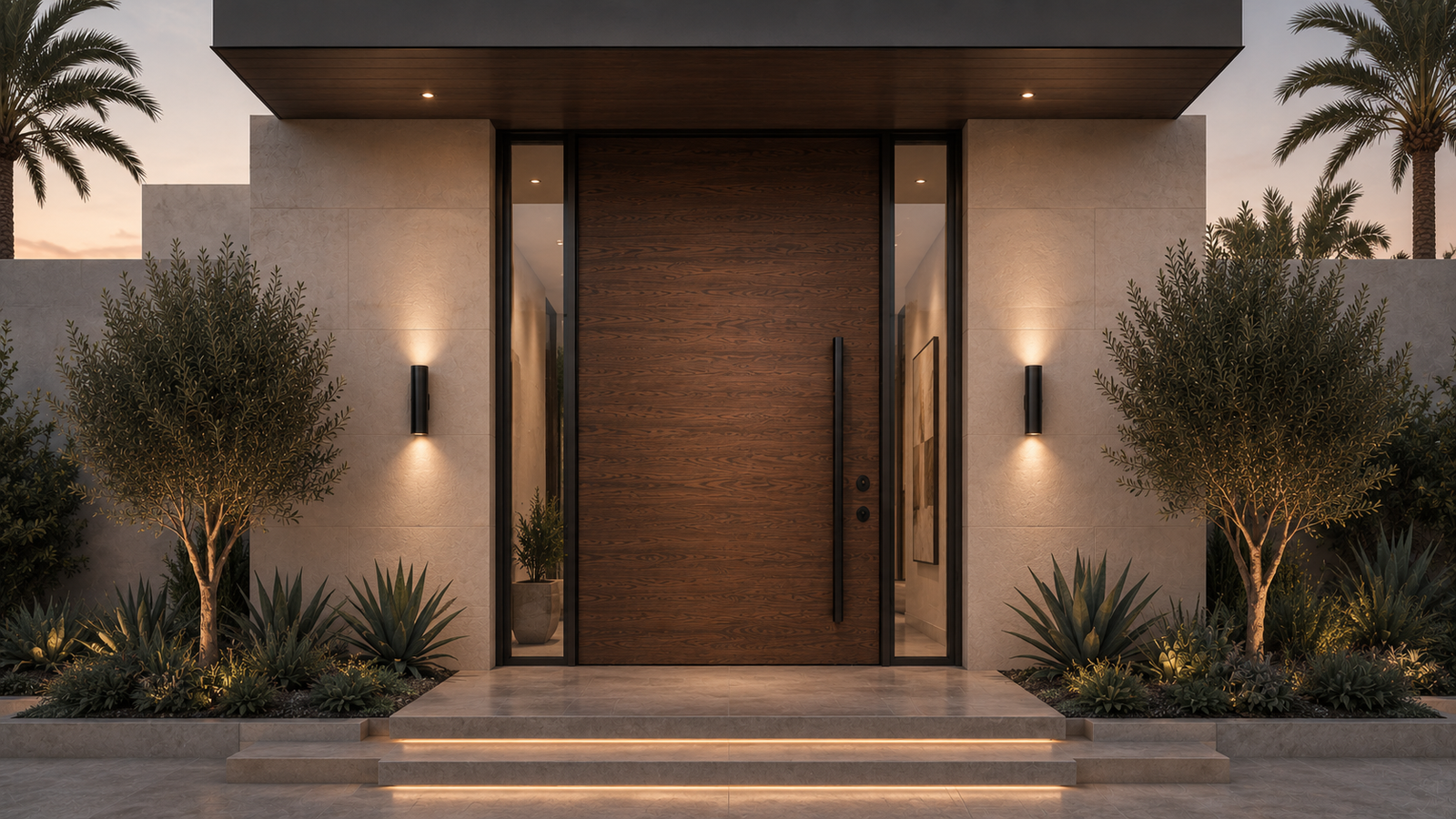
- Ask any architect who’s worked with pivot doors, and they’ll tell you the same thing: they solve problems that other door types can’t.
- First, there’s the scale. Contemporary architecture in Dubai often features high ceilings, double-height volumes, and generous proportions. Pivot doors are one of the few systems that can match that scale without looking awkward or feeling heavy to operate.
- Second, there’s the detail. The absence of visible hardware means the door integrates cleanly into the surrounding architecture. Walls stay walls. The entrance stays the entrance. Nothing feels bolted on.
- Third, there’s the experience. The way a pivot door moves that slow, balanced rotation creates a moment. It signals to anyone walking in that this space has been thought about carefully. That’s something clients notice, whether they can name it or not.
Pivot Door Pros and Cons
What Works Well
- Supports very large, heavy panels that hinged doors can’t handle
- Creates a genuinely impressive architectural entrance
- Smooth, effortless operation even on oversized panels
- Concealed hardware gives a clean, uncluttered look
- Highly customisable in terms of material, size, and finish
- Better long-term durability due to even weight distribution
Things to Keep in Mind
- Professional installation is essential, this isn’t a DIY project
- Higher upfront cost than a standard hinged door
- The door sweeps in both directions, so you need clear floor space on both sides
- Weather sealing requires careful detailing, especially in exposed locations
For most luxury residential and commercial projects, the advantages comfortably outweigh the considerations. The cost difference is real, but so is the impact.
Why Pivot Doors Work So Well in Dubai?
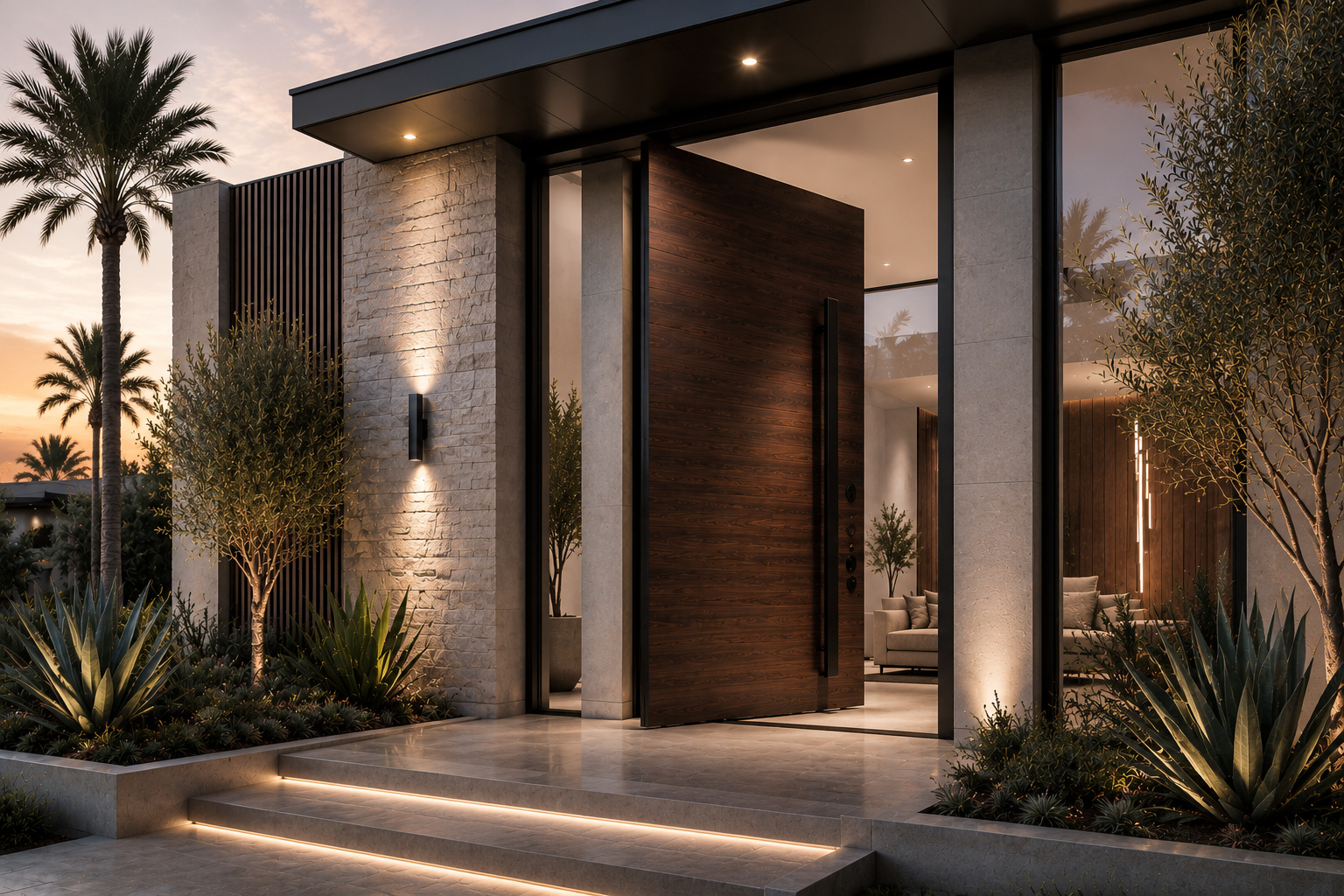
Dubai’s architecture has always pushed boundaries. Tall ceilings, dramatic entrances, and a preference for spaces that feel generous and well-designed are all hallmarks of high-end residential and commercial development here. Pivot doors fit naturally into that context.
- Beyond aesthetics, the climate plays a role too. Well-engineered pivot doors with proper thermal performance can help manage heat gain, which is a practical benefit in a market where energy efficiency is increasingly important. And because quality aluminium and steel pivot systems are resistant to humidity and temperature swings, they hold up well in the Gulf environment.
- Whether it’s a villa on Palm Jumeirah, a penthouse in Downtown Dubai, or a boutique hotel entrance in Business Bay, pivot doors have become a recognisable mark of quality in the UAE market.
Pivot Doors at Arqen Industries
- At Arqen Industries, we design and manufacture custom pivot door systems for luxury residential and commercial projects across Dubai and the UAE. Every door we build is made to order, engineered to the specific dimensions, materials, and finish requirements of each project.
- We work directly with architects, interior designers, and developers from the early design stage through to manufacturing and installation. Our team understands what high-end projects demand in terms of both aesthetics and technical performance, and we’re set up to deliver both.
- If you’re interested in seeing examples of our work or discussing a specific project, visit us at arqenindustries.com or reach out to our team directly.